Monday, May 24, 2010
The Battle of Alesia
Here is the Google Presentation-> http://docs.google.com/present/edit?id=0AY6tOzWDGMWVZGdwaHZrNjlfNGZmM3hjMmZw&hl=en

Thursday, May 20, 2010
Teachers would help me learn better if they…
- Would do something more interactive in class
- Would bring something entertaining to keep my attention
- Wouldn't just talk at the students, but to the students
- Wouldn't just force students to take notes as the entire class
- Would actually teach the subject material, not just give random pointless assignments in class to keep students busy
- Wouldn't have things show up on the test that they didn't teach
- Wouldn't teach superfluous things that won't show up on tests, as they detract from learning the important material
- Would stop for a second to make sure each individual understands the material
- Would repeat important topics
- Would do hands on projects, as hands on is fun and interactive
- Would be approachable for extra help
Wednesday, May 19, 2010

Wednesday, May 12, 2010
Gallic Wars-Paragraph #7
It was announced to Caesar that they were attempting to make their journey through our province, he hurried to depart from the city and which was able to be the greatest and farthest journey that reached in Gaul and he arrives in Geneva. He orders the whole Province with as great a number of soldiers as possible, as there was in all only one legion in farther in Gaul: he orders the bridge at Geneva to be broken down. When the Helvetii are alerted of his arrival they send to him, as ambassadors, the most illustrious men of their state, in which embassies Numeius and Verudoctius held the chief place, to say "that it was their intention to march through the Province without doing any harm, because they had" according to their own representations, "no other route: that they requested, they might be allowed to do so with his consent." Caesar, because he kept in remembrance that Lucius Cassius, the consul, had been slain, and his army routed and made to pass under the yoke by the Helvetii, did not think that ought to be granted: nor did he think that men of hostile disposition, if an opportunity of marching through the Province were given them, would abstain from outrage and mischief. Yet, in order that a period might intervene, until the soldiers whom he had ordered should assemble, he replied to the ambassadors, that he would take time to deliberate; if they wanted any thing, they might return on the day before the ides of April.
Tuesday, May 11, 2010


Wednesday, May 5, 2010
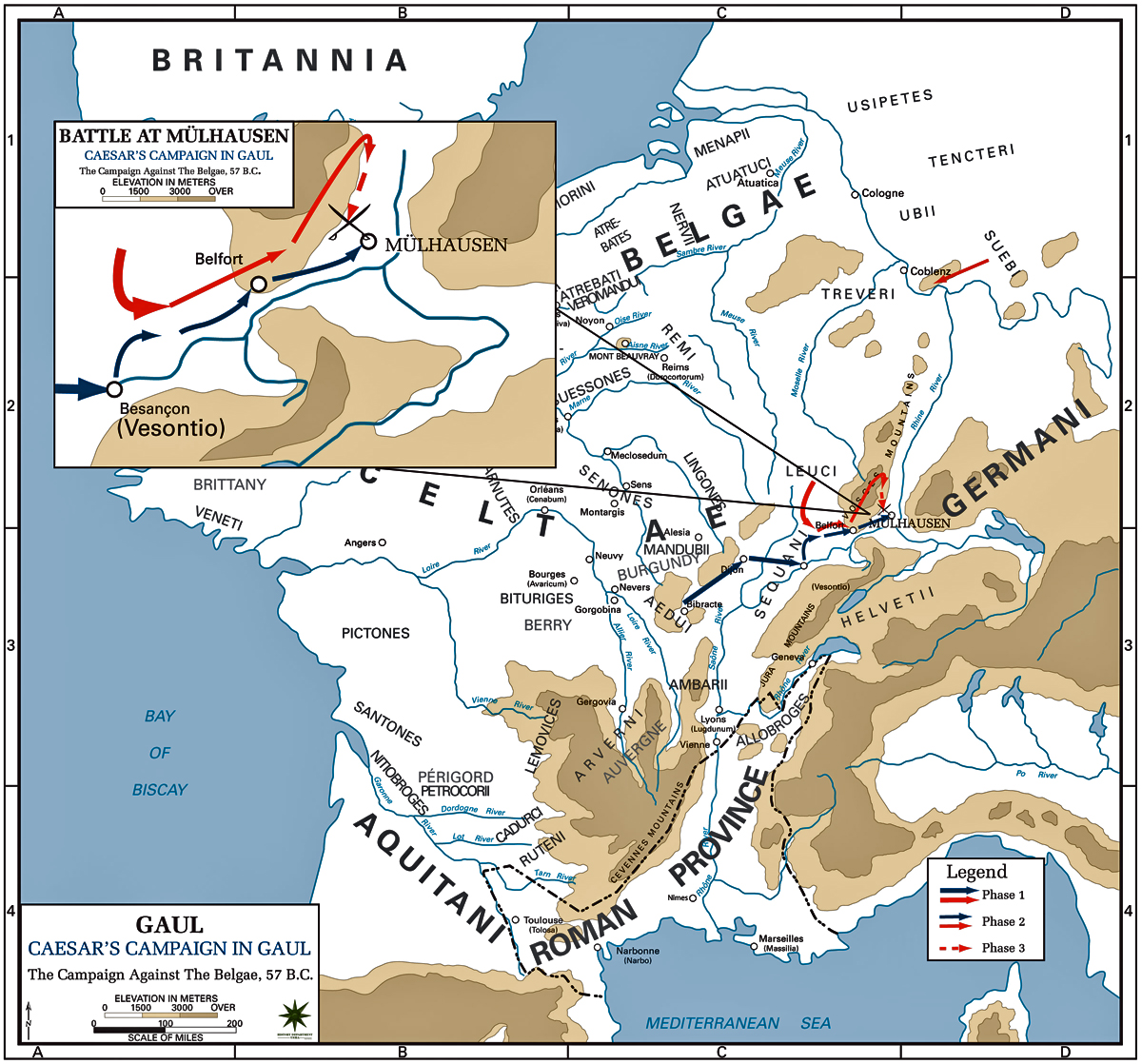
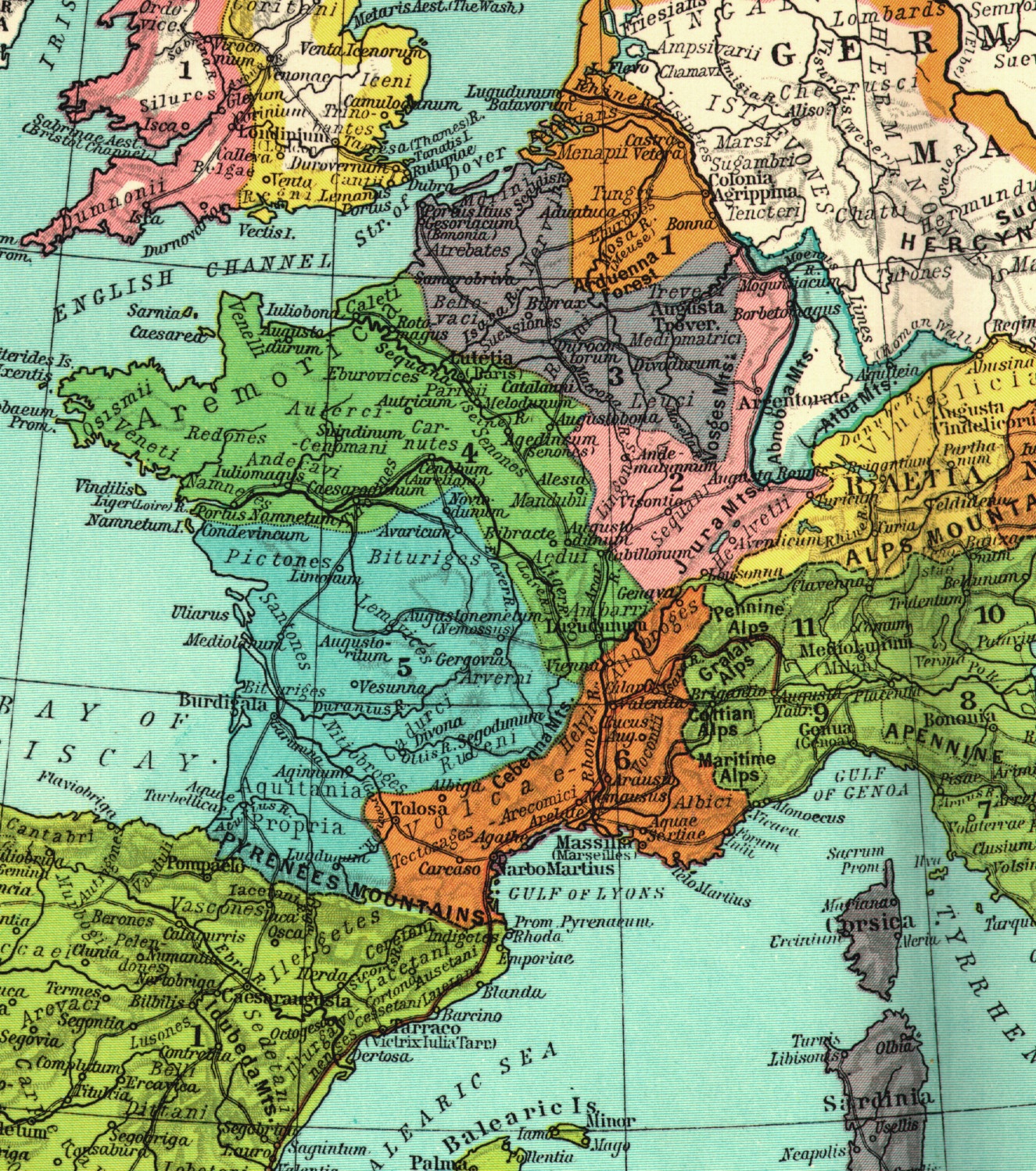
Maps of Gaul!
Gaul is present-day France, Luxembourg, and Belgium.




Works Cited
Caesar's Campaign in Gaul. Digital image. Emersonkent. Web. 5 May 2010. <http://www.emersonkent.com/images/caesars_gaul.jpg>. Celtic Tribes. Digital image. CeltNet. Web. 5 May 2010. <http://www.celtnet.org.uk/images/gaul_large.gif>.
Colored map of Gaul. Digital image. Pitt. Web. 5 May 2010. <http://www.pitt.edu/~medart/image/france/france-l-to-z/mapsfrance/sf038fra.jpg>.
Cultural Areas in Gaul. Digital image. Athena Pub. Web. 5 May 2010. <http://www.athenapub.com/gaul3prz.GIF>.
Gaul 1st Century BC. Digital image. Wikimedia Commons. Web. 5 May 2010. <http://upload.wikimedia.org/wikipedia/commons/c/ca/Gaul%2C_1st_century_BC.gif>.
Map Gallia Tribes Towns. Digital image. Wikimedia Commons. Web. 5 May 2010. <http://upload.wikimedia.org/wikipedia/commons/b/ba/Map_Gallia_Tribes_Towns.png>.
Tuesday, May 4, 2010
Discipline in the Roman Legion
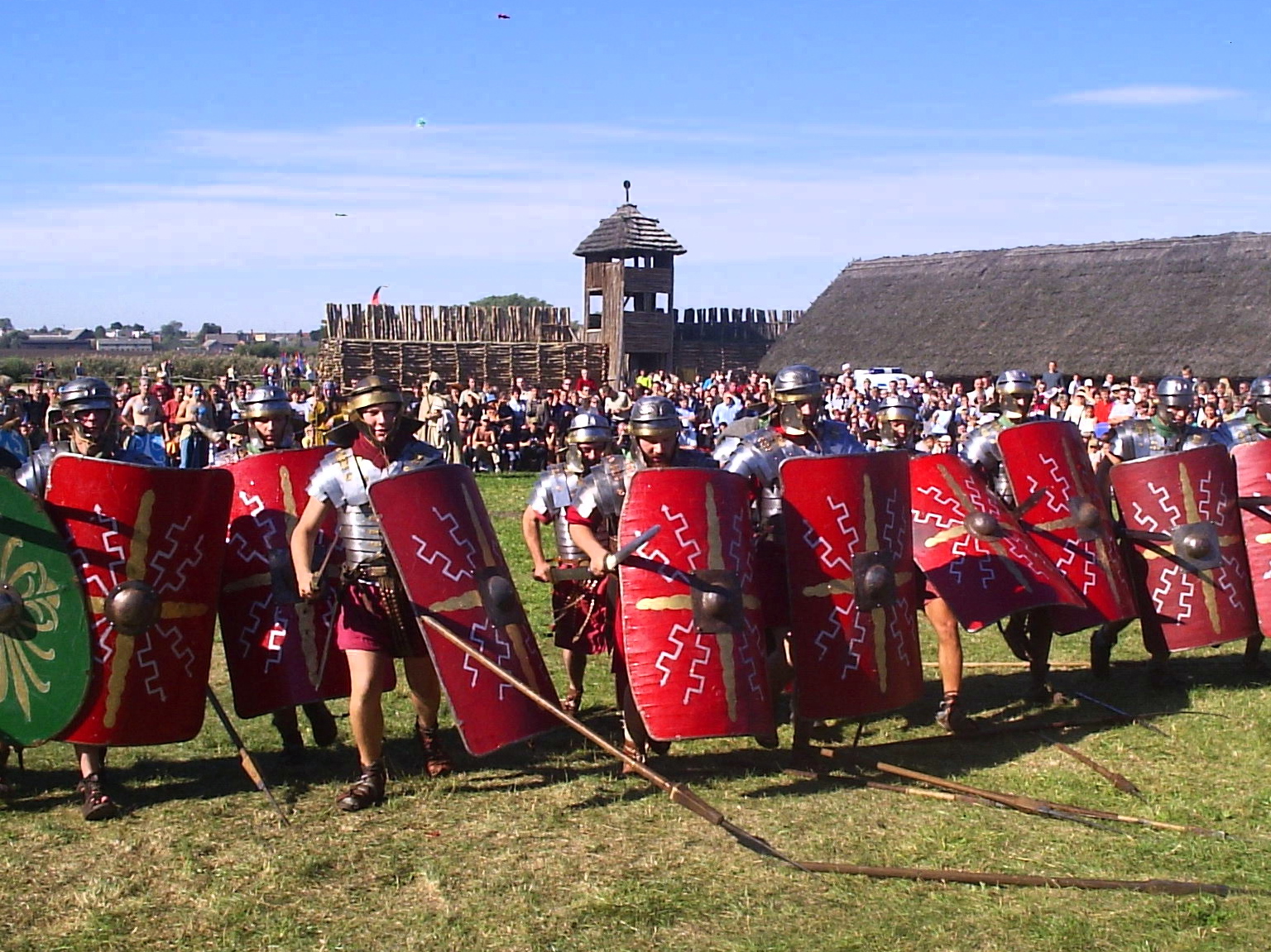
Minor punishments-being hit by the centurion with a staff (castigatio), reduction of rations, reduction in pay (pecuniaria multa), flogging in front of the legion, whipping with the flagrum (short whip), reduction in rank (gradus deiectio), dishonorable discharge (missio ignominiosa), loss of time in service advantages, relegation to inferior duties (militiae mutatio), additional duties (munerum indictio)
Major punishments
-Fustuarium-a sentence for desertion or dereliction of duty. The legionary would be stoned or beaten to death with cudgels in front of the army
-Decimation-this was carried out against an entire mutinous unit. One out of every ten men, chosen by lots, would be beaten to death by the other nine men.
"Roman Legion." Wikipedia, the Free Encyclopedia. Web. 4 May 2010.
Roman Legion at Attack 10. Digital image. Wikimedia Commons. Web. 4 May 2010.
Monday, May 3, 2010
Parsing Check-Gallic Wars paragraphs 3 + 4
Pick 10 verbs:
1. comparare-present active infinitive meaning "to prepare"
2. coemere-present active infinitive meaning "to buy"
3. facere-present active infinitive meaning "to make"
4. confirmare-present active infinitive meaning "to strenghten"
5. esse-present active infinitive meaning "to be"
6. confirmant-3rd person plural present active indicative of "confirmare" meaning "to strengthen"
7. sperant-3rd person plural present active indicative of "sperare" meaning "to hope"
8. est-3rd person singular present active indicative of "esse" meaning "to be"
9. dicere-present active infinitive meaning "to speak"
10. habebat-3rd person singular imperfect active indicative of "habere" meaning "to have"
1. comparare-present active infinitive meaning "to prepare"
2. coemere-present active infinitive meaning "to buy"
3. facere-present active infinitive meaning "to make"
4. confirmare-present active infinitive meaning "to strenghten"
5. esse-present active infinitive meaning "to be"
6. confirmant-3rd person plural present active indicative of "confirmare" meaning "to strengthen"
7. sperant-3rd person plural present active indicative of "sperare" meaning "to hope"
8. est-3rd person singular present active indicative of "esse" meaning "to be"
9. dicere-present active infinitive meaning "to speak"
10. habebat-3rd person singular imperfect active indicative of "habere" meaning "to have"
Friday, April 30, 2010


Thursday, April 29, 2010


Wednesday, April 28, 2010
Roman Swords and Spears
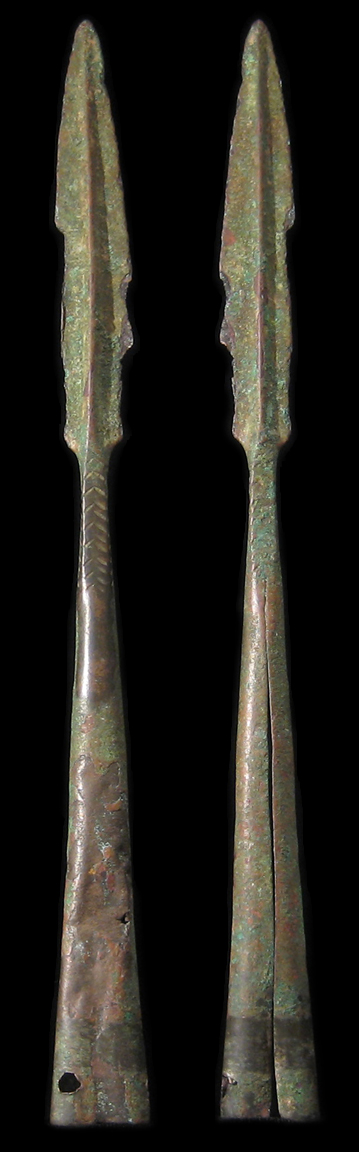
Roman Spears

Roman Dagger

Roman Gladius
Roman Gladius. Digital image. www.a2armory.com. A2Armory. Web. 28 Apr. 2010. <http://www.a2armory.com/images/new-swords/RomanGladiusSword.jpg>.
Roman Pugio. Digital image. Armillum.com. Armillum. Web. 28 Apr. 2010. <http://armillum.com/tienda/images/DEEPEEKA/pugioIII.jpg>.
Roman Spear. Digital image. www.ancientresource.xom. Ancient Resource. Web. 28 Apr. 2010. <http://www.ancientresource.com/images/roman/spears_arrowheads/roman-spear6387a.jpg>.
Tuesday, April 27, 2010
Biography of the Helvetii
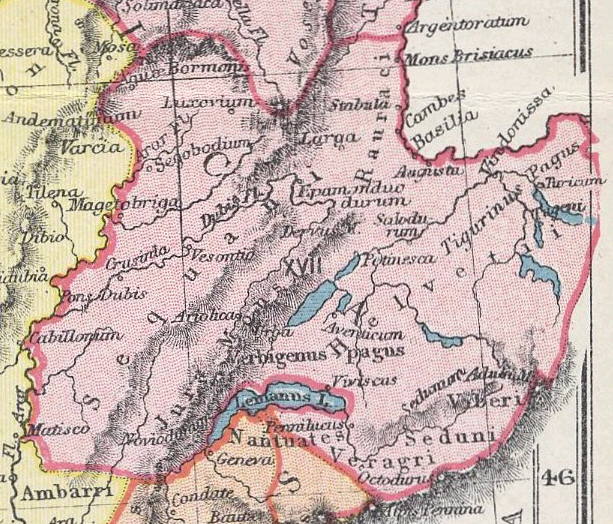
"Helvetii." Wikipedia, the Free Encyclopedia. Web. 28 Apr. 2010. <http://en.wikipedia.org/wiki/Helvetii>.
Maxima Sequanorum. Digital image. Wikimedia Commons. Wikipedia. Web. 27 Apr. 2010. <http://upload.wikimedia.org/wikipedia/commons/f/f7/Maxima_Sequanorum.jpg>.
Monday, April 26, 2010
Latin Military Jargon #2
1. Legatus legionus-overall legion commander
2. Praefectus castrorum-prefect
3. Forward hastati
Rear hastati
Forward principes
Rear principes
Forward triarii
Rear triarii
4. Optio-second in command to the primus pilus
5. Decurio-leader of the cavalry
6. Tarma-cavalry unit
7. Aquilifer-standard bearer
8. Signifer-standard bearer for a century
9. Cornicen-horn blower
10. Immunes-legion soldiers with specialized skills
Bonus #1-?
Bonus #2-Decimation-forcing the soldiers to take lots in which one out of ten will draw a separate one, meaning the other nine must kill him. It is used as a form of discipline.
2. Praefectus castrorum-prefect
3. Forward hastati
Rear hastati
Forward principes
Rear principes
Forward triarii
Rear triarii
4. Optio-second in command to the primus pilus
5. Decurio-leader of the cavalry
6. Tarma-cavalry unit
7. Aquilifer-standard bearer
8. Signifer-standard bearer for a century
9. Cornicen-horn blower
10. Immunes-legion soldiers with specialized skills
Bonus #1-?
Bonus #2-Decimation-forcing the soldiers to take lots in which one out of ten will draw a separate one, meaning the other nine must kill him. It is used as a form of discipline.
Friday, April 23, 2010


Thursday, April 22, 2010
Ancient World Examples of Recycling

Pliny the Elder, in the first century AD, wrote about reuse of scrap copper in Roman foundries. He listed that the copper was remade into armor, weapons, and articles for personal use (ex. mirror). The melting and recasting foundries were located at an Italian port city called Brindisi. This city sat on the Adriatic coast, and was the end of the Appian way (See "Appian Way" post), the Roman road constructed to facilitate easy trade and military access. Later, scientists found actual proof of this recycling along the Adriatic coast in ancient times.
"Brindisi Bronzes"; National Geographic; Vol 187 No. 4; April
1995; P. 88-101.
1995; P. 88-101.
Photograph. Scrapcopperprices.net. Scrap Copper Prices. Web. 22 Apr. 2010. .
Wednesday, April 21, 2010
Gallic Wars-Paragraph #3
Induced by these things, and influenced by the Orgetorix's authority, they decided to provide such things that were necessary for their trip - to buy as large a number as possible of beasts of burden and wagons - to make their harvests as large as possible, so that on their departure plenty of corn might be in store - and to establish peace and friendship with the neighboring states. They reckoned that a term of two years would be enough for them to execute their plans; they fix by decree their departure for the third year. Orgetorix was chosen to complete these arrangements. He took upon himself the office of ambassador to the states: on this journey he persuaded Casticus, the son of Catamantaledes, one of the Sequani, whose father had possessed the sovereignty among the people for many years, and had been styled "friend" by the senate of the Roman people, to seize upon the sovereignty in his own state, which his father had held before him, and he also persuaded Dumnorix, an Aeduan, the brother of Divitiacus, who at the time possessed the chief authority in the state, and was exceedingly beloved by the people, and gives him his daughter in marriage. He proved to them that to accomplish their attempts was a thing very easy to be done, because he himself would obtain the government of his own state; there was no doubt that the Helvetii were the most powerful in the whole of Gaul; he assures them that he will, with his own forces and his own army, acquire the sovereignty for them. Inspired by this speech, they gave a pledge and oath to one another, and hope that, when they have seized the sovereignty, they will, by means of the three most powerful and valiant nations, be enabled to obtain possession of all of Gaul.
Tuesday, April 20, 2010
Vastatio!

"Roman Army Tactics." The Roman Empire. Web. 23 Mar. 2010. http://www.roman-empire.net/army/tactics.html.
FIRE. Digital image. Wikimedia Commons. Web. 20 Apr. 2010. http://upload.wikimedia.org/wikipedia/commons/2/2a/FIRE_01.JPG.
Monday, April 19, 2010
Withdrawal of the Army

"Roman Army Tactics." The Roman Empire. Web. 23 Mar. 2010. http://www.roman-empire.net/army/tactics.html.
Roman Army in Nashville. Digital image. Wikimedia Commons. Web. 16 Apr. 2010. http://upload.wikimedia.org/wikipedia/commons/8/81/Roman_army_in_nashville.jpg.
Friday, April 16, 2010
Odd Strategems

"Roman Army Tactics." The Roman Empire. Web. 23 Mar. 2010. http://www.roman-empire.net/army/tactics.html.
Cracked Surface 2. Digital image. Wikimedia Commons. Web. 16 Apr. 2010. http://upload.wikimedia.org/wikipedia/commons/a/ab/Cracked_Surface2.jpg.
Thursday, April 15, 2010
Breaking the Enemy Battle Line (2)

"Roman Army Tactics." The Roman Empire. Web. 23 Mar. 2010. http://www.roman-empire.net/army/tactics.html.
Broken Line. Digital image. Wikimedia Commons. Web. 15 Apr. 2010. http://commons.wikimedia.org/wiki/File:Line_clipping.svg.
Subscribe to:
Posts (Atom)