Website of the Gods!!!

This is a blog of the gods, Ancient Rome, the Gallic Wars, translations, and other Latiny stuff!

Thursday, April 22, 2010

Ancient World Examples of Recycling


Pliny the Elder, in the first century AD, wrote about reuse of scrap copper in Roman foundries. He listed that the copper was remade into armor, weapons, and articles for personal use (ex. mirror). The melting and recasting foundries were located at an Italian port city called Brindisi. This city sat on the Adriatic coast, and was the end of the Appian way (See "Appian Way" post), the Roman road constructed to facilitate easy trade and military access. Later, scientists found actual proof of this recycling along the Adriatic coast in ancient times.

"Brindisi Bronzes"; National Geographic; Vol 187 No. 4;  April
1995; P. 88-101.
Photograph. Scrapcopperprices.net. Scrap Copper Prices. Web. 22 Apr. 2010. .

Wednesday, April 21, 2010

Gallic Wars-Paragraph #3


Induced by these things, and influenced by the Orgetorix's authority, they decided to provide such things that were necessary for their trip - to buy as large a number as possible of beasts of burden and wagons - to make their harvests as large as possible, so that on their departure plenty of corn might be in store - and to establish peace and friendship with the neighboring states. They reckoned that a term of two years would be enough for them to execute their plans; they fix by decree their departure for the third year. Orgetorix was chosen to complete these arrangements. He took upon himself the office of ambassador to the states: on this journey he persuaded Casticus, the son of Catamantaledes, one of the Sequani, whose father had possessed the sovereignty among the people for many years, and had been styled "friend" by the senate of the Roman people, to seize upon the sovereignty in his own state, which his father had held before him, and he also persuaded Dumnorix, an Aeduan, the brother of Divitiacus, who at the time possessed the chief authority in the state, and was exceedingly beloved by the people, and gives him his daughter in marriage. He proved to them that to accomplish their attempts was a thing very easy to be done, because he himself would obtain the government of his own state; there was no doubt that the Helvetii were the most powerful in the whole of Gaul; he assures them that he will, with his own forces and his own army, acquire the sovereignty for them. Inspired by this speech, they gave a pledge and oath to one another, and hope that, when they have seized the sovereignty, they will, by means of the three most powerful and valiant nations, be enabled to obtain possession of all of Gaul.

Tuesday, April 20, 2010

Vastatio!

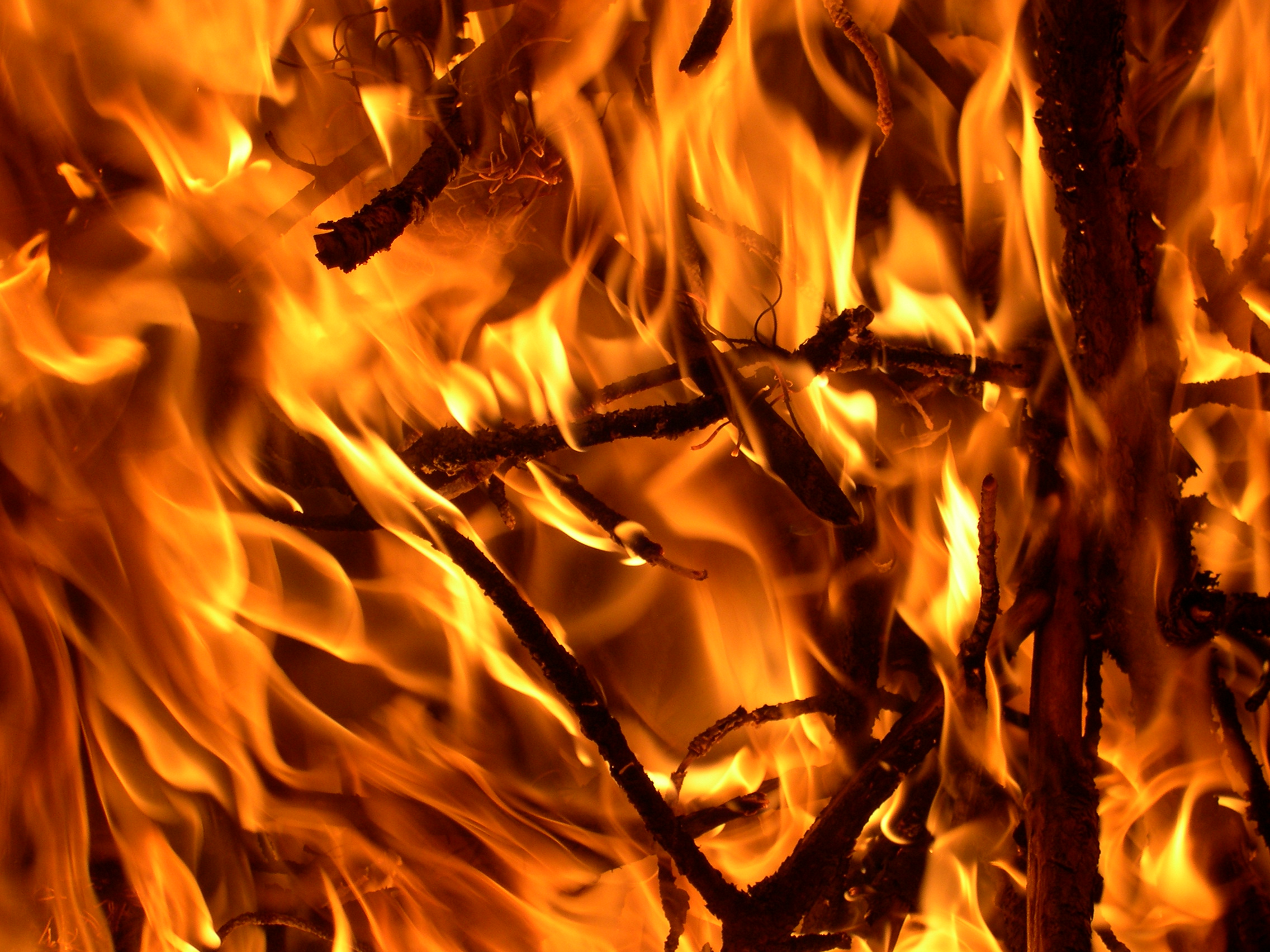
On a wider front, the Romans denied their enemies the means to keep sustained warfare. This was called vastatio. It was the systematic ravaging of an enemy territory. Crops were destroyed or stolen. Animals were slaughtered or taken. People were massacred or enslaved. The enemy's lands were demolished, denying his army any form of support. Sometimes these tactics were also used as a punitive method when barbarians crossed into Roman lands. This spread terror and acted as a deterrent. In the case of all-out war, the enemy was denied the means to survive a lengthy struggle.

"Roman Army Tactics." The Roman Empire. Web. 23 Mar. 2010. http://www.roman-empire.net/army/tactics.html.
FIRE. Digital image. Wikimedia Commons. Web. 20 Apr. 2010. http://upload.wikimedia.org/wikipedia/commons/2/2a/FIRE_01.JPG.

Monday, April 19, 2010

Withdrawal of the Army

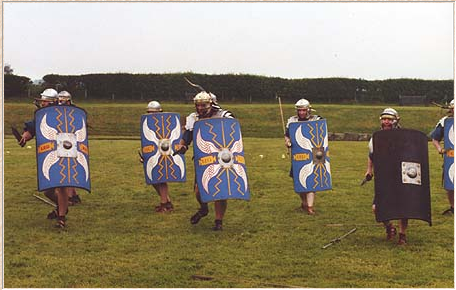
The important section of Vegetius closes with the tactics to be used in the face of withdrawal from the enemy. This highly difficult task requires immense skill and judgement. Both your own men and those of the enemy need to be deceived. He suggests that the troops be informed that their retirement is to draw the enemy into a trap and the movement can be screened from the enemy with the use of cavalry across the front. Then the units are drawn off in a normal manner, but this can only happen if the troops have not yet been engaged. During a retreat, some units are detached and left behind to ambush the enemy if there is a hasty advance, and this way the tables can be turned.

"Roman Army Tactics." The Roman Empire. Web. 23 Mar. 2010. http://www.roman-empire.net/army/tactics.html.
Roman Army in Nashville. Digital image. Wikimedia Commons. Web. 16 Apr. 2010. http://upload.wikimedia.org/wikipedia/commons/8/81/Roman_army_in_nashville.jpg.

Friday, April 16, 2010

Odd Strategems

Vegetius was full of odd strategems to mislead the enemy or demoralize the enemy troops. Once the enemy cracked, they were not to be surrounded, but left an easy escape route. The reason for this is that trapped soldiers would fight to the death, but when left a possible escape route, they were exposed to the cavalry waiting on the flanks.

"Roman Army Tactics." The Roman Empire. Web. 23 Mar. 2010. http://www.roman-empire.net/army/tactics.html.
Cracked Surface 2. Digital image. Wikimedia Commons. Web. 16 Apr. 2010. http://upload.wikimedia.org/wikipedia/commons/a/ab/Cracked_Surface2.jpg.

Thursday, April 15, 2010

Breaking the Enemy Battle Line (2)

If a weakness was detected in the enemy line, it was exploited, using a stranger force to oppose it. It was necessary to disguise one's battle line, and even troops were disguised to fool to enemy. Often the very size of the army was skillfully hidden, giving a great advantage to the disguisers. The troops could be packed very tightly to seem small, or spread far apart to seem large. There were also examples of surprise tactics made by detaching a small unit, which later emerged from a hidden space to attack. They arrived with much dust and noise to make it seem like reinforcements had arrived.

"Roman Army Tactics." The Roman Empire. Web. 23 Mar. 2010. http://www.roman-empire.net/army/tactics.html.
Broken Line. Digital image. Wikimedia Commons. Web. 15 Apr. 2010. http://commons.wikimedia.org/wiki/File:Line_clipping.svg.

Wednesday, April 14, 2010

Gallic Wars-Paragraph 2


Among the Helvetii, Orgetorix was by far the most sophisticated and wealthy. When M. Messala and M. Pisone were consuls , he was driven by lust of sovereignty, he formed a conspiracy with the nobility, and told the people to go forth from their territories with all their possessions, that it would be very simple, since they excelled all in valor, to acquire the supremacy of the whole of Gaul. To this he the more easily persuaded them, because the Helvetii are confined on every side by the nature of their situation; on one side by the Rhine , a very wide and deep river, which separates the Helvetian territory from the Germans; on a second side by the Jura , a high mountain, which is between the Sequani River and the Helvetii; on a third by the Lake of Geneva, and by the river Rhone, which separates the province from the Helvetii. From these circumstances it resulted, that they could range less widely, and could less easily make war upon their neighbors; for which reason men fond of war were affected with great regret. They thought, that considering the extent of their population, and their renown for warfare and bravery, they had but narrow limits, although they extended in length 240, and in width 180 miles.

Tuesday, April 13, 2010

LATIN MILITARY JARGON

1. Pugio-dagger
2. Gladius-one handed short sword
3. Hasta-thrusting spear
4. Pilum-throwing spear
5. Arcus et Sagitta-bow and arrow
6. Loricas Segmentata-breastplate
7. Greave-metal sheet over forearms
8. Scutum-shield
9. Caliga-nail boots
10. Ballista-giant crossbow
11. Buccina-horn
12. Caltrop-tribulus

Monday, April 12, 2010

Gallic Wars-Paragraph 1


All of Gaul is divided into three parts, the first of which the Belgae inhabit, the second Aquitani, the third which in their language are called Celts, and in our language called Gauls. They differ from each other in language, institutions, and law.The river Garonne separates the Gauls from the Aquitani; the Marne and the Seine separate them from the Belgae. Of all these, the Belgae are the bravest, because they are furthest from the civilization and refinement of our Province, and merchants least frequently resort to them, and import those things which tend to effeminate the mind; and they are the nearest to the Germans, who dwell beyond the Rhine , with whom they are continually waging war; for which reason the Helvetii also surpass the rest of the Gauls in valor, as they contend with the Germans in almost daily battles, when they either repel them from their own territories, or themselves wage war on their frontiers. One part of these, which it has been said that the Gauls occupy, takes its beginning at the river Rhone ; it is bounded by the river Garonne, the ocean, and the territories of the Belgae; it borders, too, on the side of the Sequani and the Helvetii, upon the river Rhine , and stretches toward the north. The Belgae rises from the extreme frontier of Gaul, extend to the lower part of the river Rhine ; and look toward the north and the rising sun. Aquitania extends from the river Garonne to the Pyrenaean mountains and to that part of the ocean which is near Spain: it looks between the setting of the sun, and the north star.

Friday, April 9, 2010

Breaking the Enemy Battle Line (1)

All of Vegetius' battle tactics all have the same purpose, that of breaking the enemy battle line. If a flank can be turned, then the strong center has to fight on two fronts or is forced to fight in a restricted place. Once this advantage is gained, it is very difficult to right the situation. Even in the highly trained Roman army it would have been difficult to change tactics during the course of a battle and the only units which can be successfully deployed are those in the reserves or the part of the line not yet engaged. That makes the most important decision a general has to make the disposition of his troops.

"Roman Army Tactics." The Roman Empire. Web. 23 Mar. 2010. http://www.roman-empire.net/army/tactics.html.
Line. Digital image. Wikimedia Commons. Web. 8 Apr. 2010. http://upload.wikimedia.org/wikipedia/commons/b/b1/Line.PNGhttp://upload.wikimedia.org/wikipedia/commons/b/b1/Line.PNG.

Thursday, April 8, 2010

Even More Layout Before Battle

These are the last three instructions from Vegetius regarding the layout before battle of the Roman army.
5. Same as number 4, but the center is screened by light infantry or archers who can keep the enemy center distracted while the wings engage.
6. A variation of number two, whereby the center and wing are kept back while the right wing attempts a turning movement. If successful, the left wing, enforced with reserves, could advance and hop to complete the enveloping movement, which should compress the center.
7. This is the use of suitable ground for either flank to protect it.

"Roman Army Tactics." The Roman Empire. Web. 23 Mar. 2010. http://www.roman-empire.net/army/tactics.html.
Seven, Eh? Digital image. Wikimedia Commons. Web. 6 Apr. 2010. http://upload.wikimedia.org/wikipedia/commons/c/c5/Seven.jpg.

Wednesday, April 7, 2010

More Layout Before Battle

These are the next two of Vegetius' seven instructions regarding layout before battle.
3. The same as number two, except that the left wing is made stronger and attempts a turning movement and is to be tried only when it is known that the enemy's right wing is weak.
4. Both wings advance together, leaving the center behind. This may take the enemy by surprise and leave his center exposed and demoralized. If, however, the wings are held, then this is a hazardous movement, since the army is now split into three seperate formations and a skillful enemy could turn this to their advantage.

"Roman Army Tactics." The Roman Empire. Web. 23 Mar. 2010. http://www.roman-empire.net/army/tactics.html.
Wing. Digital image. Wikimedia Commons. Web. 6 Apr. 2010. http://upload.wikimedia.org/wikipedia/commons/2/22/Wing.jpg.

Tuesday, April 6, 2010

Layout Before Battle


There are seven specific instructions by Vegetius regarding the layout before battle.
1. One level ground, the force in drawn up with a center, with two wings and reserves in the rear. The wings and the reserves must be strong enough to prevent an eveloping or outflanking maneuver.
2. An oblique battle line with the left wing held back in a defensive position while the right wing advances to turn the opponents left flank. Opposition to this move is to strengthen your left wing with cavalry and reserves, but if both sides are successful then the battle front would tend to move in a counterclockwise direction, the effect of which qould vary with the nature of the ground. The left wing should be stabalized the the right wing should have unimpeded movement.

"Roman Army Tactics." The Roman Empire. Web. 23 Mar. 2010. http://www.roman-empire.net/army/tactics.html.
Layout Before Battle. Digital image. Museum of London. Web. 6 Apr. 2010. http://www.museumoflondon.org.uk/learning/features_facts/digging/army/images/large_ermine_street_guard.jpg.

Monday, April 5, 2010

Even More Roman Formations

The order to repel cavalry brought about this next formation. The first rank would form a firm wall with their shields, with only their pila protruding, forming a line of spearheads. A horse, no matter how well trained, could not be brought to break through such a barrier. The second rank would then use their spears to drive off any horses that came to a halt near them.
The orb is a defensive position in the shape of a circle taken by a unit in desperate straits. It provided for a reasonably effective defense, but needed a very high level of discipline by the individual soldiers.

"Roman Army Tactics." The Roman Empire. Web. 23 Mar. 2010. http://www.roman-empire.net/army/tactics.html.
Repel Cavalry! Digital image. Roman-Empire.net. Web. 2 Apr. 2010. http://www.roman-empire.net/army/repel-cavalry.html.

Friday, April 2, 2010

More Roman Formations

The saw was the opposite tactic to the wedge. It was a detached unit behind the front line capable of fast sideways movement down the length of the line to block any holes that might appear. During a Roman civil war, the saw formation would inevitably be the response to the wedge formation.
The skirmishing formation was a widely spaced line of troops, as opposed to the tighter packed battle ranks typical of Roman legionaries. Every second man in the line stepped forward a few paces, essentially doubling the amount of ranks. It allowed for greater mobility and found many uses in the tactical handbooks of Roman generals.

"Roman Army Tactics." The Roman Empire. Web. 23 Mar. 2010. http://www.roman-empire.net/army/tactics.html.
Skirmishing Formation. Digital image. Roman-Empire.net. Web. 1 Apr. 2010. http://www.roman-empire.net/army/skirmishing.html.

Thursday, April 1, 2010

Roman Formations

The tortoise (testudo) was a defensive formation when the legoinaries would hold their shields above their heads, except for the front row, thereby creating a shell to project from projectiles from the front or above. The legionaries were virtually invulnerable to arrows or objects dropped from the defensive walls.
The wedge was commonly used by attacking legionaries. The legionaries formed a triangle, with one man at the front pointing towards the enemy. This allowed small groups to thrust into the enemy and expand, restricting the enemy's efforts. This made the Roman gladius great for use, but longer swords of the Germanic tribes were useless, as hand-to-hand combat was made difficult. This was a vital tactic of the Roman army.

"Roman Army Tactics." The Roman Empire. Web. 23 Mar. 2010. http://www.roman-empire.net/army/tactics.html.
Reenact Testudo. Digital image. Wikimedia Commons. Web. 10 Apr. 2010. http://en.wikipedia.org/wiki/File:Reenact_testudo.jpg.

Wednesday, March 31, 2010

Ranks of the Roman Legion

Senior officers:
1. Legatus legionus-overall legion commander
2. Dux-the leader
3. Tribunus laticlavius-Broad Band Tribune
4. Praefectus castrorum-the Camp Prefect
5. Tribuni angusticlavii-Narrow Band Tribune

Centurions:
1. Primus pilus-the senior centurion
2. Primi ordines-century commander of the first cohort
3. Primus prior-commander of each cohort's first century
4. The forward hastati-forward spears
5. The rear hastati-rear spears
6. The forward principes-the forward principle line
7. The rear principes-the rear principle line
8. The forward triarii-the forward third line
9. The rear triarii-the rear third line

"Roman Legion." Wikipedia, the Free Encyclopedia. Web. 23 Mar. 2010. http://en.wikipedia.org/wiki/Roman_legion.
Roman Legion On Attack. Digital image. Wikimedia Commons. Web. 23 Mar. 2010. http://commons.wikimedia.org/wiki/File:Roman_legion_at_attack.jpg.

Tuesday, March 30, 2010

Even More Roman Tactics

It was recommended that if your cavalry was weak, then it should be stiffened with light armed foot soldiers. Vegetius also stresses the need for adequate reserves to prevent an army from enveloping one's own or fending off cavalry from attacking the rear of the infantry. Alternatively, they could perform an eveloping manuever on the opponent. The positions taken by the commander was usually on the right wing.

"Roman Army Tactics." The Roman Empire. Web. 23 Mar. 2010. http://www.roman-empire.net/army/tactics.html.
Envelope. Digital image. Wikimedia Commons. Web. 23 Mar. 2010. http://upload.wikimedia.org/wikipedia/commons/7/7f/Envelope_-_Boonville_Address-000.jpg.

Monday, March 29, 2010

Friday, March 26, 2010

More Roman Tactics

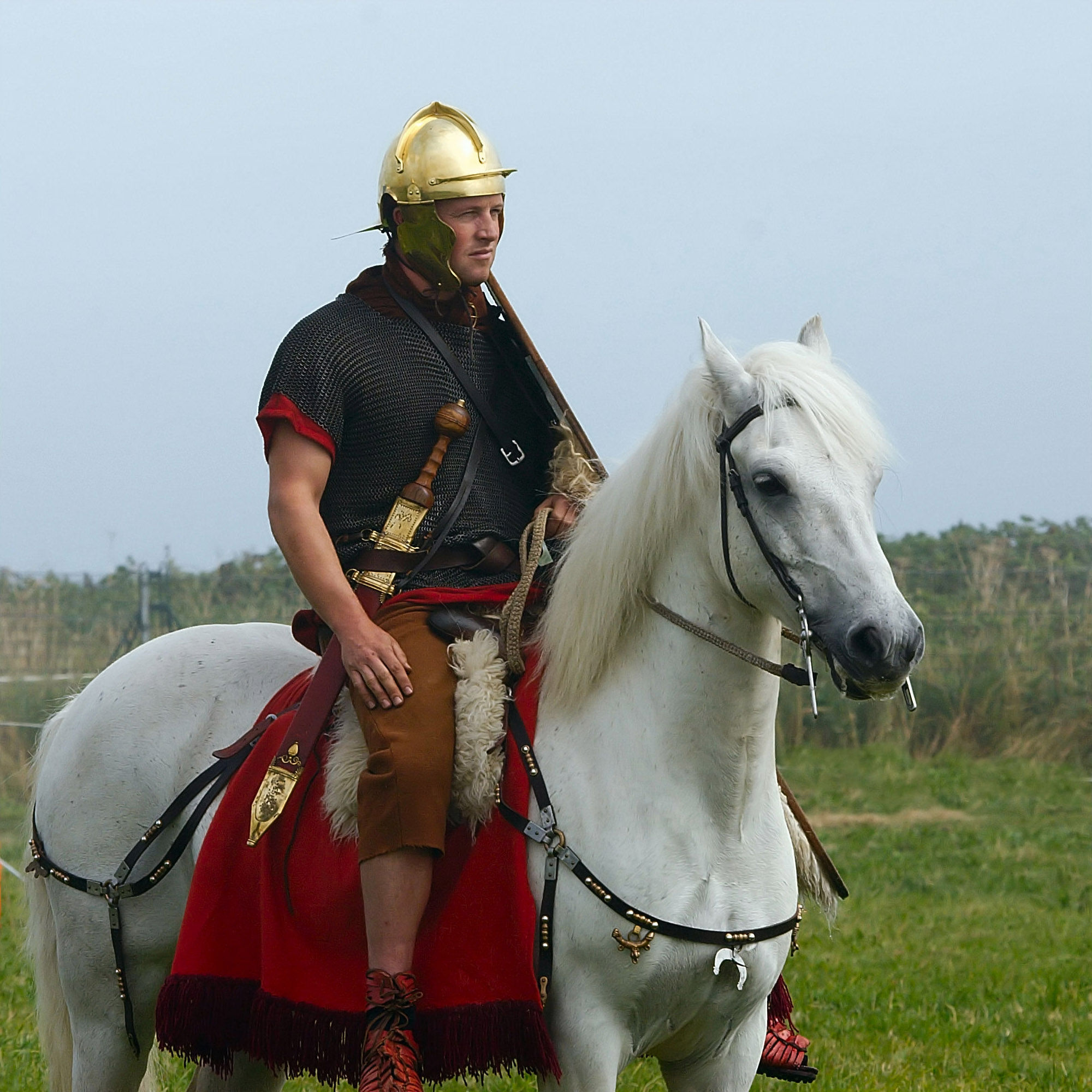
10,000 men can be placed in a rectangle 1,500 yards by twelve yards, and it was advised not to extend the line beyond that. The normal arrangement was the infantry in the center and the cavalry on the wings. Having the cavalry on the wings prevented the infantry from being outflanked, and once the battle turned and the enemy started to flee, the cavalry could finish up. Horsemen were always a secondary force in ancient warfare, as most of the fighting was done by the infantry.

"Roman Army Tactics." The Roman Empire. Web. 23 Mar. 2010. http://www.roman-empire.net/army/tactics.html.
Roman Cavalry 2. Digital image. Wikimedia Commons. Web. 23 Mar. 2010. http://upload.wikimedia.org/wikipedia/commons/e/e2/Roman_Cavalry_2.jpg.