Saturday, April 18, 2009

Wednesday, April 8, 2009
Chapter 18 Test-Part 2-Sententiae Antiquae
1. They are able because those things seems to be possible.
2. Even strong men are being scared by often dangers.
3. Your plans are clear to us; You will be held with the knowledge of all these citizens
4. Evil is counsel which is not able to be mutated
5. It is right to be taught by the enemy.
6. The occasions are contests in the Circus games, that type of light show I am never being kept by.
7. This is now my life:I admit and greet good men who come to me; thereupon either I write or read; after this, time is being given to all bodies.
8. Nothing, therefore, is dead, since the soul of nature is being held by mortals.
9. Love to be disturbed with he who is not able to fear.
10. Never, truly, is rashness intermingled with wisdom.
11. Esteem he who is not being moved by money.
12. He is being praised from this man; He is being blamed by those men.
13. Uprightness is being praised-and he is neglected.
2. Even strong men are being scared by often dangers.
3. Your plans are clear to us; You will be held with the knowledge of all these citizens
4. Evil is counsel which is not able to be mutated
5. It is right to be taught by the enemy.
6. The occasions are contests in the Circus games, that type of light show I am never being kept by.
7. This is now my life:I admit and greet good men who come to me; thereupon either I write or read; after this, time is being given to all bodies.
8. Nothing, therefore, is dead, since the soul of nature is being held by mortals.
9. Love to be disturbed with he who is not able to fear.
10. Never, truly, is rashness intermingled with wisdom.
11. Esteem he who is not being moved by money.
12. He is being praised from this man; He is being blamed by those men.
13. Uprightness is being praised-and he is neglected.
Chapter 18 Test-Part 1-Passive Paradigms
Present Passive Indicative-Laudare-to praise
Singular
1. laudor
2. laudaris
3. laudatur
Plural
1. laudamur
2. laudamini
3. laudantur
Imperfect Passive Indicative-Laudare-to praise
Singular
1. Laudabar
2. laudabaris
3. laudabatur
Plural
1. laudabamur
2. laudabamini
3. Laudabantur
Future Passive Indicative-Laudare-to praise
Singular
1. laudabor
2. laudaberis
3. laudabitur
Plural
1. laudabimur
2. laudabimini
3. laudabuntur
Present Passive Indicative-Monere-to warn
Singular
1. moneor
2. moneris
3. monetur
Plural
1. monemur
2. monemini
3. monentur
Imperfect Passive Indicative-Monere-to warn
Singular
1. monebar
2. monebaris
3. monebatur
Plural
1. monebamur
2. monebamini
3. monebantur
Future Passive Indicative-Monere-to warn
Singular
1. monebor
2. moneberis
3. monebitur
Plural
1. monebimur
2, monebimini
3. monebuntur
Singular
1. laudor
2. laudaris
3. laudatur
Plural
1. laudamur
2. laudamini
3. laudantur
Imperfect Passive Indicative-Laudare-to praise
Singular
1. Laudabar
2. laudabaris
3. laudabatur
Plural
1. laudabamur
2. laudabamini
3. Laudabantur
Future Passive Indicative-Laudare-to praise
Singular
1. laudabor
2. laudaberis
3. laudabitur
Plural
1. laudabimur
2. laudabimini
3. laudabuntur
Present Passive Indicative-Monere-to warn
Singular
1. moneor
2. moneris
3. monetur
Plural
1. monemur
2. monemini
3. monentur
Imperfect Passive Indicative-Monere-to warn
Singular
1. monebar
2. monebaris
3. monebatur
Plural
1. monebamur
2. monebamini
3. monebantur
Future Passive Indicative-Monere-to warn
Singular
1. monebor
2. moneberis
3. monebitur
Plural
1. monebimur
2, monebimini
3. monebuntur
Tuesday, April 7, 2009
Latin Help-Chapter 18 S.A., 1-7, Odd-then parse passive verbs
1. They are able because those things seem to be possible.
3. Your plans are clear to us; you will be held with the knowledge of all these citizens.
5. It is right to be taught by the enemy.
7. This is now my life: I admit and greet good men who come to me; thereupon either I write or read; after this time is being given to all bodies.
Passive verbs
Videntur-3rd person singular present passive indicative of "videri" meaning "to seem"
Teneris-2nd person singular present passive indicative of "tenere" meaning "to hold"
Doceri-The present passive infinitive
Datur-3rd person singular present passive indicative of "dare" meaning "to give"
3. Your plans are clear to us; you will be held with the knowledge of all these citizens.
5. It is right to be taught by the enemy.
7. This is now my life: I admit and greet good men who come to me; thereupon either I write or read; after this time is being given to all bodies.
Passive verbs
Videntur-3rd person singular present passive indicative of "videri" meaning "to seem"
Teneris-2nd person singular present passive indicative of "tenere" meaning "to hold"
Doceri-The present passive infinitive
Datur-3rd person singular present passive indicative of "dare" meaning "to give"
Monday, April 6, 2009
A Wedding Invitation

Greetings, Oh gods and goddesses! Our friend Peleus has great counsel; He is leading the nymph Thetis in marriage. Therefore, you all are being called by me, Jupiter, to Thessaly. Expect good games and pleasant feasts. However, you all ought to be advised away from this posterior: 1. Because Peleus is a mortal, his soul will be frightened if we seem strong; 2. That he intends to come without gifts, I will chastise. Choose the class of the gift which they will praise for all of which they will see.
You alone, goddess Discordia, are not being summoned, for you are loving none. If you will come, all gods in Olympus will be moved with anger. Discord among friends ought not to be tolerated.
They will be given penalty from the very same god which will neglect his duty.
You alone, goddess Discordia, are not being summoned, for you are loving none. If you will come, all gods in Olympus will be moved with anger. Discord among friends ought not to be tolerated.
They will be given penalty from the very same god which will neglect his duty.
Chapter 18 Vocab Quiz
1. flumen-river
2. genus-origin
3. hostis-an enemy
4. ludus-game
5. probitas-uprightness
6. scientia-knowledge
7. clarus-clear
8. mortalis-mortal
9. cur-why
10. deinde-thereupon
11. fluere-to flow
12. legere-to pick
2. genus-origin
3. hostis-an enemy
4. ludus-game
5. probitas-uprightness
6. scientia-knowledge
7. clarus-clear
8. mortalis-mortal
9. cur-why
10. deinde-thereupon
11. fluere-to flow
12. legere-to pick
Saturday, April 4, 2009
Friday, April 3, 2009
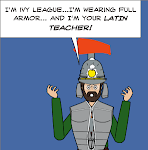
Riley and Ripple-The Roman Pillar Monster-Part 3
This is the exciting third installment in the series that's gaining more and more popularity on Pixton! (at least I hope it's gaining popularity...)
5 Heroes!
Hercules-The most popular of Greek heroes, Hercules was the essence of strength and manliness. Hercules was celebrated in stories, sculptures, paintings, and even the geography of the ancient world. This hero's life was non-stop action, from start to finish. 
Beowulf-Beowulf is from the most important work of Old English literature. Beowulf is a Scandinavian prince who rids the Danes of the monster Grendel (half man, half fiend) and Grendel's mother. Fifty years later he is a king of his native land and fights the dragon who is against his people. 
Knights Templar-The Knights Templar was a military religious order. It was also one of the three major orders of medieval Christian knights. This order was established after the First Crusade. The French gradn master Jacques de Molay confessed under torture, and the knights were all eventually burned at the stake.
Gilgamesh-Gilgamesh was a tyrannical Babylonian king who ruled the city of Uruk. His people disliked him and prayed to the gods about it. Enkidu was sent, and the two wrestled. There was no clear victor, so they became friends. He, advised by an elder, found the plant of eternal youth, but lost it to a serpent and later died. 
Jesus-Jesus was born of the Virgin Mary, and is the Son of God. He taught of God's love. Jesus was crucified for our sins, and rose from the grave. He now lives in heaven with God.
The Olympics-Ancient Vs. Modern-With 6 Major Differences

The Ancient Greek Olympics are very different from the modern-day Olympics, but they still have the same general idea. The winners still gain the fame and glory. There are also no monetary prizes, as in the Ancient Olympics. Some ancient events also remain (discus, javelin, etc.) The French Baron Pierre de Coubertin also wished to regain the ideals of the Ancient Olympics in the new modern-day Olympics.
6 Major Differences
1. Only a few hundred of Greek descent could participate in the Ancient Greek games
The Salt Lake City Olympics featured 2600 athletes from 77 countries.
2. Only men could participate in the Ancient Olympics. It was even part of their citizen's education.
Now, women can participate in the modern-day Olympics. The first women to compete were Marie Ohnier and Mme. Brohy (they participated in croquet games in the 1900 Olympics)
3. The Ancient Olympic Games were a religious event to honor the Greek god Zeus (king of the gods). A hundred oxen were also given as a sacrifice.
Frenchman Pierre Baron de Coubertin, who helped revive the Olympic Games, insisted that they feature the international competition of athletes
4. The Ancient Olympic events only had one winner, who received the olive branch crown. A statue of him was also erected in Olympia
Now there are 15 types of events with a bronze, silver, and gold medal. People now don't die to win.
5. The Ancient Greeks never thought of the Winter Olympics.
The Winter Olympics are a modern invention. The first Winter Olympics was held in Chamonix, France
6. The Ancient Olympic Games were always held in Olympia.
They are now held at different places each year, with Greece only being the site of the 1st modern Olympic Games.
6 Major Differences
1. Only a few hundred of Greek descent could participate in the Ancient Greek games
The Salt Lake City Olympics featured 2600 athletes from 77 countries.

2. Only men could participate in the Ancient Olympics. It was even part of their citizen's education.
Now, women can participate in the modern-day Olympics. The first women to compete were Marie Ohnier and Mme. Brohy (they participated in croquet games in the 1900 Olympics)
3. The Ancient Olympic Games were a religious event to honor the Greek god Zeus (king of the gods). A hundred oxen were also given as a sacrifice.
Frenchman Pierre Baron de Coubertin, who helped revive the Olympic Games, insisted that they feature the international competition of athletes

4. The Ancient Olympic events only had one winner, who received the olive branch crown. A statue of him was also erected in Olympia
Now there are 15 types of events with a bronze, silver, and gold medal. People now don't die to win.
5. The Ancient Greeks never thought of the Winter Olympics.
The Winter Olympics are a modern invention. The first Winter Olympics was held in Chamonix, France

6. The Ancient Olympic Games were always held in Olympia.
They are now held at different places each year, with Greece only being the site of the 1st modern Olympic Games.

Chapter 17-Test
Practice and Review-1-10
1. Yes, "quae nos semper alunt" is a relative clause
2. No relative clause
3. No relative clause
4. Yes, "quae mentes nostras semper regere" and "qua valere" are relative clauses
5. Yes, "quam difficile est" is a relative clause
6. No relative clause
7. Yes, "quae eum saepe neglegebat" is a relative clause
8. No relative clause
9. No relative clause
10. No relative clause
On the Pleasures of Love in Old Age
Is love in old age? Truly, the pleasure is less, but less also is the desire. However, we worry nothing, if we do not desire, and he who does not desire does not lack. Youth desire excessively; the old often have enough love and much wisdom. I think, therefore, this time of life is pleasant.
1. Yes, "quae nos semper alunt" is a relative clause
2. No relative clause
3. No relative clause
4. Yes, "quae mentes nostras semper regere" and "qua valere" are relative clauses
5. Yes, "quam difficile est" is a relative clause
6. No relative clause
7. Yes, "quae eum saepe neglegebat" is a relative clause
8. No relative clause
9. No relative clause
10. No relative clause
On the Pleasures of Love in Old Age
Is love in old age? Truly, the pleasure is less, but less also is the desire. However, we worry nothing, if we do not desire, and he who does not desire does not lack. Youth desire excessively; the old often have enough love and much wisdom. I think, therefore, this time of life is pleasant.
Thursday, April 2, 2009
Chapter 17-Sententiae Antiquae-3 Pixtons
These are numbers 3, 4, and 5.
They translate to:
3. Many citizens either don't see the dangers which are imminent or they neglect what they see.
4. He who gives quickly gives twice.
5. He who has begun, the deed had been made half. Begin!
They translate to:
3. Many citizens either don't see the dangers which are imminent or they neglect what they see.
4. He who gives quickly gives twice.
5. He who has begun, the deed had been made half. Begin!
Chapter 17-Sententiae Antiquae-Noun Cases
1. Amice-Genitive or Nominative
2. Filium-Accusative
3. Dionysis-Dative or Ablative
4. Graecia-Nominative, Vocative, or Ablative
5. Siciliam-Accusative
6. Tempestatem-Accusative
7. Cives-Nominative or Accusative
8. Pericula-Nominative or Ablative
9. Facti-Nominative or Genitive
10. Fortuna-Nominative or Ablative
11. Fortuna-Nominative or Ablative
12. Fortuna-Nominative or Ablative
13. Victoria-Nominative or Ablative
14. Simulatio-Nominative
15. Veritatem-Accusative
16. Nomen-Nominative or Accusative
17. Virtutem-Accusative
18. Viri-Nominative or Genitive
19. Corpore-Ablative
20. Turbam-Accusative
2. Filium-Accusative
3. Dionysis-Dative or Ablative
4. Graecia-Nominative, Vocative, or Ablative
5. Siciliam-Accusative
6. Tempestatem-Accusative
7. Cives-Nominative or Accusative
8. Pericula-Nominative or Ablative
9. Facti-Nominative or Genitive
10. Fortuna-Nominative or Ablative
11. Fortuna-Nominative or Ablative
12. Fortuna-Nominative or Ablative
13. Victoria-Nominative or Ablative
14. Simulatio-Nominative
15. Veritatem-Accusative
16. Nomen-Nominative or Accusative
17. Virtutem-Accusative
18. Viri-Nominative or Genitive
19. Corpore-Ablative
20. Turbam-Accusative
Chapter 17-Sententiae Antiquae-Parsing Verbs
• Salve-2nd person singular imperative
• Commisi-1st person singular perfect active indicative of "commitere" meaning "untie"
• Dixi-1st person singular perfect active indicative of "dicere" meaning "to talk"
• Navigabat-3rd person singular imperfect active indicative of "navigare" meaning "to navigate"
• Imminent-3rd person singular present active indicative of "imminere" meaning "to threaten"
• Vident-3rd person plural present active indicative of "videre" meaning to "to see"
• Vident-3rd person plural present active indicative of "videre" meaning to "to see"
• Neglegunt-3rd person plural present active indicative of "neglegere" meaning "to neglect"
• Dat-3rd person singular present active indicative of "dare" meaning "to give"
• Dat-3rd person singular present active indicative of "dare" meaning "to give"
• Coepit-3rd person singular perfect active indicative of "coeppesi" meaning "began"
• Habet-3rd person singular present active indicative of "habere" meaning "to have"
• Incipe-2nd person imperative of "incipere" meaning "to begin"
• Est-3rd person singular present active indicative of "esse" meaning "to be"
• Reposcit-3rd person singular present active indicative of "reposcere" meaning "to demand back"
• Dedit-3rd person singular perfect active indicative of "dare" meaning "to give"
• Facit-3rd person singular present active indicative of "facere" meaning "to make"
• Amat-3rd person singular present active indicative of "amare" meaning "to love"
• Est-3rd person singular present active indicative of "esse" meaning "to be"
• Facit-3rd person singular present active indicative of "facere" meaning "to make"
• Adiuvat-3rd person singular present active indicative of "adiuvare" meaning "to help"
• Vincit-3rd person singular present active indicative of "vincere" meaning "to conquer"
• Vincit-3rd person singular present active indicative of "vincere" meaning "to conquer"
• Delet-3rd person singular present active indicative of "delere" meaning "to destroy"
• Valere-infinitive meaning "to be strong"
• Potest-3rd person singular present active indicative of "posse" meaning "to be able to"
• Amavi-1st person singular perfect active indicative of "amare" meaning "to love"
• Periit-3rd person singular perfect active indicative of "perire" meaning "to die"
• Vita-2nd person singular imperative
• Vive-2nd person singular imperative
• Facere-infinitive meaning "to make"
• Possunt-3rd person plural present active indicative of "posse" meaning "to be able to"
• Admitte-2nd person singular imperative
• Potes-2nd person singular present active indicative of "posse" meaning "to be able to"
• Facere-infinitive meaning "to make"
• Commisi-1st person singular perfect active indicative of "commitere" meaning "untie"
• Dixi-1st person singular perfect active indicative of "dicere" meaning "to talk"
• Navigabat-3rd person singular imperfect active indicative of "navigare" meaning "to navigate"
• Imminent-3rd person singular present active indicative of "imminere" meaning "to threaten"
• Vident-3rd person plural present active indicative of "videre" meaning to "to see"
• Vident-3rd person plural present active indicative of "videre" meaning to "to see"
• Neglegunt-3rd person plural present active indicative of "neglegere" meaning "to neglect"
• Dat-3rd person singular present active indicative of "dare" meaning "to give"
• Dat-3rd person singular present active indicative of "dare" meaning "to give"
• Coepit-3rd person singular perfect active indicative of "coeppesi" meaning "began"
• Habet-3rd person singular present active indicative of "habere" meaning "to have"
• Incipe-2nd person imperative of "incipere" meaning "to begin"
• Est-3rd person singular present active indicative of "esse" meaning "to be"
• Reposcit-3rd person singular present active indicative of "reposcere" meaning "to demand back"
• Dedit-3rd person singular perfect active indicative of "dare" meaning "to give"
• Facit-3rd person singular present active indicative of "facere" meaning "to make"
• Amat-3rd person singular present active indicative of "amare" meaning "to love"
• Est-3rd person singular present active indicative of "esse" meaning "to be"
• Facit-3rd person singular present active indicative of "facere" meaning "to make"
• Adiuvat-3rd person singular present active indicative of "adiuvare" meaning "to help"
• Vincit-3rd person singular present active indicative of "vincere" meaning "to conquer"
• Vincit-3rd person singular present active indicative of "vincere" meaning "to conquer"
• Delet-3rd person singular present active indicative of "delere" meaning "to destroy"
• Valere-infinitive meaning "to be strong"
• Potest-3rd person singular present active indicative of "posse" meaning "to be able to"
• Amavi-1st person singular perfect active indicative of "amare" meaning "to love"
• Periit-3rd person singular perfect active indicative of "perire" meaning "to die"
• Vita-2nd person singular imperative
• Vive-2nd person singular imperative
• Facere-infinitive meaning "to make"
• Possunt-3rd person plural present active indicative of "posse" meaning "to be able to"
• Admitte-2nd person singular imperative
• Potes-2nd person singular present active indicative of "posse" meaning "to be able to"
• Facere-infinitive meaning "to make"
Tuesday, March 31, 2009
Latin Help-Parsing S.A. Chapter 17
• Salve-2nd person singular imperative
• Commisi-1st person singular perfect active indicative of "commitere" meaning "untie"
• Dixi-1st person singular perfect active indicative of "dicere" meaning "to talk"
• Navigabat-3rd person singular imperfect active indicative of "navigare" meaning "to navigate"
• Imminent-3rd person singular present active indicative of "imminere" meaning "to threaten"
• Vident-3rd person plural present active indicative of "videre" meaning to "to see"
• Vident-3rd person plural present active indicative of "videre" meaning to "to see"
• Neglegunt-3rd person plural present active indicative of "neglegere" meaning "to neglect"
• Dat-3rd person singular present active indicative of "dare" meaning "to give"
• Dat-3rd person singular present active indicative of "dare" meaning "to give"
• Coepit-3rd person singular perfect active indicative of "coeppesi" meaning "began"
• Habet-3rd person singular present active indicative of "habere" meaning "to have"
• Incipe-2nd person imperative of "incipere" meaning "to begin"
• Est-3rd person singular present active indicative of "esse" meaning "to be"
• Reposcit-3rd person singular present active indicative of "reposcere" meaning "to demand back"
• Dedit-3rd person singular perfect active indicative of "dare" meaning "to give"
• Facit-3rd person singular present active indicative of "facere" meaning "to make"
• Amat-3rd person singular present active indicative of "amare" meaning "to love"
• Est-3rd person singular present active indicative of "esse" meaning "to be"
• Facit-3rd person singular present active indicative of "facere" meaning "to make"
• Adiuvat-3rd person singular present active indicative of "adiuvare" meaning "to help"
• Vincit-3rd person singular present active indicative of "vincere" meaning "to conquer"
• Vincit-3rd person singular present active indicative of "vincere" meaning "to conquer"
• Delet-3rd person singular present active indicative of "delere" meaning "to destroy"
• Valere-infinitive meaning "to be strong"
• Potest-3rd person singular present active indicative of "posse" meaning "to be able to"
• Amavi-1st person singular perfect active indicative of "amare" meaning "to love"
• Periit-3rd person singular perfect active indicative of "perire" meaning "to die"
• Vita-2nd person singular imperative
• Vive-2nd person singular imperative
• Facere-infinitive meaning "to make"
• Possunt-3rd person plural present active indicative of "posse" meaning "to be able to"
• Admitte-2nd person singular imperative
• Potes-2nd person singular present active indicative of "posse" meaning "to be able to"
• Facere-infinitive meaning "to make"
• Commisi-1st person singular perfect active indicative of "commitere" meaning "untie"
• Dixi-1st person singular perfect active indicative of "dicere" meaning "to talk"
• Navigabat-3rd person singular imperfect active indicative of "navigare" meaning "to navigate"
• Imminent-3rd person singular present active indicative of "imminere" meaning "to threaten"
• Vident-3rd person plural present active indicative of "videre" meaning to "to see"
• Vident-3rd person plural present active indicative of "videre" meaning to "to see"
• Neglegunt-3rd person plural present active indicative of "neglegere" meaning "to neglect"
• Dat-3rd person singular present active indicative of "dare" meaning "to give"
• Dat-3rd person singular present active indicative of "dare" meaning "to give"
• Coepit-3rd person singular perfect active indicative of "coeppesi" meaning "began"
• Habet-3rd person singular present active indicative of "habere" meaning "to have"
• Incipe-2nd person imperative of "incipere" meaning "to begin"
• Est-3rd person singular present active indicative of "esse" meaning "to be"
• Reposcit-3rd person singular present active indicative of "reposcere" meaning "to demand back"
• Dedit-3rd person singular perfect active indicative of "dare" meaning "to give"
• Facit-3rd person singular present active indicative of "facere" meaning "to make"
• Amat-3rd person singular present active indicative of "amare" meaning "to love"
• Est-3rd person singular present active indicative of "esse" meaning "to be"
• Facit-3rd person singular present active indicative of "facere" meaning "to make"
• Adiuvat-3rd person singular present active indicative of "adiuvare" meaning "to help"
• Vincit-3rd person singular present active indicative of "vincere" meaning "to conquer"
• Vincit-3rd person singular present active indicative of "vincere" meaning "to conquer"
• Delet-3rd person singular present active indicative of "delere" meaning "to destroy"
• Valere-infinitive meaning "to be strong"
• Potest-3rd person singular present active indicative of "posse" meaning "to be able to"
• Amavi-1st person singular perfect active indicative of "amare" meaning "to love"
• Periit-3rd person singular perfect active indicative of "perire" meaning "to die"
• Vita-2nd person singular imperative
• Vive-2nd person singular imperative
• Facere-infinitive meaning "to make"
• Possunt-3rd person plural present active indicative of "posse" meaning "to be able to"
• Admitte-2nd person singular imperative
• Potes-2nd person singular present active indicative of "posse" meaning "to be able to"
• Facere-infinitive meaning "to make"
Subscribe to:
Posts (Atom)