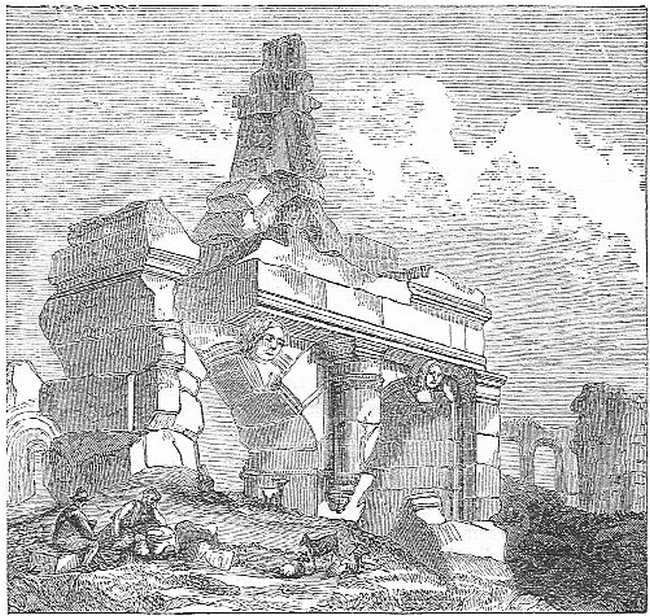
Ancient Gaul Ruins. Digital image. Tripadvisor.com. Trip Advisor. Web. 24 Mar. 2010. <http://media-cdn.tripadvisor.com/media/photo-s/01/60/b9/a3/the-ancient-roman-ruins.jpg>.
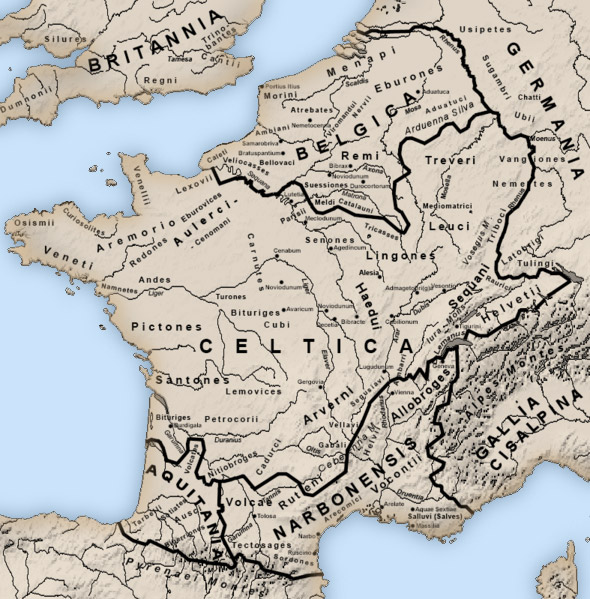
Gaul Map. Digital image. Humanities.mq.edu. Humanities. Web. 24 Mar. 2010. <http://www.humanities.mq.edu.au/acans/caesar/images-coins/Map-of-Roman-Gaul.jpg>.
Ruins in Gaul. Digital image. Gutenberg.com. Gutenberg Site. Web. 24 Mar. 2010. <http://www.gutenberg.org/files/19694/19694-h/images/022.jpg>.
Ruins of Gaul. Digital image. Travel.webshots.com. Webshots. Web. 24 Mar. 2010. <http://travel.webshots.com/photo/1136275551055159650oVNiSJ>.
Website of the Gods!!!
This is a blog of the gods, Ancient Rome, the Gallic Wars, translations, and other Latiny stuff!
Wednesday, March 24, 2010
Tuesday, March 23, 2010
Sallust's View on Human Nature-38 Latin CH 34
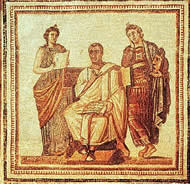
All men who wish to surpass the other creatures ought to strive for the greatest power, so that their life isn't passed through with silence like the rest of the cattle, which nature formed bent forward but with an obedient belly. But all of our strength is placed in spirit and flesh; souls enjoy power, souls enjoy service, our soul is common between us and the gods, and the body is common between us and the beasts. To me, virtue appears to seek glory with the help of powers and of natural talent, because life itself is enjoyed and short, seeming to bring about memories to be long lasting as possible. For glory and beauty and riches are changeable and also fragile; while virtue is clear and eternal strength.
But many mortals, addicted to the stomach and to sleep, have carried an ignorant and unsophisticated life, just like those who travel; To the, the body assuredly served as a source of pleasure against nature, the soul was a burden. But at last the soul seemed to live and enjoy of me, which comes to seek some business of intent on acts rather than good reputation
Monday, March 22, 2010
Danae-Who
Danae was the princess of Argos, in Peloponessos. She was a daughter of King Akrisios. When her father learns of a prophecy that he was to be killed by a son of his daughter, he locked her away, but Zeus, disguised as a golden shower, impregnated her. She had a son named Perseus. After hearing of this, the king locked them in a chest and cast them out at sea. Perseus did eventually fulfill the prophecy. Works Cited
"DANAE." Theoi Project. Theoi. Web. 22 Mar. 2010. <http://www.theoi.com/Heroine/Danae.html>.
Friday, March 19, 2010
Bats and Owls-Why?
The Minyades were the princesses of Orchomenus, under King Minyas. They scorned the worship of the god Dionysus, and refused to participate in his orgies. As punishment for this crime, the gods inflicted them with madness. This caused them to dismember one of their sons. The gods then transformed the three into bats and owls.
Works Cited
Bat. Photograph. Commons.wikimedia.com. Wikipedia. Web. 19 Mar. 2010. <http://commons.wikimedia.org/wiki/File:Bat_%28PSF%29.jpg>.
"Minyades." Theoi Project. Theoi. Web. 19 Mar. 2010. <http://www.theoi.com/Heroine/Minyades.html>.
Thursday, March 18, 2010
Decimation!-Special Post
Decimation was a form of military discipline used by officers in the army to punish mutinous or cowardly soldiers. The word "decimation" is derived from Latin meaning "removal of a tenth." In Latin, "decem" means "ten." Units were divided into groups of ten, and then lots were drawn to see who would die. The unlucky victim was then killed by stoning or clubbing by the remaining nine comrades. The remaining soldiers were given barley instead of wheat and had to sleep outside of the Roman encampments.
Works Cited
"Decimation (Roman Army)." Wikipedia. Wikipedia. Web. 18 Mar. 2010. <http://en.wikipedia.org/wiki/Decimation_%28Roman_army%29>.
Photograph. Silverclipboard.com. Silverclipboard. Web. 18 Mar. 2010. <http://silverclipboard.com/wp-content/uploads/2009/06/rome1.JPG>.
Wednesday, March 17, 2010
Aqua Virgo-Where?
The Aqua Virgo aqueduct was built by Agrippa in 19 BC. It supplied Rome with 100,000 cubic meters of water per day. It ran almost entirely underground, out of sight. It ended in the Baths of Agrippa in the Campus Martius. It was restored in the 18th century, and its waters feed the famous Trevi Fountain (1744).
Works Cited
"Aqua Virgo." Romereborn.com. University of Virginia. Web. 17 Mar. 2010. <http://www.romereborn.virginia.edu/ge/AQ-006.html>.
Tuesday, March 16, 2010
The Realm of Elysium-What
The Elysium Fields were the fields where the souls of heroes and virtuous men found rest. This included the islands of the Blessed and the Lethean fields of Hades. The first of these, also known as White Island, was reserved for the heroes of myth. The latter Elysium was a netherworld realm on the side of the river Lethe, in Hades. Its fields were promised to the initiates of the Mysteries who lived a virtuous life.
Works Cited
Atsma, Aaron J. "The Realm of Elysium." Theoi Project. Theoi. Web. 17 Mar. 2010. <http://www.theoi.com/Kosmos/Elysion.html>.
Goethe's Ankunft Im Elysium. Photograph. Commons.wikimedia.com. Wikipedia. Web. 17 Mar. 2010. <http://commons.wikimedia.org/wiki/File:Goethe_Elysium.jpg>.
Monday, March 15, 2010
King Midas-Who
King Midas was a wealthy king of Phyrgia, in Asia Minor. When an elderly companion of Dionysus was separated from his master, Midas showed great hospitality. Therefore, when Midas returned the old satyr to Dionysus, he was granted one wish. He wished for the golden touch, which quickly turned out to be more of a blessing than a curse. He could not even eat without his meal turning into gold. When Midas confronted Dionysus about this, he was told to travel to the river Paktolos, and bathe there. Midas obeyed, which rid him of the power, and imbued the river's sands with gold. Later, he was asked to judge a musical contest between Apollo and Pan. When he chose the pipe over the lyre, the lyre-god gave him donkey ears. Ashamed of this, Midas hid these ears under a Phyrgian cap, the traditional cap of the nobility.
Works Cited
Atsma, Aaron J. "MIDAS." Theoi Project. Theoi. Web. 15 Mar. 2010. <http://www.theoi.com/Heros/Midas.html>.
Photograph. Home.comcast.net. Comcast. Web. 15 Mar. 2010. <http://home.comcast.net/~bmill07/TurkeyTrip_files/image005.jpg>.
Photograph. Realmagick.com. RealMagick. Web. 15 Mar. 2010. <http://realmagick.com/articles/69/1169-1.jpg>.
Vocab Check-Chapters 23-33
1. dehinc-then
2. hic-here
3. credere-to believe
4. negare-to deny
5. nescire-to not know
6. patefacire-to make open
7. putare-to reckon
8. lex-law
9. limen-threshold
10. mensa-table
11. tristis-sad
12. turpis-ugly
13. quam-whoever
14. tantum-so much
15. nepos-descendant
16. quot-how great
17. utilis-useful
18. ponere-to put, place, or set
19. stella-star
20. ut-so that
21. cedere-to withdraw
22. dedicare-to dedicate
23. egere-to lack
24. tacere-to be silent
25. moenia-walls of a city
26. osculum-kiss
27. denique-finally
28. ita-so
29. quidem-someone
30. condere-to store
31. contendere-to contend
32. pugnare-to attack
33. respondere-to answer
34. surgire-to arise
35. repente-suddenly
36. unde-so that
37. bibere-to drink
38. cognoscere-to learn
39. comprehendere-to comprehend
40. exponere-to explain
41. rogare-to ask
42. vinum-wine
43. apud-among
44. semel-once
45. usque-all the way
46. dolere-to grieve
47. ferre-to carry
48. adferre-to bring to
49. conferre-to bring together
50. referre-to carry back
51. invidere-to look at with envy
52. occiddere-to die
53. custodia-custody
54. exercitus-army
55. dives-rich
56. dummodo-provided that
57. malle-to want
58. patere-to be evident
59. praebere-to excel
60. promittere-to send forth, promise
61. velle-to wish
62. initium-beginning
63. ops-aid
64. philosophus-philosopher
65. plebs-plebeians
Friday, March 12, 2010
Arachnids-Why
Arachne was an arrogant girl and a weaver in the Greek town of Colophon in Lydia. She dared to challenge the goddess Athena to a contest in weaving. Athena presented the gods seated on high thrones, while Arachne presented them disguised as animals chasing around mortal girls. This made Athena furious, so she beat Arachne with her shuttle. Arachne hung herself in despair, and Athena transformed her into a spider.Arachne -> Arachnid
Source: http://www.theoi.com/Heroine/Arakhne.html
Thursday, March 11, 2010
Iron Age-When
The Iron Age is the prehistoric period during which cutting tools and weapons were made mainly of iron or steel. This coincided with other changes in society, including agricultural practices, religious beliefs, and artistic styles. The Romans lived through the end of the Bronze Age and the Iron Age. The British Iron Age ended with the Roman Conquest.
Picture: http://scrapetv.com/News/News%20Pages/Science/images-2/iron-age-tools.jpg
Wednesday, March 10, 2010
Pons Aelius-Where
This bridge is the modern Ponte S. Angelo. It was also completed by Hadrian in AD 134. It linked his mausoleum with the Campus Martius across the Tiber River. Other names for the bridge included the Pons Hadriani and the Pons S. Petri. It included three main arches and three smaller arches.
Picture: http://upload.wikimedia.org/wikipedia/en/thumb/b/b1/Pons_Aelius_production2YD.jpg/500px-Pons_Aelius_production2YD.jpg
Tuesday, March 9, 2010
Caucon-What
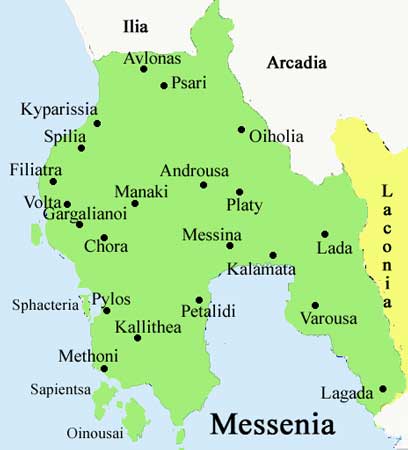
Caucon was a priest of the goddess Demeter, and established her Mysteries in the land of Messenia. Caucon was the Lord of the Cauconians, nestled between Elis, Arkadia, and Messenia. The three genealogies derived from a long running dispute over the sovereignty of the region. He was worshiped as a hero and his tomb was shown in Lepreos.
Site: http://www.theoi.com/Heros/Kaukon.html
Monday, March 8, 2010
Wheelock's Latin-Chapters 23-33 Vocab
http://docs.google.com/present/edit?id=0AY6tOzWDGMWVZGdwaHZrNjlfMmNkYmNwN2hr&hl=en
Callisto-Who
Callisto was the daughter of the Arkadian King Lykaon. She was also a hunting companion of the goddess Artemis. Callisto's name means "most beautiful." She was seduced by the god Zeus, and was later transformed into a bear. Callisto bore a son named Arkas. She was later hunted down as a beast and placed among the constellations as Ursa Major.
Picture: http://www.theoi.com/Heroine/Kallisto.html
Friday, March 5, 2010
The Character of Cimon-Parsed Verbs
Parsed Verbs-
Pervenit-3rd person singular present active indicative of "pervenire" meaning "to come to"
Habebat-3rd person singular imperfect active indicative of "habere" meaning "to have"
Fuerat-3rd person singular pluperfect active indicative of "esse" meaning "to be"
Tenuit-3rd person singular perfect active indicative of "tenere" meaning "to have"
Valuit-3rd person singular perfect active indicative of "valere" meaning "to be strong"
Occidisset-3rd person singular pluperfect active subjunctive of "occidere" meaning "to fall"
Doluerunt-3rd person plural perfect active indicative of "dolere" meaning "to hurt"
Desideraverunt-3rd person plural perfect active indicative of "desidere" meaning "to sit"
Fuit-3rd person singular perfect active indicative of "esse" meaning "to be"
Haberet-3rd person singular imperfect active subjunctive of "habere" meaning "to have"
Poneret-3rd person singular imperfect active subjunctive of "ponere" meaning "to put"
Patere-present active infinitive meaning "to stand open"
Voluit-3rd person singular perfect active indicative of "volvere" meaning "to roll"
Prohiberetur-3rd person singular imperfect passive subjunctive of "prohibere" meaning "to hinder"
Videret-3rd person singular imperfect active subjunctive of "videre" meaning "to see"
Dedit-3rd person singular present active indicative of "dedere" meaning "to give up"
Locupletavit-3rd person singular perfect active indicative of "locupletare" meaning "to enrich"
Iuvit-3rd person singular perfect active indicative of "iuvare" meaning "to help"
Extulit-3rd person singular perfect active indicative of "effero" meaning "to carry out"
Est-3rd person singular present active indicative of "esse" meaning "to be"
Fuit-3rd person singular perfect active indicative of "esse" meaning "to be"
Thursday, March 4, 2010
The Character of Cimon
Cimon quickly came to the highest honor. For he had enough eloquence, the highest courtesy, and a great knowledge of law and military matters, that with father and son in the army. Therefore, that witty man of the populous easily has your power and at the army he is strong with the greatest authority.
Wednesday, March 3, 2010
Chapter 32-SA-Parsed Verbs
Praebetur-3rd person singular present passive indicative of "praebere" meaning "to offer"
Amittitur-3rd person singular present passive indicative of "amittere" meaning "to lose"
Vivere-present active infinitive meaning "to live"
Potes-2nd person singular present active indicative of "posse" meaning "to be able to"
Remanere-present active infinitive meaning "to remain"
Feremus-1st person plural future active indicative of "ferre" meaning "to bring"
Vivere-present active infinitive meaning "to live"
Sit-3rd person singular present active subjunctive of "esse" meaning "to be"
Dixit-3rd person singular perfect active indicative of "dicere" meaning "to say"
Vellet-3rd person singular imperfect active subjunctive of "velle" meaning "to want"
Congregantur-3rd person plural present passive indicative of "congregare" meaning "to gather into a flock"
Amo-1st person singular present active indicative of "amare" meaning "to love"
Credunt-3rd person plural present active indicative of "credere" meaning "to trust"
Volunt-3rd person plural present active indicative of "velle" meaning "to want"
Aveniunt-3rd person plural present active indicative of "venire" meaning "to come" + enclitic
Volunt-3rd person plural present active indicative of "velle" meaning "to want"
Nolunt-3rd person plural present active indicative of "nolle" meaning "to not want"
Contendere-present active infinitive meaning "to stretch"
Vincere-present active infinitive meaning "to defeat"
Facere-present active infinitive meaning "to make"
Dicere-present active infinitive meaning "to say"
Vivunt-3rd person plural present active indicative of "vivere" meaning "to live"
Laudant-3rd person plural present active indicative of "laudare" meaning "to praise"
Movetur-3rd person singular present passive indicative of "movere" meaning "to move"
Scire-present active infinitive meaning "to know"
Sit-3rd person singular present active subjunctive of "esse" meaning "to be"
Ridet-3rd person singular present active indicative of "ridere" meaning "to laugh at"
Dant-3rd person plural present active indicative of "dare" meaning "to give"
Discere-present active infinitive meaning "to learn"
Velint-3rd person plural present active subjunctive of "velle" meaning "to want"
Flere-present active infinitive meaning "to cry"
Est-3rd person singular present active indicative of "esse" meaning "to be"
Tuesday, March 2, 2010
Chapter 32 SA 1-8
- He was offered the not easy situation, and besides the easy situation was suddenly lost.
- You are not able to live with us even now for a considerable time; you do not want to remain; we do not bring it.
- You wish to live right? Who doesn't?
- Many of you do not want what may happen.
- He told me what he truly wants.
- Pairs are easily gather into a flock with pairs.
- I love you more than my eyes.
- Men believe that it is willing because they wish it to be.
Monday, March 1, 2010
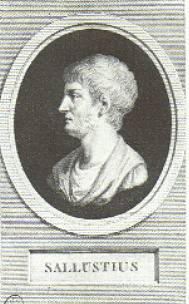
Sallust
Gauis Sallustius Crispus, AKA Sallust, was a Roman historian from a well-known plebeian family. He was born at Amiternum in the country of the Sabines. Throughout his career he always stood as a popularis, or opposer of Pompey's party and the old aristocracy of Rome. He won electron as Quaestor in 55, and tribune of the plebeians in 52. From the beginning of his Career, he was a partisan of Caesar. In 46 he served as praetor, and he accompanied Caesar on his African campaign. As reward for this, he was made governor for the province of Africa Nova.
Source: http://en.wikipedia.org/wiki/Sallust
Subscribe to:
Posts (Atom)