Works Cited
"Aqua Virgo." Romereborn.com. University of Virginia. Web. 17 Mar. 2010. <http://www.romereborn.virginia.edu/ge/AQ-006.html>.

 King Midas was a wealthy king of Phyrgia, in Asia Minor. When an elderly companion of Dionysus was separated from his master, Midas showed great hospitality. Therefore, when Midas returned the old satyr to Dionysus, he was granted one wish. He wished for the golden touch, which quickly turned out to be more of a blessing than a curse. He could not even eat without his meal turning into gold. When Midas confronted Dionysus about this, he was told to travel to the river Paktolos, and bathe there. Midas obeyed, which rid him of the power, and imbued the river's sands with gold.
 Arachne was an arrogant girl and a weaver in the Greek town of Colophon in Lydia. She dared to challenge the goddess Athena to a contest in weaving. Athena presented the gods seated on high thrones, while Arachne presented them disguised as animals chasing around mortal girls. This made Athena furious, so she beat Arachne with her shuttle. Arachne hung herself in despair, and Athena transformed her into a spider.


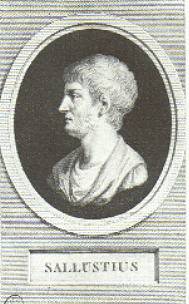

 Caesar suffered from epilepsy, and is recorded by Plutarch to have had a seizure right before battle. Caesar often tried to cover this weakness up, but strange fits of migraine, as well as loss of consciousness and seizure, were on record. It is said that his first epileptic attack occurred in Cordoba. Caesar used warfare as a tonic for his health, to make his body strong to fight the epilepsy.
 Caesar was a master of the art of war. He won many battles while risking little on the battlefield. The legions of Rome were forever stretched thin, and yet Caesar still avoided much head-to-head conflict. By using strategies such as sieges, Caesar minimized conflict and lose of Rome's time and resources. The Roman public appreciated the succinctness of Caesar's wars.