1. Pugio-dagger
2. Gladius-one handed short sword
3. Hasta-thrusting spear
4. Pilum-throwing spear
5. Arcus et Sagitta-bow and arrow
6. Loricas Segmentata-breastplate
7. Greave-metal sheet over forearms
8. Scutum-shield
9. Caliga-nail boots
10. Ballista-giant crossbow
11. Buccina-horn
12. Caltrop-tribulus
Tuesday, April 13, 2010

Monday, April 12, 2010
Gallic Wars-Paragraph 1
All of Gaul is divided into three parts, the first of which the Belgae inhabit, the second Aquitani, the third which in their language are called Celts, and in our language called Gauls. They differ from each other in language, institutions, and law.The river Garonne separates the Gauls from the Aquitani; the Marne and the Seine separate them from the Belgae. Of all these, the Belgae are the bravest, because they are furthest from the civilization and refinement of our Province, and merchants least frequently resort to them, and import those things which tend to effeminate the mind; and they are the nearest to the Germans, who dwell beyond the Rhine , with whom they are continually waging war; for which reason the Helvetii also surpass the rest of the Gauls in valor, as they contend with the Germans in almost daily battles, when they either repel them from their own territories, or themselves wage war on their frontiers. One part of these, which it has been said that the Gauls occupy, takes its beginning at the river Rhone ; it is bounded by the river Garonne, the ocean, and the territories of the Belgae; it borders, too, on the side of the Sequani and the Helvetii, upon the river Rhine , and stretches toward the north. The Belgae rises from the extreme frontier of Gaul, extend to the lower part of the river Rhine ; and look toward the north and the rising sun. Aquitania extends from the river Garonne to the Pyrenaean mountains and to that part of the ocean which is near Spain: it looks between the setting of the sun, and the north star.
Friday, April 9, 2010
Breaking the Enemy Battle Line (1)

"Roman Army Tactics." The Roman Empire. Web. 23 Mar. 2010. http://www.roman-empire.net/army/tactics.html.
Line. Digital image. Wikimedia Commons. Web. 8 Apr. 2010. http://upload.wikimedia.org/wikipedia/commons/b/b1/Line.PNGhttp://upload.wikimedia.org/wikipedia/commons/b/b1/Line.PNG.
Thursday, April 8, 2010
Even More Layout Before Battle

These are the last three instructions from Vegetius regarding the layout before battle of the Roman army.
5. Same as number 4, but the center is screened by light infantry or archers who can keep the enemy center distracted while the wings engage.
6. A variation of number two, whereby the center and wing are kept back while the right wing attempts a turning movement. If successful, the left wing, enforced with reserves, could advance and hop to complete the enveloping movement, which should compress the center.
7. This is the use of suitable ground for either flank to protect it. "Roman Army Tactics." The Roman Empire. Web. 23 Mar. 2010. http://www.roman-empire.net/army/tactics.html.
Seven, Eh? Digital image. Wikimedia Commons. Web. 6 Apr. 2010. http://upload.wikimedia.org/wikipedia/commons/c/c5/Seven.jpg.
Wednesday, April 7, 2010
More Layout Before Battle
These are the next two of Vegetius' seven instructions regarding layout before battle.
3. The same as number two, except that the left wing is made stronger and attempts a turning movement and is to be tried only when it is known that the enemy's right wing is weak.
 4. Both wings advance together, leaving the center behind. This may take the enemy by surprise and leave his center exposed and demoralized. If, however, the wings are held, then this is a hazardous movement, since the army is now split into three seperate formations and a skillful enemy could turn this to their advantage.
"Roman Army Tactics." The Roman Empire. Web. 23 Mar. 2010. http://www.roman-empire.net/army/tactics.html.
Wing. Digital image. Wikimedia Commons. Web. 6 Apr. 2010. http://upload.wikimedia.org/wikipedia/commons/2/22/Wing.jpg.
3. The same as number two, except that the left wing is made stronger and attempts a turning movement and is to be tried only when it is known that the enemy's right wing is weak.

"Roman Army Tactics." The Roman Empire. Web. 23 Mar. 2010. http://www.roman-empire.net/army/tactics.html.
Wing. Digital image. Wikimedia Commons. Web. 6 Apr. 2010. http://upload.wikimedia.org/wikipedia/commons/2/22/Wing.jpg.
Tuesday, April 6, 2010
Layout Before Battle

There are seven specific instructions by Vegetius regarding the layout before battle.
1. One level ground, the force in drawn up with a center, with two wings and reserves in the rear. The wings and the reserves must be strong enough to prevent an eveloping or outflanking maneuver.
2. An oblique battle line with the left wing held back in a defensive position while the right wing advances to turn the opponents left flank. Opposition to this move is to strengthen your left wing with cavalry and reserves, but if both sides are successful then the battle front would tend to move in a counterclockwise direction, the effect of which qould vary with the nature of the ground. The left wing should be stabalized the the right wing should have unimpeded movement.
"Roman Army Tactics." The Roman Empire. Web. 23 Mar. 2010. http://www.roman-empire.net/army/tactics.html.
Layout Before Battle. Digital image. Museum of London. Web. 6 Apr. 2010. http://www.museumoflondon.org.uk/learning/features_facts/digging/army/images/large_ermine_street_guard.jpg.
Monday, April 5, 2010
Even More Roman Formations

The orb is a defensive position in the shape of a circle taken by a unit in desperate straits. It provided for a reasonably effective defense, but needed a very high level of discipline by the individual soldiers.
"Roman Army Tactics." The Roman Empire. Web. 23 Mar. 2010. http://www.roman-empire.net/army/tactics.html.
Repel Cavalry! Digital image. Roman-Empire.net. Web. 2 Apr. 2010. http://www.roman-empire.net/army/repel-cavalry.html.
Friday, April 2, 2010
More Roman Formations
The saw was the opposite tactic to the wedge. It was a detached unit behind the front line capable of fast sideways movement down the length of the line to block any holes that might appear. During a Roman civil war, the saw formation would inevitably be the response to the wedge formation.

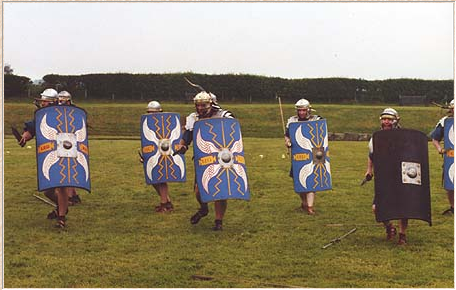
The skirmishing formation was a widely spaced line of troops, as opposed to the tighter packed battle ranks typical of Roman legionaries. Every second man in the line stepped forward a few paces, essentially doubling the amount of ranks. It allowed for greater mobility and found many uses in the tactical handbooks of Roman generals.
"Roman Army Tactics." The Roman Empire. Web. 23 Mar. 2010. http://www.roman-empire.net/army/tactics.html.
Skirmishing Formation. Digital image. Roman-Empire.net. Web. 1 Apr. 2010. http://www.roman-empire.net/army/skirmishing.html.
Thursday, April 1, 2010
Roman Formations
The tortoise (testudo) was a defensive formation when the legoinaries would hold their shields above their heads, except for the front row, thereby creating a shell to project from projectiles from the front or above. The legionaries were virtually invulnerable to arrows or objects dropped from the defensive walls.
 The wedge was commonly used by attacking legionaries. The legionaries formed a triangle, with one man at the front pointing towards the enemy. This allowed small groups to thrust into the enemy and expand, restricting the enemy's efforts. This made the Roman gladius great for use, but longer swords of the Germanic tribes were useless, as hand-to-hand combat was made difficult. This was a vital tactic of the Roman army.
"Roman Army Tactics." The Roman Empire. Web. 23 Mar. 2010. http://www.roman-empire.net/army/tactics.html.
Reenact Testudo. Digital image. Wikimedia Commons. Web. 10 Apr. 2010. http://en.wikipedia.org/wiki/File:Reenact_testudo.jpg.

"Roman Army Tactics." The Roman Empire. Web. 23 Mar. 2010. http://www.roman-empire.net/army/tactics.html.
Reenact Testudo. Digital image. Wikimedia Commons. Web. 10 Apr. 2010. http://en.wikipedia.org/wiki/File:Reenact_testudo.jpg.
Wednesday, March 31, 2010
Ranks of the Roman Legion

Senior officers:
1. Legatus legionus-overall legion commander
2. Dux-the leader
3. Tribunus laticlavius-Broad Band Tribune
4. Praefectus castrorum-the Camp Prefect
5. Tribuni angusticlavii-Narrow Band Tribune
Centurions:
1. Primus pilus-the senior centurion
2. Primi ordines-century commander of the first cohort
3. Primus prior-commander of each cohort's first century
4. The forward hastati-forward spears
5. The rear hastati-rear spears
6. The forward principes-the forward principle line
7. The rear principes-the rear principle line
8. The forward triarii-the forward third line
9. The rear triarii-the rear third line
"Roman Legion." Wikipedia, the Free Encyclopedia. Web. 23 Mar. 2010. http://en.wikipedia.org/wiki/Roman_legion.
Roman Legion On Attack. Digital image. Wikimedia Commons. Web. 23 Mar. 2010. http://commons.wikimedia.org/wiki/File:Roman_legion_at_attack.jpg.
Tuesday, March 30, 2010
Even More Roman Tactics

It was recommended that if your cavalry was weak, then it should be stiffened with light armed foot soldiers. Vegetius also stresses the need for adequate reserves to prevent an army from enveloping one's own or fending off cavalry from attacking the rear of the infantry. Alternatively, they could perform an eveloping manuever on the opponent. The positions taken by the commander was usually on the right wing.
"Roman Army Tactics." The Roman Empire. Web. 23 Mar. 2010. http://www.roman-empire.net/army/tactics.html.
Envelope. Digital image. Wikimedia Commons. Web. 23 Mar. 2010. http://upload.wikimedia.org/wikipedia/commons/7/7f/Envelope_-_Boonville_Address-000.jpg.
Monday, March 29, 2010

Friday, March 26, 2010
More Roman Tactics
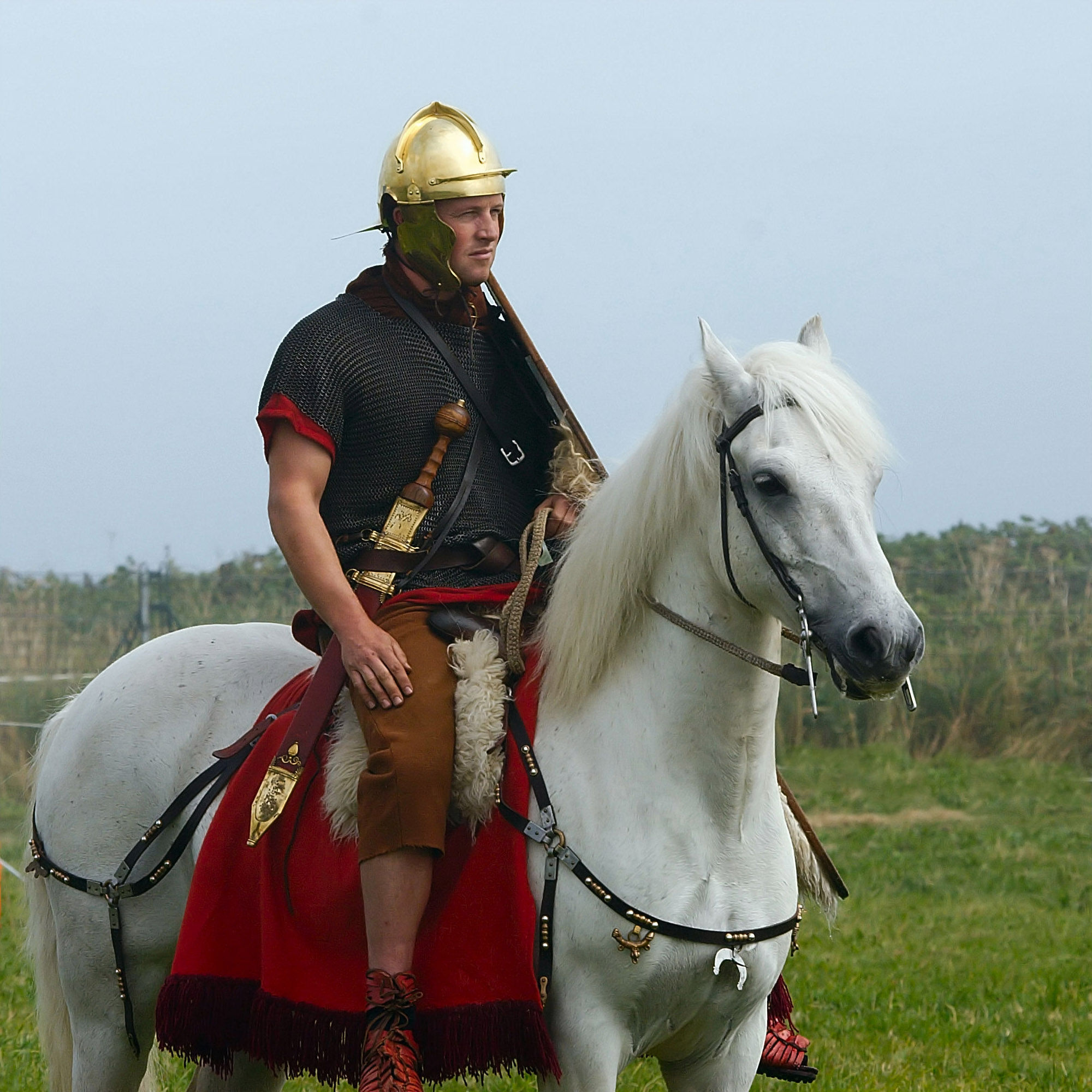
"Roman Army Tactics." The Roman Empire. Web. 23 Mar. 2010. http://www.roman-empire.net/army/tactics.html.
Roman Cavalry 2. Digital image. Wikimedia Commons. Web. 23 Mar. 2010. http://upload.wikimedia.org/wikipedia/commons/e/e2/Roman_Cavalry_2.jpg.
Thursday, March 25, 2010
Roman Tactics

Digital image. Wikimedia Commons. Web. 23 Mar. 2010. http://upload.wikimedia.org/wikipedia/commons/b/b3/Celestia_sun.jpg.
"Roman Army Tactics." The Roman Empire. Web. 23 Mar. 2010. http://www.roman-empire.net/army/tactics.html.
Wednesday, March 24, 2010
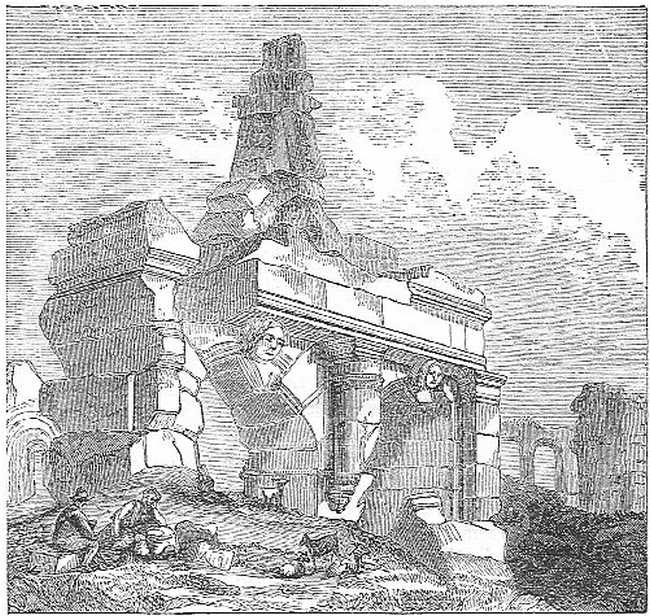
Ancient Ruins in Gaul


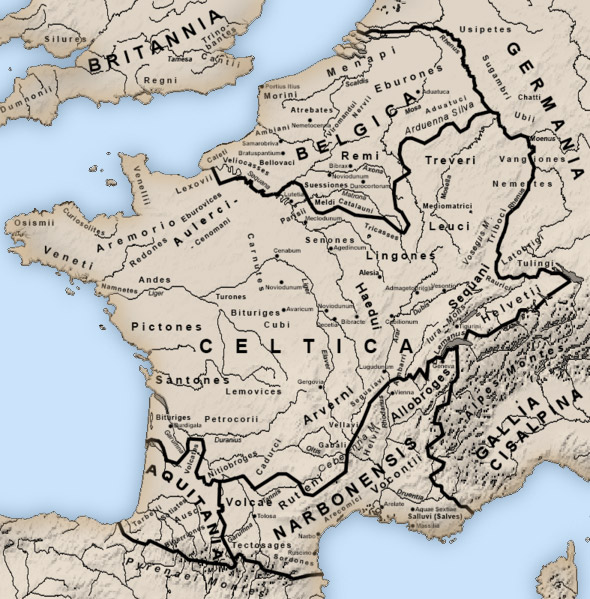
Gaul Map. Digital image. Humanities.mq.edu. Humanities. Web. 24 Mar. 2010. <http://www.humanities.mq.edu.au/acans/caesar/images-coins/Map-of-Roman-Gaul.jpg>.
Ruins in Gaul. Digital image. Gutenberg.com. Gutenberg Site. Web. 24 Mar. 2010. <http://www.gutenberg.org/files/19694/19694-h/images/022.jpg>.
Ruins of Gaul. Digital image. Travel.webshots.com. Webshots. Web. 24 Mar. 2010. <http://travel.webshots.com/photo/1136275551055159650oVNiSJ>.
Tuesday, March 23, 2010
Sallust's View on Human Nature-38 Latin CH 34
All men who wish to surpass the other creatures ought to strive for the greatest power, so that their life isn't passed through with silence like the rest of the cattle, which nature formed bent forward but with an obedient belly. But all of our strength is placed in spirit and flesh; souls enjoy power, souls enjoy service, our soul is common between us and the gods, and the body is common between us and the beasts. To me, virtue appears to seek glory with the help of powers and of natural talent, because life itself is enjoyed and short, seeming to bring about memories to be long lasting as possible. For glory and beauty and riches are changeable and also fragile; while virtue is clear and eternal strength.
But many mortals, addicted to the stomach and to sleep, have carried an ignorant and unsophisticated life, just like those who travel; To the, the body assuredly served as a source of pleasure against nature, the soul was a burden. But at last the soul seemed to live and enjoy of me, which comes to seek some business of intent on acts rather than good reputation
Monday, March 22, 2010
Danae-Who
 Danae was the princess of Argos, in Peloponessos. She was a daughter of King Akrisios. When her father learns of a prophecy that he was to be killed by a son of his daughter, he locked her away, but Zeus, disguised as a golden shower, impregnated her. She had a son named Perseus. After hearing of this, the king locked them in a chest and cast them out at sea. Perseus did eventually fulfill the prophecy.
 Works Cited
"DANAE." Theoi Project. Theoi. Web. 22 Mar. 2010. <http://www.theoi.com/Heroine/Danae.html>.
Friday, March 19, 2010
Bats and Owls-Why?

Works Cited
Bat. Photograph. Commons.wikimedia.com. Wikipedia. Web. 19 Mar. 2010. <http://commons.wikimedia.org/wiki/File:Bat_%28PSF%29.jpg>.
"Minyades." Theoi Project. Theoi. Web. 19 Mar. 2010. <http://www.theoi.com/Heroine/Minyades.html>.
Thursday, March 18, 2010
Decimation!-Special Post

Works Cited
"Decimation (Roman Army)." Wikipedia. Wikipedia. Web. 18 Mar. 2010. <http://en.wikipedia.org/wiki/Decimation_%28Roman_army%29>.
Photograph. Silverclipboard.com. Silverclipboard. Web. 18 Mar. 2010. <http://silverclipboard.com/wp-content/uploads/2009/06/rome1.JPG>.
Wednesday, March 17, 2010
Aqua Virgo-Where?

Works Cited
"Aqua Virgo." Romereborn.com. University of Virginia. Web. 17 Mar. 2010. <http://www.romereborn.virginia.edu/ge/AQ-006.html>.
Subscribe to:
Posts (Atom)