Website of the Gods!!!

This is a blog of the gods, Ancient Rome, the Gallic Wars, translations, and other Latiny stuff!

Tuesday, April 20, 2010

Vastatio!

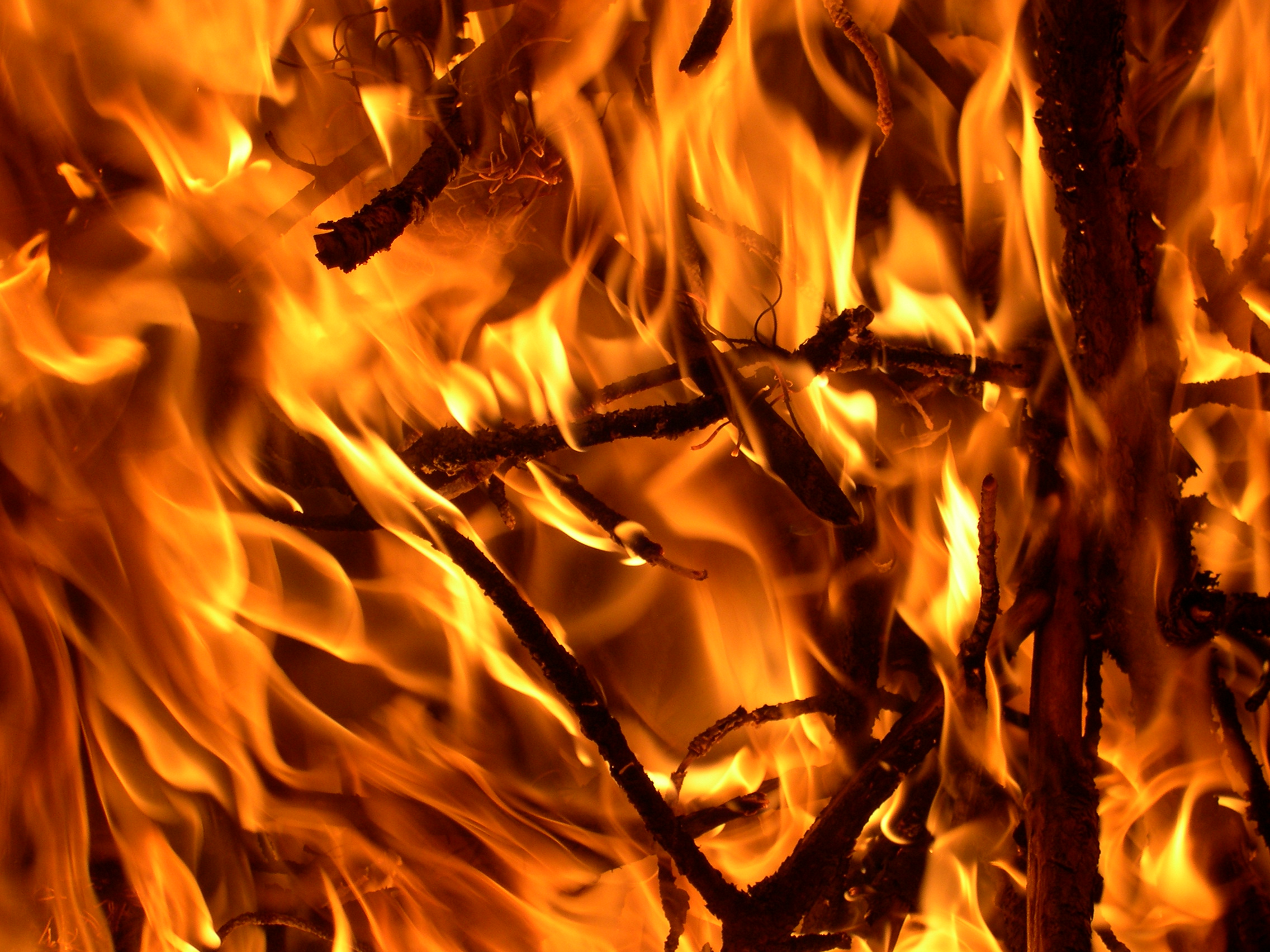
On a wider front, the Romans denied their enemies the means to keep sustained warfare. This was called vastatio. It was the systematic ravaging of an enemy territory. Crops were destroyed or stolen. Animals were slaughtered or taken. People were massacred or enslaved. The enemy's lands were demolished, denying his army any form of support. Sometimes these tactics were also used as a punitive method when barbarians crossed into Roman lands. This spread terror and acted as a deterrent. In the case of all-out war, the enemy was denied the means to survive a lengthy struggle.

"Roman Army Tactics." The Roman Empire. Web. 23 Mar. 2010. http://www.roman-empire.net/army/tactics.html.
FIRE. Digital image. Wikimedia Commons. Web. 20 Apr. 2010. http://upload.wikimedia.org/wikipedia/commons/2/2a/FIRE_01.JPG.

Monday, April 19, 2010

Withdrawal of the Army

The important section of Vegetius closes with the tactics to be used in the face of withdrawal from the enemy. This highly difficult task requires immense skill and judgement. Both your own men and those of the enemy need to be deceived. He suggests that the troops be informed that their retirement is to draw the enemy into a trap and the movement can be screened from the enemy with the use of cavalry across the front. Then the units are drawn off in a normal manner, but this can only happen if the troops have not yet been engaged. During a retreat, some units are detached and left behind to ambush the enemy if there is a hasty advance, and this way the tables can be turned.

"Roman Army Tactics." The Roman Empire. Web. 23 Mar. 2010. http://www.roman-empire.net/army/tactics.html.
Roman Army in Nashville. Digital image. Wikimedia Commons. Web. 16 Apr. 2010. http://upload.wikimedia.org/wikipedia/commons/8/81/Roman_army_in_nashville.jpg.

Friday, April 16, 2010

Odd Strategems

Vegetius was full of odd strategems to mislead the enemy or demoralize the enemy troops. Once the enemy cracked, they were not to be surrounded, but left an easy escape route. The reason for this is that trapped soldiers would fight to the death, but when left a possible escape route, they were exposed to the cavalry waiting on the flanks.

"Roman Army Tactics." The Roman Empire. Web. 23 Mar. 2010. http://www.roman-empire.net/army/tactics.html.
Cracked Surface 2. Digital image. Wikimedia Commons. Web. 16 Apr. 2010. http://upload.wikimedia.org/wikipedia/commons/a/ab/Cracked_Surface2.jpg.

Thursday, April 15, 2010

Breaking the Enemy Battle Line (2)

If a weakness was detected in the enemy line, it was exploited, using a stranger force to oppose it. It was necessary to disguise one's battle line, and even troops were disguised to fool to enemy. Often the very size of the army was skillfully hidden, giving a great advantage to the disguisers. The troops could be packed very tightly to seem small, or spread far apart to seem large. There were also examples of surprise tactics made by detaching a small unit, which later emerged from a hidden space to attack. They arrived with much dust and noise to make it seem like reinforcements had arrived.

"Roman Army Tactics." The Roman Empire. Web. 23 Mar. 2010. http://www.roman-empire.net/army/tactics.html.
Broken Line. Digital image. Wikimedia Commons. Web. 15 Apr. 2010. http://commons.wikimedia.org/wiki/File:Line_clipping.svg.

Wednesday, April 14, 2010

Gallic Wars-Paragraph 2


Among the Helvetii, Orgetorix was by far the most sophisticated and wealthy. When M. Messala and M. Pisone were consuls , he was driven by lust of sovereignty, he formed a conspiracy with the nobility, and told the people to go forth from their territories with all their possessions, that it would be very simple, since they excelled all in valor, to acquire the supremacy of the whole of Gaul. To this he the more easily persuaded them, because the Helvetii are confined on every side by the nature of their situation; on one side by the Rhine , a very wide and deep river, which separates the Helvetian territory from the Germans; on a second side by the Jura , a high mountain, which is between the Sequani River and the Helvetii; on a third by the Lake of Geneva, and by the river Rhone, which separates the province from the Helvetii. From these circumstances it resulted, that they could range less widely, and could less easily make war upon their neighbors; for which reason men fond of war were affected with great regret. They thought, that considering the extent of their population, and their renown for warfare and bravery, they had but narrow limits, although they extended in length 240, and in width 180 miles.

Tuesday, April 13, 2010

LATIN MILITARY JARGON

1. Pugio-dagger
2. Gladius-one handed short sword
3. Hasta-thrusting spear
4. Pilum-throwing spear
5. Arcus et Sagitta-bow and arrow
6. Loricas Segmentata-breastplate
7. Greave-metal sheet over forearms
8. Scutum-shield
9. Caliga-nail boots
10. Ballista-giant crossbow
11. Buccina-horn
12. Caltrop-tribulus

Monday, April 12, 2010

Gallic Wars-Paragraph 1


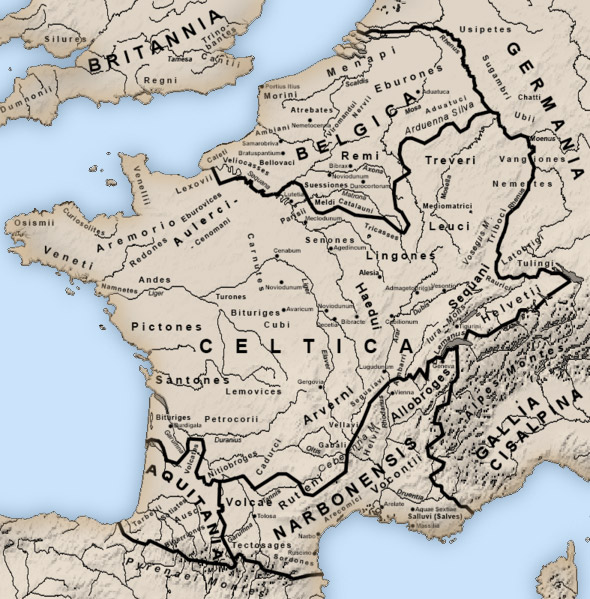
All of Gaul is divided into three parts, the first of which the Belgae inhabit, the second Aquitani, the third which in their language are called Celts, and in our language called Gauls. They differ from each other in language, institutions, and law.The river Garonne separates the Gauls from the Aquitani; the Marne and the Seine separate them from the Belgae. Of all these, the Belgae are the bravest, because they are furthest from the civilization and refinement of our Province, and merchants least frequently resort to them, and import those things which tend to effeminate the mind; and they are the nearest to the Germans, who dwell beyond the Rhine , with whom they are continually waging war; for which reason the Helvetii also surpass the rest of the Gauls in valor, as they contend with the Germans in almost daily battles, when they either repel them from their own territories, or themselves wage war on their frontiers. One part of these, which it has been said that the Gauls occupy, takes its beginning at the river Rhone ; it is bounded by the river Garonne, the ocean, and the territories of the Belgae; it borders, too, on the side of the Sequani and the Helvetii, upon the river Rhine , and stretches toward the north. The Belgae rises from the extreme frontier of Gaul, extend to the lower part of the river Rhine ; and look toward the north and the rising sun. Aquitania extends from the river Garonne to the Pyrenaean mountains and to that part of the ocean which is near Spain: it looks between the setting of the sun, and the north star.

Friday, April 9, 2010

Breaking the Enemy Battle Line (1)

All of Vegetius' battle tactics all have the same purpose, that of breaking the enemy battle line. If a flank can be turned, then the strong center has to fight on two fronts or is forced to fight in a restricted place. Once this advantage is gained, it is very difficult to right the situation. Even in the highly trained Roman army it would have been difficult to change tactics during the course of a battle and the only units which can be successfully deployed are those in the reserves or the part of the line not yet engaged. That makes the most important decision a general has to make the disposition of his troops.

"Roman Army Tactics." The Roman Empire. Web. 23 Mar. 2010. http://www.roman-empire.net/army/tactics.html.
Line. Digital image. Wikimedia Commons. Web. 8 Apr. 2010. http://upload.wikimedia.org/wikipedia/commons/b/b1/Line.PNGhttp://upload.wikimedia.org/wikipedia/commons/b/b1/Line.PNG.

Thursday, April 8, 2010

Even More Layout Before Battle

These are the last three instructions from Vegetius regarding the layout before battle of the Roman army.
5. Same as number 4, but the center is screened by light infantry or archers who can keep the enemy center distracted while the wings engage.
6. A variation of number two, whereby the center and wing are kept back while the right wing attempts a turning movement. If successful, the left wing, enforced with reserves, could advance and hop to complete the enveloping movement, which should compress the center.
7. This is the use of suitable ground for either flank to protect it.

"Roman Army Tactics." The Roman Empire. Web. 23 Mar. 2010. http://www.roman-empire.net/army/tactics.html.
Seven, Eh? Digital image. Wikimedia Commons. Web. 6 Apr. 2010. http://upload.wikimedia.org/wikipedia/commons/c/c5/Seven.jpg.

Wednesday, April 7, 2010

More Layout Before Battle

These are the next two of Vegetius' seven instructions regarding layout before battle.
3. The same as number two, except that the left wing is made stronger and attempts a turning movement and is to be tried only when it is known that the enemy's right wing is weak.
4. Both wings advance together, leaving the center behind. This may take the enemy by surprise and leave his center exposed and demoralized. If, however, the wings are held, then this is a hazardous movement, since the army is now split into three seperate formations and a skillful enemy could turn this to their advantage.

"Roman Army Tactics." The Roman Empire. Web. 23 Mar. 2010. http://www.roman-empire.net/army/tactics.html.
Wing. Digital image. Wikimedia Commons. Web. 6 Apr. 2010. http://upload.wikimedia.org/wikipedia/commons/2/22/Wing.jpg.

Tuesday, April 6, 2010

Layout Before Battle


There are seven specific instructions by Vegetius regarding the layout before battle.
1. One level ground, the force in drawn up with a center, with two wings and reserves in the rear. The wings and the reserves must be strong enough to prevent an eveloping or outflanking maneuver.
2. An oblique battle line with the left wing held back in a defensive position while the right wing advances to turn the opponents left flank. Opposition to this move is to strengthen your left wing with cavalry and reserves, but if both sides are successful then the battle front would tend to move in a counterclockwise direction, the effect of which qould vary with the nature of the ground. The left wing should be stabalized the the right wing should have unimpeded movement.

"Roman Army Tactics." The Roman Empire. Web. 23 Mar. 2010. http://www.roman-empire.net/army/tactics.html.
Layout Before Battle. Digital image. Museum of London. Web. 6 Apr. 2010. http://www.museumoflondon.org.uk/learning/features_facts/digging/army/images/large_ermine_street_guard.jpg.

Monday, April 5, 2010

Even More Roman Formations

The order to repel cavalry brought about this next formation. The first rank would form a firm wall with their shields, with only their pila protruding, forming a line of spearheads. A horse, no matter how well trained, could not be brought to break through such a barrier. The second rank would then use their spears to drive off any horses that came to a halt near them.
The orb is a defensive position in the shape of a circle taken by a unit in desperate straits. It provided for a reasonably effective defense, but needed a very high level of discipline by the individual soldiers.

"Roman Army Tactics." The Roman Empire. Web. 23 Mar. 2010. http://www.roman-empire.net/army/tactics.html.
Repel Cavalry! Digital image. Roman-Empire.net. Web. 2 Apr. 2010. http://www.roman-empire.net/army/repel-cavalry.html.

Friday, April 2, 2010

More Roman Formations

The saw was the opposite tactic to the wedge. It was a detached unit behind the front line capable of fast sideways movement down the length of the line to block any holes that might appear. During a Roman civil war, the saw formation would inevitably be the response to the wedge formation.
The skirmishing formation was a widely spaced line of troops, as opposed to the tighter packed battle ranks typical of Roman legionaries. Every second man in the line stepped forward a few paces, essentially doubling the amount of ranks. It allowed for greater mobility and found many uses in the tactical handbooks of Roman generals.

"Roman Army Tactics." The Roman Empire. Web. 23 Mar. 2010. http://www.roman-empire.net/army/tactics.html.
Skirmishing Formation. Digital image. Roman-Empire.net. Web. 1 Apr. 2010. http://www.roman-empire.net/army/skirmishing.html.

Thursday, April 1, 2010

Roman Formations

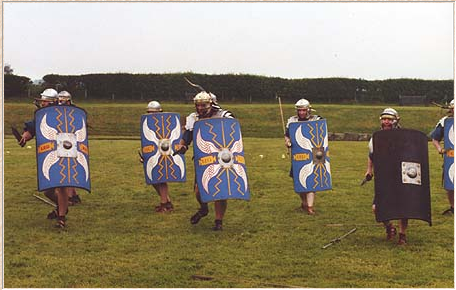
The tortoise (testudo) was a defensive formation when the legoinaries would hold their shields above their heads, except for the front row, thereby creating a shell to project from projectiles from the front or above. The legionaries were virtually invulnerable to arrows or objects dropped from the defensive walls.
The wedge was commonly used by attacking legionaries. The legionaries formed a triangle, with one man at the front pointing towards the enemy. This allowed small groups to thrust into the enemy and expand, restricting the enemy's efforts. This made the Roman gladius great for use, but longer swords of the Germanic tribes were useless, as hand-to-hand combat was made difficult. This was a vital tactic of the Roman army.

"Roman Army Tactics." The Roman Empire. Web. 23 Mar. 2010. http://www.roman-empire.net/army/tactics.html.
Reenact Testudo. Digital image. Wikimedia Commons. Web. 10 Apr. 2010. http://en.wikipedia.org/wiki/File:Reenact_testudo.jpg.

Wednesday, March 31, 2010

Ranks of the Roman Legion

Senior officers:
1. Legatus legionus-overall legion commander
2. Dux-the leader
3. Tribunus laticlavius-Broad Band Tribune
4. Praefectus castrorum-the Camp Prefect
5. Tribuni angusticlavii-Narrow Band Tribune

Centurions:
1. Primus pilus-the senior centurion
2. Primi ordines-century commander of the first cohort
3. Primus prior-commander of each cohort's first century
4. The forward hastati-forward spears
5. The rear hastati-rear spears
6. The forward principes-the forward principle line
7. The rear principes-the rear principle line
8. The forward triarii-the forward third line
9. The rear triarii-the rear third line

"Roman Legion." Wikipedia, the Free Encyclopedia. Web. 23 Mar. 2010. http://en.wikipedia.org/wiki/Roman_legion.
Roman Legion On Attack. Digital image. Wikimedia Commons. Web. 23 Mar. 2010. http://commons.wikimedia.org/wiki/File:Roman_legion_at_attack.jpg.

Tuesday, March 30, 2010

Even More Roman Tactics

It was recommended that if your cavalry was weak, then it should be stiffened with light armed foot soldiers. Vegetius also stresses the need for adequate reserves to prevent an army from enveloping one's own or fending off cavalry from attacking the rear of the infantry. Alternatively, they could perform an eveloping manuever on the opponent. The positions taken by the commander was usually on the right wing.

"Roman Army Tactics." The Roman Empire. Web. 23 Mar. 2010. http://www.roman-empire.net/army/tactics.html.
Envelope. Digital image. Wikimedia Commons. Web. 23 Mar. 2010. http://upload.wikimedia.org/wikipedia/commons/7/7f/Envelope_-_Boonville_Address-000.jpg.

Monday, March 29, 2010

Friday, March 26, 2010

More Roman Tactics

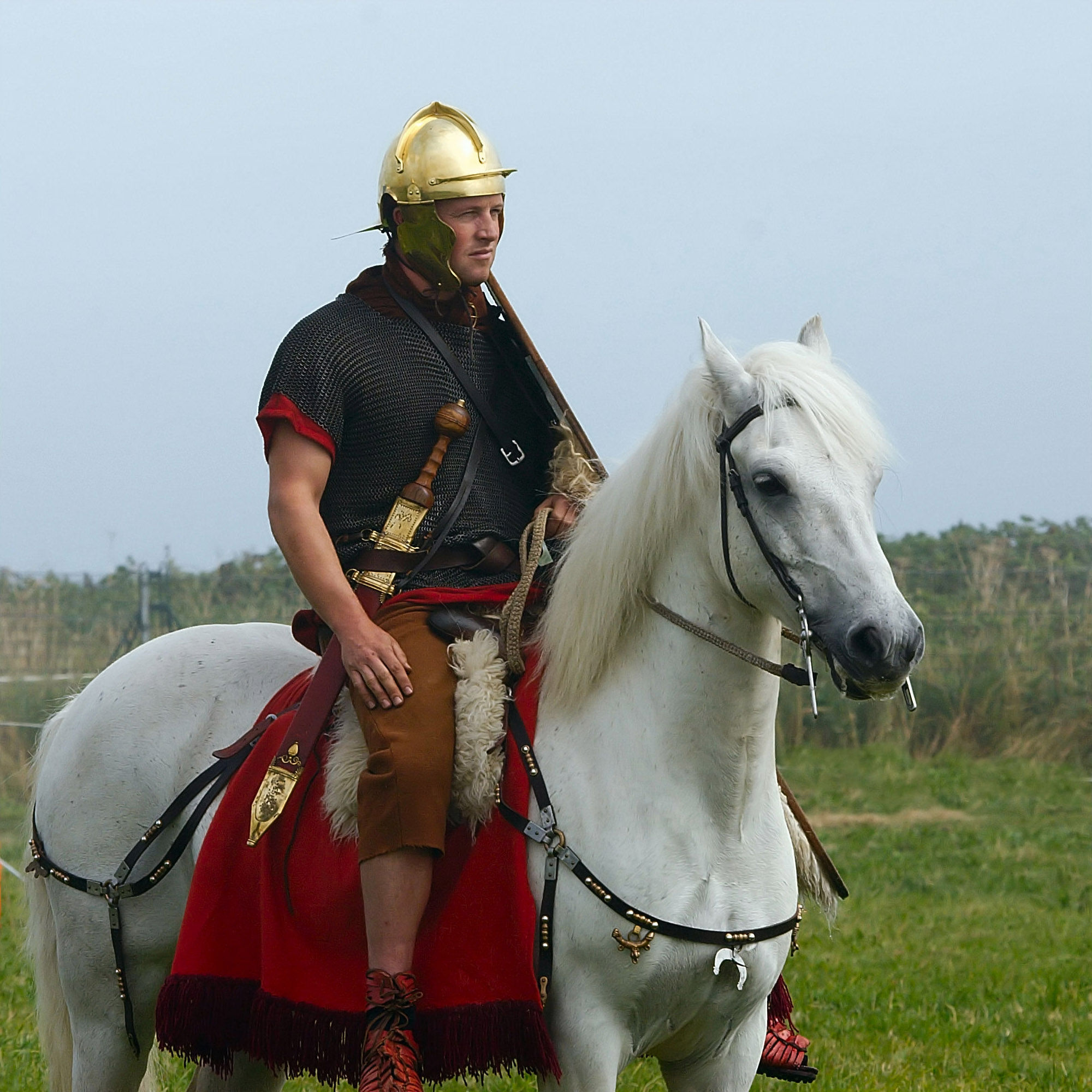
10,000 men can be placed in a rectangle 1,500 yards by twelve yards, and it was advised not to extend the line beyond that. The normal arrangement was the infantry in the center and the cavalry on the wings. Having the cavalry on the wings prevented the infantry from being outflanked, and once the battle turned and the enemy started to flee, the cavalry could finish up. Horsemen were always a secondary force in ancient warfare, as most of the fighting was done by the infantry.

"Roman Army Tactics." The Roman Empire. Web. 23 Mar. 2010. http://www.roman-empire.net/army/tactics.html.
Roman Cavalry 2. Digital image. Wikimedia Commons. Web. 23 Mar. 2010. http://upload.wikimedia.org/wikipedia/commons/e/e2/Roman_Cavalry_2.jpg.

Thursday, March 25, 2010

Roman Tactics

In the works of Vegetius, many Roman battle tactics are expressed. The importance of choice of ground is pointed out. Height is an advantage over the enemy. Rough ground is also better for pitting infantry against cavalry. The sun should be behind you to dazzle the enemy. The wind should also be blowing away from you, blowing your projectiles further and putting dust into the enemy's eyes. In the battle line, each man should have three feet of space, while there should be six feet between each rank.

Digital image. Wikimedia Commons. Web. 23 Mar. 2010. http://upload.wikimedia.org/wikipedia/commons/b/b3/Celestia_sun.jpg.
"Roman Army Tactics." The Roman Empire. Web. 23 Mar. 2010. http://www.roman-empire.net/army/tactics.html.

Wednesday, March 24, 2010

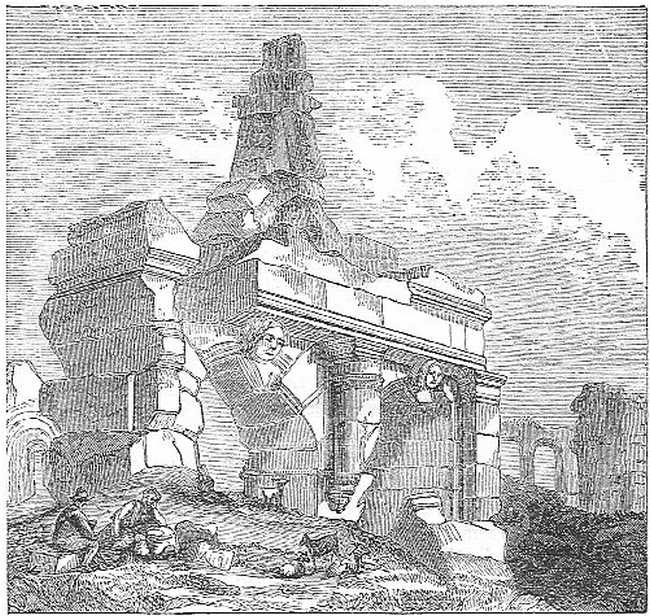
Ancient Ruins in Gaul

Ancient Gaul Ruins. Digital image. Tripadvisor.com. Trip Advisor. Web. 24 Mar. 2010. <http://media-cdn.tripadvisor.com/media/photo-s/01/60/b9/a3/the-ancient-roman-ruins.jpg>.
Gaul Map. Digital image. Humanities.mq.edu. Humanities. Web. 24 Mar. 2010. <http://www.humanities.mq.edu.au/acans/caesar/images-coins/Map-of-Roman-Gaul.jpg>.
Ruins in Gaul. Digital image. Gutenberg.com. Gutenberg Site. Web. 24 Mar. 2010. <http://www.gutenberg.org/files/19694/19694-h/images/022.jpg>.
Ruins of Gaul. Digital image. Travel.webshots.com. Webshots. Web. 24 Mar. 2010. <http://travel.webshots.com/photo/1136275551055159650oVNiSJ>.

Tuesday, March 23, 2010

Sallust's View on Human Nature-38 Latin CH 34


All men who wish to surpass the other creatures ought to strive for the greatest power, so that their life isn't passed through with silence like the rest of the cattle, which nature formed bent forward but with an obedient belly. But all of our strength is placed in spirit and flesh; souls enjoy power, souls enjoy service, our soul is common between us and the gods, and the body is common between us and the beasts. To me, virtue appears to seek glory with the help of powers and of natural talent, because life itself is enjoyed and short, seeming to bring about memories to be long lasting as possible. For glory and beauty and riches are changeable and also fragile; while virtue is clear and eternal strength.

But many mortals, addicted to the stomach and to sleep, have carried an ignorant and unsophisticated life, just like those who travel; To the, the body assuredly served as a source of pleasure against nature, the soul was a burden. But at last the soul seemed to live and enjoy of me, which comes to seek some business of intent on acts rather than good reputation

Monday, March 22, 2010

Danae-Who

Danae was the princess of Argos, in Peloponessos. She was a daughter of King Akrisios. When her father learns of a prophecy that he was to be killed by a son of his daughter, he locked her away, but Zeus, disguised as a golden shower, impregnated her. She had a son named Perseus. After hearing of this, the king locked them in a chest and cast them out at sea. Perseus did eventually fulfill the prophecy.

Works Cited
"DANAE." Theoi Project. Theoi. Web. 22 Mar. 2010. <http://www.theoi.com/Heroine/Danae.html>.

Friday, March 19, 2010

Bats and Owls-Why?

The Minyades were the princesses of Orchomenus, under King Minyas. They scorned the worship of the god Dionysus, and refused to participate in his orgies. As punishment for this crime, the gods inflicted them with madness. This caused them to dismember one of their sons. The gods then transformed the three into bats and owls.

Works Cited
Bat. Photograph. Commons.wikimedia.com. Wikipedia. Web. 19 Mar. 2010. <http://commons.wikimedia.org/wiki/File:Bat_%28PSF%29.jpg>.
"Minyades." Theoi Project. Theoi. Web. 19 Mar. 2010. <http://www.theoi.com/Heroine/Minyades.html>.

Thursday, March 18, 2010

Decimation!-Special Post

Decimation was a form of military discipline used by officers in the army to punish mutinous or cowardly soldiers. The word "decimation" is derived from Latin meaning "removal of a tenth." In Latin, "decem" means "ten." Units were divided into groups of ten, and then lots were drawn to see who would die. The unlucky victim was then killed by stoning or clubbing by the remaining nine comrades. The remaining soldiers were given barley instead of wheat and had to sleep outside of the Roman encampments.


Works Cited
"Decimation (Roman Army)." Wikipedia. Wikipedia. Web. 18 Mar. 2010. <http://en.wikipedia.org/wiki/Decimation_%28Roman_army%29>.
Photograph. Silverclipboard.com. Silverclipboard. Web. 18 Mar. 2010. <http://silverclipboard.com/wp-content/uploads/2009/06/rome1.JPG>.

Wednesday, March 17, 2010

Aqua Virgo-Where?

The Aqua Virgo aqueduct was built by Agrippa in 19 BC. It supplied Rome with 100,000 cubic meters of water per day. It ran almost entirely underground, out of sight. It ended in the Baths of Agrippa in the Campus Martius. It was restored in the 18th century, and its waters feed the famous Trevi Fountain (1744).


Works Cited
"Aqua Virgo." Romereborn.com. University of Virginia. Web. 17 Mar. 2010. <http://www.romereborn.virginia.edu/ge/AQ-006.html>.

Tuesday, March 16, 2010

The Realm of Elysium-What


The Elysium Fields were the fields where the souls of heroes and virtuous men found rest. This included the islands of the Blessed and the Lethean fields of Hades. The first of these, also known as White Island, was reserved for the heroes of myth. The latter Elysium was a netherworld realm on the side of the river Lethe, in Hades. Its fields were promised to the initiates of the Mysteries who lived a virtuous life. 
Works Cited

Atsma, Aaron J. "The Realm of Elysium." Theoi Project. Theoi. Web. 17 Mar. 2010. <http://www.theoi.com/Kosmos/Elysion.html>.

Goethe's Ankunft Im Elysium. Photograph. Commons.wikimedia.com. Wikipedia. Web. 17 Mar. 2010. <http://commons.wikimedia.org/wiki/File:Goethe_Elysium.jpg>.


Monday, March 15, 2010

King Midas-Who

King Midas was a wealthy king of Phyrgia, in Asia Minor. When an elderly companion of Dionysus was separated from his master, Midas showed great hospitality. Therefore, when Midas returned the old satyr to Dionysus, he was granted one wish. He wished for the golden touch, which quickly turned out to be more of a blessing than a curse. He could not even eat without his meal turning into gold. When Midas confronted Dionysus about this, he was told to travel to the river Paktolos, and bathe there. Midas obeyed, which rid him of the power, and imbued the river's sands with gold.
Later, he was asked to judge a musical contest between Apollo and Pan. When he chose the pipe over the lyre, the lyre-god gave him donkey ears. Ashamed of this, Midas hid these ears under a Phyrgian cap, the traditional cap of the nobility.


Works Cited
Atsma, Aaron J. "MIDAS." Theoi Project. Theoi. Web. 15 Mar. 2010. <http://www.theoi.com/Heros/Midas.html>.
Photograph. Home.comcast.net. Comcast. Web. 15 Mar. 2010. <http://home.comcast.net/~bmill07/TurkeyTrip_files/image005.jpg>.
Photograph. Realmagick.com. RealMagick. Web. 15 Mar. 2010. <http://realmagick.com/articles/69/1169-1.jpg>.

Vocab Check-Chapters 23-33

1. dehinc-then
2. hic-here
3. credere-to believe
4. negare-to deny
5. nescire-to not know
6. patefacire-to make open
7. putare-to reckon
8. lex-law
9. limen-threshold
10. mensa-table
11. tristis-sad
12. turpis-ugly
13. quam-whoever
14. tantum-so much
15. nepos-descendant
16. quot-how great
17. utilis-useful
18. ponere-to put, place, or set
19. stella-star
20. ut-so that
21. cedere-to withdraw
22. dedicare-to dedicate
23. egere-to lack
24. tacere-to be silent
25. moenia-walls of a city
26. osculum-kiss
27. denique-finally
28. ita-so
29. quidem-someone
30. condere-to store
31. contendere-to contend
32. pugnare-to attack
33. respondere-to answer
34. surgire-to arise
35. repente-suddenly
36. unde-so that
37. bibere-to drink
38. cognoscere-to learn
39. comprehendere-to comprehend
40. exponere-to explain
41. rogare-to ask
42. vinum-wine
43. apud-among
44. semel-once
45. usque-all the way
46. dolere-to grieve
47. ferre-to carry
48. adferre-to bring to
49. conferre-to bring together
50. referre-to carry back
51. invidere-to look at with envy
52. occiddere-to die
53. custodia-custody
54. exercitus-army
55. dives-rich
56. dummodo-provided that
57. malle-to want
58. patere-to be evident
59. praebere-to excel
60. promittere-to send forth, promise
61. velle-to wish
62. initium-beginning
63. ops-aid
64. philosophus-philosopher
65. plebs-plebeians

Friday, March 12, 2010

Arachnids-Why

Arachne was an arrogant girl and a weaver in the Greek town of Colophon in Lydia. She dared to challenge the goddess Athena to a contest in weaving. Athena presented the gods seated on high thrones, while Arachne presented them disguised as animals chasing around mortal girls. This made Athena furious, so she beat Arachne with her shuttle. Arachne hung herself in despair, and Athena transformed her into a spider.
Arachne -> Arachnid


Source: http://www.theoi.com/Heroine/Arakhne.html

Thursday, March 11, 2010

Iron Age-When

The Iron Age is the prehistoric period during which cutting tools and weapons were made mainly of iron or steel. This coincided with other changes in society, including agricultural practices, religious beliefs, and artistic styles. The Romans lived through the end of the Bronze Age and the Iron Age. The British Iron Age ended with the Roman Conquest.

Picture: http://scrapetv.com/News/News%20Pages/Science/images-2/iron-age-tools.jpg

Wednesday, March 10, 2010

Pons Aelius-Where

This bridge is the modern Ponte S. Angelo. It was also completed by Hadrian in AD 134. It linked his mausoleum with the Campus Martius across the Tiber River. Other names for the bridge included the Pons Hadriani and the Pons S. Petri. It included three main arches and three smaller arches. 

Picture: http://upload.wikimedia.org/wikipedia/en/thumb/b/b1/Pons_Aelius_production2YD.jpg/500px-Pons_Aelius_production2YD.jpg

Tuesday, March 9, 2010

Caucon-What

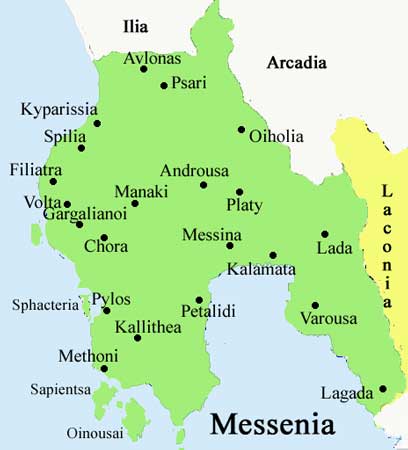
Caucon was a priest of the goddess Demeter, and established her Mysteries in the land of Messenia. Caucon was the Lord of the Cauconians, nestled between Elis, Arkadia, and Messenia. The three genealogies derived from a long running dispute over the sovereignty of the region. He was worshiped as a hero and his tomb was shown in Lepreos.


Site: http://www.theoi.com/Heros/Kaukon.html

Monday, March 8, 2010

Wheelock's Latin-Chapters 23-33 Vocab

http://docs.google.com/present/edit?id=0AY6tOzWDGMWVZGdwaHZrNjlfMmNkYmNwN2hr&hl=en

Callisto-Who

Callisto was the daughter of the Arkadian King Lykaon. She was also a hunting companion of the goddess Artemis. Callisto's name means "most beautiful." She was seduced by the god Zeus, and was later transformed into a bear. Callisto bore a son named Arkas. She was later hunted down as a beast and placed among the constellations as Ursa Major.

Picture: http://www.theoi.com/Heroine/Kallisto.html

Friday, March 5, 2010

The Character of Cimon-Parsed Verbs

Parsed Verbs-
Pervenit-3rd person singular present active indicative of "pervenire" meaning "to come to"
Habebat-3rd person singular imperfect active indicative of "habere" meaning "to have"
Fuerat-3rd person singular pluperfect active indicative of "esse" meaning "to be"
Tenuit-3rd person singular perfect active indicative of "tenere" meaning "to have"
Valuit-3rd person singular perfect active indicative of "valere" meaning "to be strong"
Occidisset-3rd person singular pluperfect active subjunctive of "occidere" meaning "to fall"
Doluerunt-3rd person plural perfect active indicative of "dolere" meaning "to hurt"
Desideraverunt-3rd person plural perfect active indicative of "desidere" meaning "to sit"
Fuit-3rd person singular perfect active indicative of "esse" meaning "to be"
Haberet-3rd person singular imperfect active subjunctive of "habere" meaning "to have"
Poneret-3rd person singular imperfect active subjunctive of "ponere" meaning "to put"
Patere-present active infinitive meaning "to stand open"
Voluit-3rd person singular perfect active indicative of "volvere" meaning "to roll"
Prohiberetur-3rd person singular imperfect passive subjunctive of "prohibere" meaning "to hinder"
Videret-3rd person singular imperfect active subjunctive of "videre" meaning "to see"
Dedit-3rd person singular present active indicative of "dedere" meaning "to give up"
Locupletavit-3rd person singular perfect active indicative of "locupletare" meaning "to enrich"
Iuvit-3rd person singular perfect active indicative of "iuvare" meaning "to help"
Extulit-3rd person singular perfect active indicative of "effero" meaning "to carry out"
Est-3rd person singular present active indicative of "esse" meaning "to be"
Fuit-3rd person singular perfect active indicative of "esse" meaning "to be"

Thursday, March 4, 2010

The Character of Cimon

Cimon quickly came to the highest honor. For he had enough eloquence, the highest courtesy, and a great knowledge of law and military matters, that with father and son in the army. Therefore, that witty man of the populous easily has your power and at the army he is strong with the greatest authority.

Wednesday, March 3, 2010

Chapter 32-SA-Parsed Verbs


Praebetur-3rd person singular present passive indicative of "praebere" meaning "to offer"
Amittitur-3rd person singular present passive indicative of "amittere" meaning "to lose"
Vivere-present active infinitive meaning "to live"
Potes-2nd person singular present active indicative of "posse" meaning "to be able to"
Remanere-present active infinitive meaning "to remain"
Feremus-1st person plural future active indicative of "ferre" meaning "to bring"
Vivere-present active infinitive meaning "to live"
Sit-3rd person singular present active subjunctive of "esse" meaning "to be"
Dixit-3rd person singular perfect active indicative of "dicere" meaning "to say"
Vellet-3rd person singular imperfect active subjunctive of "velle" meaning "to want"
Congregantur-3rd person plural present passive indicative of "congregare" meaning "to gather into a flock"
Amo-1st person singular present active indicative of "amare" meaning "to love"
Credunt-3rd person plural present active indicative of "credere" meaning "to trust"
Volunt-3rd person plural present active indicative of "velle" meaning "to want"
Aveniunt-3rd person plural present active indicative of "venire" meaning "to come" +  enclitic
Volunt-3rd person plural present active indicative of "velle" meaning "to want"
Nolunt-3rd person plural present active indicative of "nolle" meaning "to not want"
Contendere-present active infinitive meaning "to stretch"
Vincere-present active infinitive meaning "to defeat"
Facere-present active infinitive meaning "to make"
Dicere-present active infinitive meaning "to say"
Vivunt-3rd person plural present active indicative of "vivere" meaning "to live"
Laudant-3rd person plural present active indicative of "laudare" meaning "to praise"
Movetur-3rd person singular present passive indicative of "movere" meaning "to move"
Scire-present active infinitive meaning "to know"
Sit-3rd person singular present active subjunctive of "esse" meaning "to be"
Ridet-3rd person singular present active indicative of "ridere" meaning "to laugh at"
Dant-3rd person plural present active indicative of "dare" meaning "to give"
Discere-present active infinitive meaning "to learn"
Velint-3rd person plural present active subjunctive of "velle" meaning "to want"
Flere-present active infinitive meaning "to cry"
Est-3rd person singular present active indicative of "esse" meaning "to be"

Tuesday, March 2, 2010

Chapter 32 SA 1-8


  1. He was offered the not easy situation, and besides the easy situation was suddenly lost.
  2. You are not able to live with us even now for a considerable time; you do not want to remain; we do not bring it.
  3. You wish to live right? Who doesn't?
  4. Many of you do not want what may happen.
  5. He told me what he truly wants.
  6. Pairs are easily gather into a flock with pairs.
  7. I love you more than my eyes.
  8. Men believe that it is willing because they wish it to be.

Monday, March 1, 2010

Sallust

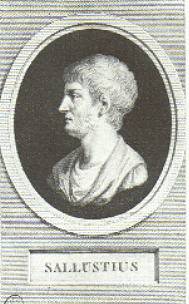
Gauis Sallustius Crispus, AKA Sallust, was a Roman historian from a well-known plebeian family. He was born at Amiternum in the country of the Sabines. Throughout his career he always stood as a popularis, or opposer of Pompey's party and the old aristocracy of Rome. He won electron as Quaestor in 55, and tribune of the plebeians in 52. From the beginning of his Career, he was a partisan of Caesar. In 46 he served as praetor, and he accompanied Caesar on his African campaign. As reward for this, he was made governor for the province of Africa Nova.

Source: http://en.wikipedia.org/wiki/Sallust

Friday, February 26, 2010

Marc Antony

Marc Antony was a Roman politician, general, and Caesar's right-hand man. He was his military commander and administrator. He was Caesar's second cousin, once removed. After Caesar's death, Marc Antony formed the Second Triumvirate with Octavian and Lepidus. The triumvirate broke in 33 BC, and caused the Final War of the Roman Republic in 31 BC. He was defeated by Octavian in the Battle of Actium and a brief battle near Alexandria. He and his lover Cleopatra committed suicide shortly afterward.

Source: http://en.wikipedia.org/wiki/Mark_Antony

Thursday, February 25, 2010

Caesar's Illness

Caesar suffered from epilepsy, and is recorded by Plutarch to have had a seizure right before battle. Caesar often tried to cover this weakness up, but strange fits of migraine, as well as loss of consciousness and seizure, were on record. It is said that his first epileptic attack occurred in Cordoba. Caesar used warfare as a tonic for his health, to make his body strong to fight the epilepsy.

Source: http://everything2.com/title/Julius+Caesar%2527s+illness

Wednesday, February 24, 2010

Caesar's Love Life

Caesar was an attractive man, and even as he went bald, he covered it up with his other hair and his crown of laurels. Caesar loved Cornelia, his wife, and wept when she died. She left behind Caesar's only and legitimate child. Caesar had many mistresses, though, including Cleopatra VII, who had Caesarion with him. Eventually, Caesarion was murdered by Caesar's adopted son, Octavian. Caesar's favorite mistress seemed to be the mother of his eventual assassin Marcus Brutus, Servilia. Caesar's second wife was Pompey's relative, Pompeia, and his third wife Calpurnia. Caesar remained married to Calpurnia till his death.

Source: http://www.royalty.nu/Europe/Rome/Caesar.html

Tuesday, February 23, 2010

Caesar's Tactics

Caesar was a master of the art of war. He won many battles while risking little on the battlefield. The legions of Rome were forever stretched thin, and yet Caesar still avoided much head-to-head conflict. By using strategies such as sieges, Caesar minimized conflict and lose of Rome's time and resources. The Roman public appreciated the succinctness of Caesar's wars.

Sources: http://www.wellplacedpottery.org/alec/literature/caesar.html

Monday, February 22, 2010

CH 29-38 Latin Stories

Parsed verbs-
facere-present active infinitive meaning "'to make"
possunt-3rd person plural present active indicative of "posse" meaning "to be able to"
puto-1st person singular present active indicative of "putare" meaning "to believe"
pugnat-3rd person singular present active indicative of "pugnare" meaning "to fight"
videtur-3rd person singular present passive indicative of "videre" to "to seem"
docere-present active infinitive meaning "to teach"
movere-present active infinitive meaning "to move"
videatur-3rd person singular present passive subjunctive of "videre" meaning "to seem"
dicit-3rd person singular present active indicative of "dicere" meaning "to say"
est-3rd person singular present active indicative of "esse" meaning "to be"

Friday, February 19, 2010

Minthe Vs. Mint-Why?

Spearmint is an herbaceous perennial with aromatic leaves. It was sacred to Demeter, Persephone, and Hades. Minthe was a nymph loved by the god Hades. When Minthe boasted that she was superior to his Queen Persephone, either Persephone or her mother Demeter transformed Minthe into the mint plant.

Picture:http://www.theoi.com/Flora2.html

Thursday, February 18, 2010

Parsing Check-part deux

Chapter 30 SA verbs
videtis-second person plural present active indicative of "videre" meaning "to see"
leges-second person singular present active subjunctive of "legere" meaning "to choose"
sit-3rd person singular present active subjunctive of "esse" meaning "to be"
dicam-1st person singular future active indicative of "dicere" meaning "to say"
rogabat-1st person singular imperfect active indicative of "rogare" meaning "to ask"
cessissent-3rd person plural imperfect active subjunctive of "cedere" meaning "to believe"
scio-1st person singular present active indicative of "scire" meaning "to know"
sit-3rd person singular present active subjunctive of "esse" meaning "to be"
videamus-1st person plural present active subjunctive of "videre" meaning "to see"
scribere-present active infinitive meaning "to write"
possit-3rd person singular present active subjunctive of "posse" meaning "to be able to"
dubitabant-3rd person plural imperfect active indicative of "dubitare" meaning "to doubt"
esset-3rd person singular imperfect active subjunctive of "esse" meaning "to be"
incipiam-1st person singular future active indicative of "incipere" meaning "to start"
exponere-present active infinitive meaning "to set forth"
creet-3rd person singular present active subjunctive of "creare" meaning "to create"
est-3rd person singular present active indicative of "esse" meaning "to be"
videre-present active infinitive meaning "to see"
careas-2nd person singular present active subjunctive of "carere" meaning "to desire"
relegi-1st person singular perfect active indicative of "relegere" meaning "to reread"
dicit-3rd person singular present active indicative of "dicere" meaning "to say"
sit-3rd person singular present active subjunctive of "esse" meaning "to be"
rogabis-2nd person singular future active indicative of "rogare" meaning "to ask"
agere-present active infinitive meaning "to lead"
possis-2nd person plural present active subjunctive of "posse" meaning "to be able to"
paret-3rd person singular present active subjunctive of "parare" meaning "to prepare"
habere-present active infinitive meaning "to have"
est-3rd person singular present active indicative of "esse" meaning "to be"
discedere-present active infinitive meaning "to march off"
sit-3rd person singular present active subjunctive of "esse" meaning "to be"
scire-present active infinitive meaning "to know"
credo-1st person singular present active indicative of "credere" meaning "to trust"

Wednesday, February 17, 2010

Parsing Check

ID and Parse all verbs CH 29 and 30 SA

CH 29
vincit-3rd person singular present active indicative of "vincere" meaning "to defeat"
cedamus-1st person plural present active subjunctive of "cedere" meaning "to believe"
condidi-1st person singular perfect active indicative of "condere" meaning "to put together"
vidi-1st person singular perfect active indicative of "videre" meaning "to seem"
explevi-1st person singular perfect active indicative of "explere" meaning "to fill out"
dederant-3rd person plural pluperfect active indicative of "dare" meaning "to give"
eras-2nd person singular imperfect active indicative of "esse" meaning "to be"
molliri-present passive infinitive of "mollire" meaning "to soften"
posses-2nd person singular imperfect active subjunctive of "posse" meaning "to be able"
est-3rd person singular present active indicative of "esse" meaning "to be"
molliri-present passive infinitive of "mollire" meaning "to soften"
possit-3rd person singular present active subjunctive of "posse" meaning "to be able to"
est-3rd person singular present active indicative of "esse" meaning "to be"
scribere-present active infinitive meaning "to write"
est-3rd person singular present active indicative of "esse" meaning "to be"
teneat-3rd person singular present active subjunctive of "tenere" meaning "to have"
fuit-3rd person singular perfect active indicative of "esse" meaning "to be"
reprimerent-3rd person plural imperfect active subjunctive of "reprimere" meaning "repress"
est-3rd person singular present active indicative of "esse" meaning "to be"
sit-3rd person singular present active subjunctive of "esse" meaning "to be"
vincant-3rd person plural present active subjunctive of "vincere" meaning "to defeat"
praestiterunt-3rd person plural perfect active indicative of "praestare" meaning "to excel"
superarent-3rd person plural imperfect active subjunctive of "superare" meaning "to be above"
perterruerunt-3rd person plural perfect active indicative of "perterrere" meaning "to frighten greatly"
refugerunt-3rd person plural perfect active indicative of "refugere" meaning "to run away"
petat-3rd person singular present active subjunctive of "petere" meaning "to attack"
dicuntur-3rd person plural present passive indicative of "dicere" meaning "to say"
superaret-3rd person singular imperfect active subjunctive of "superare" meaning "to be above"
sint-3rd person plural present active subjunctive of "esse" meaning "to be"
discant-3rd person plural present active subjunctive of "discere" meaning "to learn"
est-3rd person singular present active indicative of "esse"  meaning "to be"
possit-3rd person singular present active subjunctive of "posse" meaning "to be able to"
investigari-present passive infinitive meaning "to investigate"
suscipiatur-3rd person singular present passive subjunctive of "suscipere" meaning "to support"
esse-present active infinitive meaning "to be"
videatur-3rd person singular present passive subjunctive of "videre" meaning "to seem"
est-3rd person singular present active indicative of "esse" meaning "to be"
diligamus-1st person plural present active subjunctive of "diligere" meaning "to esteem"

CH 30
sit-3rd person singular present active subjunctive of "esse" meaning "to be"

Tuesday, February 16, 2010

Barley-What

Barley was an important grain crop to the ancient world, second only to wheat. It was sacred to Demeter, as when she was searching for Persephone (her daughter), she stopped at a farmer's cottage for a sweet barley drink. A boy named Askalabos mocked her for this, and in anger Demeter cast the drink upon him. This transformed him into a lizard, with spots from the flecks of barley.

Picture: http://www.hgca.com/images/upload/barley.jpg

Monday, February 15, 2010

Typhon-Who

Typhon was a monstrous immortal storm-giant. He was so tall his head was said to touch the stars. Typhon appeared human down to his waist, with two coiled vipers in place of his legs. Attached to his hands were serpents as fingers, fifty per hand. Typhon was winged, with a beard, pointy ears, and eyes flashing fire. He was defeated by Zeus and imprisoned in the pit of Tartaros.

Picture: http://www.theoi.com/Gallery/M10.1.html