Website of the Gods!!!

This is a blog of the gods, Ancient Rome, the Gallic Wars, translations, and other Latiny stuff!

Friday, March 19, 2010

Bats and Owls-Why?

The Minyades were the princesses of Orchomenus, under King Minyas. They scorned the worship of the god Dionysus, and refused to participate in his orgies. As punishment for this crime, the gods inflicted them with madness. This caused them to dismember one of their sons. The gods then transformed the three into bats and owls.

Works Cited
Bat. Photograph. Commons.wikimedia.com. Wikipedia. Web. 19 Mar. 2010. <http://commons.wikimedia.org/wiki/File:Bat_%28PSF%29.jpg>.
"Minyades." Theoi Project. Theoi. Web. 19 Mar. 2010. <http://www.theoi.com/Heroine/Minyades.html>.

Thursday, March 18, 2010

Decimation!-Special Post

Decimation was a form of military discipline used by officers in the army to punish mutinous or cowardly soldiers. The word "decimation" is derived from Latin meaning "removal of a tenth." In Latin, "decem" means "ten." Units were divided into groups of ten, and then lots were drawn to see who would die. The unlucky victim was then killed by stoning or clubbing by the remaining nine comrades. The remaining soldiers were given barley instead of wheat and had to sleep outside of the Roman encampments.


Works Cited
"Decimation (Roman Army)." Wikipedia. Wikipedia. Web. 18 Mar. 2010. <http://en.wikipedia.org/wiki/Decimation_%28Roman_army%29>.
Photograph. Silverclipboard.com. Silverclipboard. Web. 18 Mar. 2010. <http://silverclipboard.com/wp-content/uploads/2009/06/rome1.JPG>.

Wednesday, March 17, 2010

Aqua Virgo-Where?

The Aqua Virgo aqueduct was built by Agrippa in 19 BC. It supplied Rome with 100,000 cubic meters of water per day. It ran almost entirely underground, out of sight. It ended in the Baths of Agrippa in the Campus Martius. It was restored in the 18th century, and its waters feed the famous Trevi Fountain (1744).


Works Cited
"Aqua Virgo." Romereborn.com. University of Virginia. Web. 17 Mar. 2010. <http://www.romereborn.virginia.edu/ge/AQ-006.html>.

Tuesday, March 16, 2010

The Realm of Elysium-What


The Elysium Fields were the fields where the souls of heroes and virtuous men found rest. This included the islands of the Blessed and the Lethean fields of Hades. The first of these, also known as White Island, was reserved for the heroes of myth. The latter Elysium was a netherworld realm on the side of the river Lethe, in Hades. Its fields were promised to the initiates of the Mysteries who lived a virtuous life. 
Works Cited

Atsma, Aaron J. "The Realm of Elysium." Theoi Project. Theoi. Web. 17 Mar. 2010. <http://www.theoi.com/Kosmos/Elysion.html>.

Goethe's Ankunft Im Elysium. Photograph. Commons.wikimedia.com. Wikipedia. Web. 17 Mar. 2010. <http://commons.wikimedia.org/wiki/File:Goethe_Elysium.jpg>.


Monday, March 15, 2010

King Midas-Who

King Midas was a wealthy king of Phyrgia, in Asia Minor. When an elderly companion of Dionysus was separated from his master, Midas showed great hospitality. Therefore, when Midas returned the old satyr to Dionysus, he was granted one wish. He wished for the golden touch, which quickly turned out to be more of a blessing than a curse. He could not even eat without his meal turning into gold. When Midas confronted Dionysus about this, he was told to travel to the river Paktolos, and bathe there. Midas obeyed, which rid him of the power, and imbued the river's sands with gold.
Later, he was asked to judge a musical contest between Apollo and Pan. When he chose the pipe over the lyre, the lyre-god gave him donkey ears. Ashamed of this, Midas hid these ears under a Phyrgian cap, the traditional cap of the nobility.


Works Cited
Atsma, Aaron J. "MIDAS." Theoi Project. Theoi. Web. 15 Mar. 2010. <http://www.theoi.com/Heros/Midas.html>.
Photograph. Home.comcast.net. Comcast. Web. 15 Mar. 2010. <http://home.comcast.net/~bmill07/TurkeyTrip_files/image005.jpg>.
Photograph. Realmagick.com. RealMagick. Web. 15 Mar. 2010. <http://realmagick.com/articles/69/1169-1.jpg>.

Vocab Check-Chapters 23-33

1. dehinc-then
2. hic-here
3. credere-to believe
4. negare-to deny
5. nescire-to not know
6. patefacire-to make open
7. putare-to reckon
8. lex-law
9. limen-threshold
10. mensa-table
11. tristis-sad
12. turpis-ugly
13. quam-whoever
14. tantum-so much
15. nepos-descendant
16. quot-how great
17. utilis-useful
18. ponere-to put, place, or set
19. stella-star
20. ut-so that
21. cedere-to withdraw
22. dedicare-to dedicate
23. egere-to lack
24. tacere-to be silent
25. moenia-walls of a city
26. osculum-kiss
27. denique-finally
28. ita-so
29. quidem-someone
30. condere-to store
31. contendere-to contend
32. pugnare-to attack
33. respondere-to answer
34. surgire-to arise
35. repente-suddenly
36. unde-so that
37. bibere-to drink
38. cognoscere-to learn
39. comprehendere-to comprehend
40. exponere-to explain
41. rogare-to ask
42. vinum-wine
43. apud-among
44. semel-once
45. usque-all the way
46. dolere-to grieve
47. ferre-to carry
48. adferre-to bring to
49. conferre-to bring together
50. referre-to carry back
51. invidere-to look at with envy
52. occiddere-to die
53. custodia-custody
54. exercitus-army
55. dives-rich
56. dummodo-provided that
57. malle-to want
58. patere-to be evident
59. praebere-to excel
60. promittere-to send forth, promise
61. velle-to wish
62. initium-beginning
63. ops-aid
64. philosophus-philosopher
65. plebs-plebeians

Friday, March 12, 2010

Arachnids-Why

Arachne was an arrogant girl and a weaver in the Greek town of Colophon in Lydia. She dared to challenge the goddess Athena to a contest in weaving. Athena presented the gods seated on high thrones, while Arachne presented them disguised as animals chasing around mortal girls. This made Athena furious, so she beat Arachne with her shuttle. Arachne hung herself in despair, and Athena transformed her into a spider.
Arachne -> Arachnid


Source: http://www.theoi.com/Heroine/Arakhne.html

Thursday, March 11, 2010

Iron Age-When

The Iron Age is the prehistoric period during which cutting tools and weapons were made mainly of iron or steel. This coincided with other changes in society, including agricultural practices, religious beliefs, and artistic styles. The Romans lived through the end of the Bronze Age and the Iron Age. The British Iron Age ended with the Roman Conquest.

Picture: http://scrapetv.com/News/News%20Pages/Science/images-2/iron-age-tools.jpg

Wednesday, March 10, 2010

Pons Aelius-Where

This bridge is the modern Ponte S. Angelo. It was also completed by Hadrian in AD 134. It linked his mausoleum with the Campus Martius across the Tiber River. Other names for the bridge included the Pons Hadriani and the Pons S. Petri. It included three main arches and three smaller arches. 

Picture: http://upload.wikimedia.org/wikipedia/en/thumb/b/b1/Pons_Aelius_production2YD.jpg/500px-Pons_Aelius_production2YD.jpg

Tuesday, March 9, 2010

Caucon-What

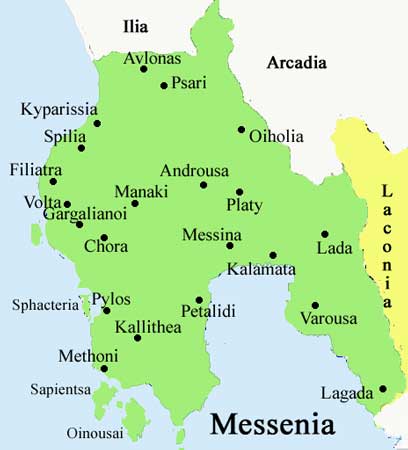
Caucon was a priest of the goddess Demeter, and established her Mysteries in the land of Messenia. Caucon was the Lord of the Cauconians, nestled between Elis, Arkadia, and Messenia. The three genealogies derived from a long running dispute over the sovereignty of the region. He was worshiped as a hero and his tomb was shown in Lepreos.


Site: http://www.theoi.com/Heros/Kaukon.html

Monday, March 8, 2010

Wheelock's Latin-Chapters 23-33 Vocab

http://docs.google.com/present/edit?id=0AY6tOzWDGMWVZGdwaHZrNjlfMmNkYmNwN2hr&hl=en

Callisto-Who

Callisto was the daughter of the Arkadian King Lykaon. She was also a hunting companion of the goddess Artemis. Callisto's name means "most beautiful." She was seduced by the god Zeus, and was later transformed into a bear. Callisto bore a son named Arkas. She was later hunted down as a beast and placed among the constellations as Ursa Major.

Picture: http://www.theoi.com/Heroine/Kallisto.html

Friday, March 5, 2010

The Character of Cimon-Parsed Verbs

Parsed Verbs-
Pervenit-3rd person singular present active indicative of "pervenire" meaning "to come to"
Habebat-3rd person singular imperfect active indicative of "habere" meaning "to have"
Fuerat-3rd person singular pluperfect active indicative of "esse" meaning "to be"
Tenuit-3rd person singular perfect active indicative of "tenere" meaning "to have"
Valuit-3rd person singular perfect active indicative of "valere" meaning "to be strong"
Occidisset-3rd person singular pluperfect active subjunctive of "occidere" meaning "to fall"
Doluerunt-3rd person plural perfect active indicative of "dolere" meaning "to hurt"
Desideraverunt-3rd person plural perfect active indicative of "desidere" meaning "to sit"
Fuit-3rd person singular perfect active indicative of "esse" meaning "to be"
Haberet-3rd person singular imperfect active subjunctive of "habere" meaning "to have"
Poneret-3rd person singular imperfect active subjunctive of "ponere" meaning "to put"
Patere-present active infinitive meaning "to stand open"
Voluit-3rd person singular perfect active indicative of "volvere" meaning "to roll"
Prohiberetur-3rd person singular imperfect passive subjunctive of "prohibere" meaning "to hinder"
Videret-3rd person singular imperfect active subjunctive of "videre" meaning "to see"
Dedit-3rd person singular present active indicative of "dedere" meaning "to give up"
Locupletavit-3rd person singular perfect active indicative of "locupletare" meaning "to enrich"
Iuvit-3rd person singular perfect active indicative of "iuvare" meaning "to help"
Extulit-3rd person singular perfect active indicative of "effero" meaning "to carry out"
Est-3rd person singular present active indicative of "esse" meaning "to be"
Fuit-3rd person singular perfect active indicative of "esse" meaning "to be"

Thursday, March 4, 2010

The Character of Cimon

Cimon quickly came to the highest honor. For he had enough eloquence, the highest courtesy, and a great knowledge of law and military matters, that with father and son in the army. Therefore, that witty man of the populous easily has your power and at the army he is strong with the greatest authority.

Wednesday, March 3, 2010

Chapter 32-SA-Parsed Verbs


Praebetur-3rd person singular present passive indicative of "praebere" meaning "to offer"
Amittitur-3rd person singular present passive indicative of "amittere" meaning "to lose"
Vivere-present active infinitive meaning "to live"
Potes-2nd person singular present active indicative of "posse" meaning "to be able to"
Remanere-present active infinitive meaning "to remain"
Feremus-1st person plural future active indicative of "ferre" meaning "to bring"
Vivere-present active infinitive meaning "to live"
Sit-3rd person singular present active subjunctive of "esse" meaning "to be"
Dixit-3rd person singular perfect active indicative of "dicere" meaning "to say"
Vellet-3rd person singular imperfect active subjunctive of "velle" meaning "to want"
Congregantur-3rd person plural present passive indicative of "congregare" meaning "to gather into a flock"
Amo-1st person singular present active indicative of "amare" meaning "to love"
Credunt-3rd person plural present active indicative of "credere" meaning "to trust"
Volunt-3rd person plural present active indicative of "velle" meaning "to want"
Aveniunt-3rd person plural present active indicative of "venire" meaning "to come" +  enclitic
Volunt-3rd person plural present active indicative of "velle" meaning "to want"
Nolunt-3rd person plural present active indicative of "nolle" meaning "to not want"
Contendere-present active infinitive meaning "to stretch"
Vincere-present active infinitive meaning "to defeat"
Facere-present active infinitive meaning "to make"
Dicere-present active infinitive meaning "to say"
Vivunt-3rd person plural present active indicative of "vivere" meaning "to live"
Laudant-3rd person plural present active indicative of "laudare" meaning "to praise"
Movetur-3rd person singular present passive indicative of "movere" meaning "to move"
Scire-present active infinitive meaning "to know"
Sit-3rd person singular present active subjunctive of "esse" meaning "to be"
Ridet-3rd person singular present active indicative of "ridere" meaning "to laugh at"
Dant-3rd person plural present active indicative of "dare" meaning "to give"
Discere-present active infinitive meaning "to learn"
Velint-3rd person plural present active subjunctive of "velle" meaning "to want"
Flere-present active infinitive meaning "to cry"
Est-3rd person singular present active indicative of "esse" meaning "to be"

Tuesday, March 2, 2010

Chapter 32 SA 1-8


  1. He was offered the not easy situation, and besides the easy situation was suddenly lost.
  2. You are not able to live with us even now for a considerable time; you do not want to remain; we do not bring it.
  3. You wish to live right? Who doesn't?
  4. Many of you do not want what may happen.
  5. He told me what he truly wants.
  6. Pairs are easily gather into a flock with pairs.
  7. I love you more than my eyes.
  8. Men believe that it is willing because they wish it to be.

Monday, March 1, 2010

Sallust

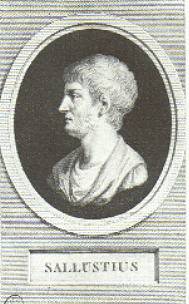
Gauis Sallustius Crispus, AKA Sallust, was a Roman historian from a well-known plebeian family. He was born at Amiternum in the country of the Sabines. Throughout his career he always stood as a popularis, or opposer of Pompey's party and the old aristocracy of Rome. He won electron as Quaestor in 55, and tribune of the plebeians in 52. From the beginning of his Career, he was a partisan of Caesar. In 46 he served as praetor, and he accompanied Caesar on his African campaign. As reward for this, he was made governor for the province of Africa Nova.

Source: http://en.wikipedia.org/wiki/Sallust

Friday, February 26, 2010

Marc Antony

Marc Antony was a Roman politician, general, and Caesar's right-hand man. He was his military commander and administrator. He was Caesar's second cousin, once removed. After Caesar's death, Marc Antony formed the Second Triumvirate with Octavian and Lepidus. The triumvirate broke in 33 BC, and caused the Final War of the Roman Republic in 31 BC. He was defeated by Octavian in the Battle of Actium and a brief battle near Alexandria. He and his lover Cleopatra committed suicide shortly afterward.

Source: http://en.wikipedia.org/wiki/Mark_Antony

Thursday, February 25, 2010

Caesar's Illness

Caesar suffered from epilepsy, and is recorded by Plutarch to have had a seizure right before battle. Caesar often tried to cover this weakness up, but strange fits of migraine, as well as loss of consciousness and seizure, were on record. It is said that his first epileptic attack occurred in Cordoba. Caesar used warfare as a tonic for his health, to make his body strong to fight the epilepsy.

Source: http://everything2.com/title/Julius+Caesar%2527s+illness

Wednesday, February 24, 2010

Caesar's Love Life

Caesar was an attractive man, and even as he went bald, he covered it up with his other hair and his crown of laurels. Caesar loved Cornelia, his wife, and wept when she died. She left behind Caesar's only and legitimate child. Caesar had many mistresses, though, including Cleopatra VII, who had Caesarion with him. Eventually, Caesarion was murdered by Caesar's adopted son, Octavian. Caesar's favorite mistress seemed to be the mother of his eventual assassin Marcus Brutus, Servilia. Caesar's second wife was Pompey's relative, Pompeia, and his third wife Calpurnia. Caesar remained married to Calpurnia till his death.

Source: http://www.royalty.nu/Europe/Rome/Caesar.html

Tuesday, February 23, 2010

Caesar's Tactics

Caesar was a master of the art of war. He won many battles while risking little on the battlefield. The legions of Rome were forever stretched thin, and yet Caesar still avoided much head-to-head conflict. By using strategies such as sieges, Caesar minimized conflict and lose of Rome's time and resources. The Roman public appreciated the succinctness of Caesar's wars.

Sources: http://www.wellplacedpottery.org/alec/literature/caesar.html

Monday, February 22, 2010

CH 29-38 Latin Stories

Parsed verbs-
facere-present active infinitive meaning "'to make"
possunt-3rd person plural present active indicative of "posse" meaning "to be able to"
puto-1st person singular present active indicative of "putare" meaning "to believe"
pugnat-3rd person singular present active indicative of "pugnare" meaning "to fight"
videtur-3rd person singular present passive indicative of "videre" to "to seem"
docere-present active infinitive meaning "to teach"
movere-present active infinitive meaning "to move"
videatur-3rd person singular present passive subjunctive of "videre" meaning "to seem"
dicit-3rd person singular present active indicative of "dicere" meaning "to say"
est-3rd person singular present active indicative of "esse" meaning "to be"

Friday, February 19, 2010

Minthe Vs. Mint-Why?

Spearmint is an herbaceous perennial with aromatic leaves. It was sacred to Demeter, Persephone, and Hades. Minthe was a nymph loved by the god Hades. When Minthe boasted that she was superior to his Queen Persephone, either Persephone or her mother Demeter transformed Minthe into the mint plant.

Picture:http://www.theoi.com/Flora2.html

Thursday, February 18, 2010

Parsing Check-part deux

Chapter 30 SA verbs
videtis-second person plural present active indicative of "videre" meaning "to see"
leges-second person singular present active subjunctive of "legere" meaning "to choose"
sit-3rd person singular present active subjunctive of "esse" meaning "to be"
dicam-1st person singular future active indicative of "dicere" meaning "to say"
rogabat-1st person singular imperfect active indicative of "rogare" meaning "to ask"
cessissent-3rd person plural imperfect active subjunctive of "cedere" meaning "to believe"
scio-1st person singular present active indicative of "scire" meaning "to know"
sit-3rd person singular present active subjunctive of "esse" meaning "to be"
videamus-1st person plural present active subjunctive of "videre" meaning "to see"
scribere-present active infinitive meaning "to write"
possit-3rd person singular present active subjunctive of "posse" meaning "to be able to"
dubitabant-3rd person plural imperfect active indicative of "dubitare" meaning "to doubt"
esset-3rd person singular imperfect active subjunctive of "esse" meaning "to be"
incipiam-1st person singular future active indicative of "incipere" meaning "to start"
exponere-present active infinitive meaning "to set forth"
creet-3rd person singular present active subjunctive of "creare" meaning "to create"
est-3rd person singular present active indicative of "esse" meaning "to be"
videre-present active infinitive meaning "to see"
careas-2nd person singular present active subjunctive of "carere" meaning "to desire"
relegi-1st person singular perfect active indicative of "relegere" meaning "to reread"
dicit-3rd person singular present active indicative of "dicere" meaning "to say"
sit-3rd person singular present active subjunctive of "esse" meaning "to be"
rogabis-2nd person singular future active indicative of "rogare" meaning "to ask"
agere-present active infinitive meaning "to lead"
possis-2nd person plural present active subjunctive of "posse" meaning "to be able to"
paret-3rd person singular present active subjunctive of "parare" meaning "to prepare"
habere-present active infinitive meaning "to have"
est-3rd person singular present active indicative of "esse" meaning "to be"
discedere-present active infinitive meaning "to march off"
sit-3rd person singular present active subjunctive of "esse" meaning "to be"
scire-present active infinitive meaning "to know"
credo-1st person singular present active indicative of "credere" meaning "to trust"

Wednesday, February 17, 2010

Parsing Check

ID and Parse all verbs CH 29 and 30 SA

CH 29
vincit-3rd person singular present active indicative of "vincere" meaning "to defeat"
cedamus-1st person plural present active subjunctive of "cedere" meaning "to believe"
condidi-1st person singular perfect active indicative of "condere" meaning "to put together"
vidi-1st person singular perfect active indicative of "videre" meaning "to seem"
explevi-1st person singular perfect active indicative of "explere" meaning "to fill out"
dederant-3rd person plural pluperfect active indicative of "dare" meaning "to give"
eras-2nd person singular imperfect active indicative of "esse" meaning "to be"
molliri-present passive infinitive of "mollire" meaning "to soften"
posses-2nd person singular imperfect active subjunctive of "posse" meaning "to be able"
est-3rd person singular present active indicative of "esse" meaning "to be"
molliri-present passive infinitive of "mollire" meaning "to soften"
possit-3rd person singular present active subjunctive of "posse" meaning "to be able to"
est-3rd person singular present active indicative of "esse" meaning "to be"
scribere-present active infinitive meaning "to write"
est-3rd person singular present active indicative of "esse" meaning "to be"
teneat-3rd person singular present active subjunctive of "tenere" meaning "to have"
fuit-3rd person singular perfect active indicative of "esse" meaning "to be"
reprimerent-3rd person plural imperfect active subjunctive of "reprimere" meaning "repress"
est-3rd person singular present active indicative of "esse" meaning "to be"
sit-3rd person singular present active subjunctive of "esse" meaning "to be"
vincant-3rd person plural present active subjunctive of "vincere" meaning "to defeat"
praestiterunt-3rd person plural perfect active indicative of "praestare" meaning "to excel"
superarent-3rd person plural imperfect active subjunctive of "superare" meaning "to be above"
perterruerunt-3rd person plural perfect active indicative of "perterrere" meaning "to frighten greatly"
refugerunt-3rd person plural perfect active indicative of "refugere" meaning "to run away"
petat-3rd person singular present active subjunctive of "petere" meaning "to attack"
dicuntur-3rd person plural present passive indicative of "dicere" meaning "to say"
superaret-3rd person singular imperfect active subjunctive of "superare" meaning "to be above"
sint-3rd person plural present active subjunctive of "esse" meaning "to be"
discant-3rd person plural present active subjunctive of "discere" meaning "to learn"
est-3rd person singular present active indicative of "esse"  meaning "to be"
possit-3rd person singular present active subjunctive of "posse" meaning "to be able to"
investigari-present passive infinitive meaning "to investigate"
suscipiatur-3rd person singular present passive subjunctive of "suscipere" meaning "to support"
esse-present active infinitive meaning "to be"
videatur-3rd person singular present passive subjunctive of "videre" meaning "to seem"
est-3rd person singular present active indicative of "esse" meaning "to be"
diligamus-1st person plural present active subjunctive of "diligere" meaning "to esteem"

CH 30
sit-3rd person singular present active subjunctive of "esse" meaning "to be"

Tuesday, February 16, 2010

Barley-What

Barley was an important grain crop to the ancient world, second only to wheat. It was sacred to Demeter, as when she was searching for Persephone (her daughter), she stopped at a farmer's cottage for a sweet barley drink. A boy named Askalabos mocked her for this, and in anger Demeter cast the drink upon him. This transformed him into a lizard, with spots from the flecks of barley.

Picture: http://www.hgca.com/images/upload/barley.jpg

Monday, February 15, 2010

Typhon-Who

Typhon was a monstrous immortal storm-giant. He was so tall his head was said to touch the stars. Typhon appeared human down to his waist, with two coiled vipers in place of his legs. Attached to his hands were serpents as fingers, fifty per hand. Typhon was winged, with a beard, pointy ears, and eyes flashing fire. He was defeated by Zeus and imprisoned in the pit of Tartaros.

Picture: http://www.theoi.com/Gallery/M10.1.html

Friday, February 12, 2010

Fields of Asphodel-Why

Asphodel is a spring-flowering perennial with gray-green leaves. It was sacred to Hades, with asphodel planted around tombs. In mythology, they appear in the Fields of Asphodel. The ghostly gray plant was believed to cover the fields in the land of the dead. It was also regarded as the food of the dead.

Picture: http://www.theoi.com/Flora1.html

Thursday, February 11, 2010

Tetrarchy, 293-When

Tetrarchy comes from the Greek for four (tetra-) and rule (arch-). It was also known as a quadrumvirate. It refers to Emperor Diocletian's four-way division of the Roman Empire in 293. Diocletian ruled the East, while his co-emperor Maximian ruled the West. They were both called "Augustus," signaling that they were emperors. Subordinate to them were the two "Caesars." They were Galerius, in the east, and Constantius, in the west.

Picture: http://tetrarchy.com/coppermine/albums/userpics/DAG_map.jpg

Wednesday, February 10, 2010

Horologium of Augustus-Where

 The Horologium of Augustus was a large sundial that was 160 x 75 meters. It was erected by Augustus in the Campus Martius, and served as a clock and a calendar. The gnomon (the part that casts the shadow) was imported from Egypt. It was the first to be brought to Rome. It now stands in the Piazza del Montecitorio. Pliny the Elder stated that, decades after its building, the clock no longer worked, as it was out of alignment.

Picture: http://darkwing.uoregon.edu/~klio/solarium/horologium_augusti.jpg

Tuesday, February 9, 2010

Aconite-What

Aconite is an herbaceous perennial plant. Its leaves and roots are extremely toxic. When Hercules was sent to Hades to face Cerberus, the beast's spit fell to the earth, and from it sprang the first aconite plant. Also, when Theseus came to King Aegeas (his father), Medea (the king's wife) tried to poison Theseus with an aconite-laced drink. When Aegeas saw the sword of Theseus as a mark of his paternity, he dashed the cup from Theseus' hands.

Picture: http://www.wildchicken.com/nature/garden/aconite_flower.jpg

Monday, February 8, 2010

Triptolemus-Who

 Triptolemus was a demi-god. He was of the Eleusinian mysteries. "Triptolemus" means "he who pounds the husks." Demeter came to him, mourning the loss of her daughter Persephone to Hades. Demeter instructed Triptolemus in agriculture, and gave to him a winged chariot drawn by serpents, so that he could travel the world spreading agriculture.

Picture: http://www.theoi.com/Gallery/O28.1.html

Friday, February 5, 2010

Tyler and Alex's Latin Thing II

Well, I just spent another 2 hours updating the script with stage directions and all kinds of other stuff, so that's my Latin homework for tonight.
http://sites.google.com/site/tyleralexslatinthing/

Thursday, February 4, 2010

Tyler and Alex's Latin Thing

So I spent 2 hours today editing this, fixing the script so it's more like the video, adding characters, props, making the wiki, tweeting about it, etc.
I think that qualifies at some in-depth Latin homework.
http://sites.google.com/site/tyleralexslatinthing/

Wednesday, February 3, 2010

Alta Semita-Where

 The Alta Semita is a major street in Rome. It runs along the spine of the Quirinal hill. The Alta Semita is on the line of the modern Via del Quirinale and Via Venti Settembre. Many important families lived along this street. The Alta Semita is also the name of the sixth region of Augustus, as it is the main street in this region.

Pictures: http://www.hist-europe.fr/Rome2/image/region.jpg
http://www.vroma.org/~lnoles/eamus/images/vi.gif

Tuesday, February 2, 2010

Parses for Ever Expanding Verbs >>>


Chapter 27 Optional (You know…not really) Exercises
Accepit-3rd person singular perfect active indicative of "accipere" meaning "to take" (AK)
Appellabant-3rd person plural imperfect active indicative of "appellare" meaning "to call" (AK)
Credunt-3rd person plural present active indicative of "credere" meaning "to trust" (AK)
Dederunt-3rd person plural perfect active indicative of "dare" meaning "to give" (AK)
Duces-2nd person singular future active indicative of "ducere" meaning "to lead" (AK)
Esse-present active indicative meaning "to be" (AK)
Expulso-1st person singular present active indicative "expulsare" meaning "to expel" (AK)
Habuit-3rd person singular perfect active indicative of "habere" meaning "to have" (AK)
Laudabant-3rd person plural imperfect active indicative of "laudare" meaning "to praise" (AK)
Quaesiverunt-3rd person plural perfect active indicative of "quaerere" meaning "to search for" (AK)
Scribunt-3rd person plural present active indicative of "scribere" meaning "to write"  (AK)
Sunt-3rd person plural present active indicative of "esse" meaning "to be" (AK)
Veniet-3rd person singular future active indicative of "venire" meaning "to come" (AK)

Chapter 28 Optional (the joke is assumed) Exercises
Accipiemus-1st person plural future active indicative of "accipere" meaning "to take" (AK)
Agat-3rd person singular present active subjunctive of "agere" meaning "to drive" (AK)
Ametur-3rd person singular present passive subjunctive of "amare" meaning "to love" (AK)
Careant-3rd person plural present active subjunctive of "carere" meaning "to be without" (AK)
Cupiunt-3rd person plural present active indicative of "capere" meaning "to desire" (AK)
Discedatis-2nd person plural present active subjunctive of "discedere" meaning "to depart" (AK)
Eripietur-3rd person singular future passive indicative of "eripere"meaning "to snatch away" (AK)
Faciamus-1st person plural present active subjunctive of "facere" meaning "to make" (AK)
Faciant-3rd person plural present active subjunctive of "facere" meaning "to make" (AK)
Faciat-3rd person singular present active subjunctive of "facere" meaning "to make" (AK)
Paremus-1st person plural present active subjunctive of "parere" meaning "to prepare" (AK)
Quaeramus-1st person plural present active subjunctive of "quaerere" meaning "to search for" (AK)
Scribant-3rd person plural present active subjunctive of "scribere" meaning "to write" (AK)
Scribantur-3rd person plural present passive subjunctive of "scribere" meaning "to write" (AK)
Tollatur-3rd person singular present passive subjunctive of "tollere" meaning "to lift" (AK)
Veniat-3rd person singular present active subjunctive of "venire" meaning "to come" (AK)
Vitent-3rd person plural present active subjunctive of "vitare" meaning "to avoid" (AK)
Vivamus-1st person plural present active subjunctive of "vivere" meaning "to live" (AK)

Monday, February 1, 2010

Chapter 8-Laocoon and the Trojan Horse


Chapter 8-Laocoon and the Trojan Horse
Agemus-1st person plural present active indicative of "agere" meaning "to drive"
Audet-3rd person singular present active indicative of "audere" meaning "to dare"
Cogitatis-2nd person plural present active indicative of "cogitare" meaning "to think"
Credere-present active infinitive meaning "to believe"
Debetis-2nd person plural present active indicative of "debere" meaning "to owe"
Dedicant-3rd person plural present active indicative of "dedicare" meaning "to declare"
Dicunt-3rd person plural present active indicative of "dicere" meaning "to declare"
Docet-3rd person singular present active indicative of "docere" meaning "to teach"
Ducemus-1st person plural present active indicative of "ducere" meaning "to lead"
Ducunt-3rd person plural present active indicative of "ducere" meaning "to lead"
Erimus-1st person plural future active indicative of "esse" meaning "to be"
Gerebant-3rd person plural imperfect active indicative of "gerere" meaning "to carry on"
Habebimus-1st person plural future active indicative of "habere" meaning "to have/hold"
Inveniunt-3rd person plural present active indicative of "invenire" meaning "to discover"
Mittit-3rd person singular present active indicative of "mittere" meaning "to send"
Monere-present active infinitive meaning "to warn"
Relinquunt-3rd person singular present active indicative of "relinquere" meaning "to abandon"
Strangulant-3rd person plural present active indicative of "strangulare" meaning "to strangle"
Sunt-3rd person plural present active indicative of "esse" meaning "to be"
Timent-3rd person plural present active indicative of "timere" meaning "to fear"
Tundit-3rd person singular present active indicative of "tundere" meaning "to beat"

Friday, January 29, 2010

Why was the Aeneid written?

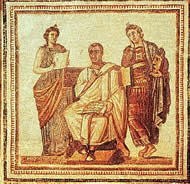
The Aeneid was written to explain to the Roman people how people came to settle in Italy. It tells Aeneas' story, a Trojan who, according to legend, become an ancestor to the Romans. Virgil was the author of this epic poem, and he cleverly created family ties from Aeneas to Augustus (Augustus was the emperor Virgil's patron). This made the story more interesting and important to the people of the Roman Empire.

Picture: http://www.sffaudio.com/images08/librivoxtheaeneid500.jpg

Thursday, January 28, 2010

Baths of Constantine-Where

These were the last of the great baths of Rome, and were built by Constantine on the Quirinal Hill. They were probably built before AD 315. They suffered greatly from fire and earthquake, but were restored in 443 AD. Very little from the baths survive today except some important statues that used to adorn the complex. These statues include Constantine and his son Constans, the Nile and Tiber river gods,  and the bronze boxer. 

Picture: http://www.romereborn.virginia.edu/ge/BT-003.html

38 Latin Stories-Chapter 29, Quintilian Praises the Oratory of Cicero-Parsed Verbs


Dant-3rd person plural present active indicative of "dare" meaning "to give"
Dicit-3rd person singular present active indicative of "dicere" meaning "to say"
Didicit-3rd person singular perfect active indicative of "discere" meaning "to learn"
Diligere-present active infinitive meaning "to be diligent"
Dissentire-present active infinitive meaning "to disagree"
Docere-present active infinitive meaning "to lead"
Est-3rd person singular present active indicative of "esse" meaning "to be"
Facere-present active infinitive meaning "to make"
Fuit-3rd person singular perfect active indicative of "esse" meaning "to be"
Habeatur-3rd person singular present passive subjunctive of "habere" meaning "to hold"
Habere-present active infinitive meaning "to hold"
Movere-present active infinitive meaning "to disturb"
Posset-3rd person singular imperfect active subjunctive of "posse" meaning "to be able to"
Possunt-3rd person plural present active indicative of  "posse" meaning "to be able to"
Potest-3rd person singular present active indicative of "posse" meaning "to be able to"
Pudeat-3rd person singular present active subjunctive from "pudere" meaning "to be ashamed"
Pugnat-3rd person singular present active indicative of "pugnare" meaning "to fight"
Puto-1st person singular present active indicative of "putare" meaning "to think"
Regnare-present active infinitive meaning "to reign"
Sciat-3rd person singular present active subjunctive of "scire" meaning "to know"
Sit-3rd person singular present active subjunctive of "esse" meaning "to be"
Spectemus-1st person plural present active subjunctive of "spectare" meaning "to watch"
Sunt-3rd person plural present active indicative of "esse" meaning "to be"
Videatur-3rd person singular present passive subjunctive of "videre" meaning "to seem"
Videtur-3rd person singular present passive indicative of "videre" meaning "to seem"

Wednesday, January 27, 2010

Pliny the Younger


Pliny the Younger was a lawyer, author, and magistrate in Ancient Rome. He is not to be confused with his uncle, Pliny the Elder, who helped raise and educate him. They both witnessed Mt. Vesuvius erupt on August 24th, 74 AD. This was the day of Pliny the Elder's death. Pliny is known for his hundreds of surviving letters. These are an invaluable historical source for study of Pliny's contemporary time period (ca. 1st cent AD). Many of these letters are to emperors, nobles, historians (ie. Tacitus). Pliny himself was a notable figure, who served as imperial magistrate under Trajan. Pliny was an honest and moderate man who rose through the cursus honorum (series of political and military offices).

Picture: http://geopolicraticus.files.wordpress.com/2009/02/pliny_the_younger.jpg

Pliny Writes to His Friends


    I am angry; I know I ought not be, but I am angry.  You know how at times unjust, how often out of control, how always rather prone to complain about trifles love may be. I do not know whether that cause may be just; Nevertheless it is important, and I deeply am angry, because it had been so long with no letters from you. You are able to win me over in one way, if at least now the greatest and longest letters you will have sent. I only make these true amends, the remaining will seem wrong. I am not about to hear "I am not in the city" or "I was occupied"; May they forbid that I may hear "I am sick." Think how much care I may hold for you. To know I desire which you make and will make. Now send the greatest amount and longest letters! Farewell!
    -Pliny, Epistles 2.2
    15 Parsed verbs:
  1. Suscenseo-1st person singular present active indicative of "suscensere" meaning "to be angry"
  2. Nescio-1st person singular present active indicative of "nescire" meaning "to not know"
  3. Debeam-2st person singular present active subjunctive of "debere" meaning "to owe"
  4. Scis-2nd person singular present active indicative of "scire" meaning "to know"
  5. Sit-3rd person singular present active subjunctive of "esse" meaning "to be"
  6. Est-3rd person singular present active indicative of "esse" meaning "to be"
  7. Fuerunt-3rd person plural perfect active indicative of "esse" meaning "to be"
  8. Exorare-present active infinitive meaning "to win over by begging"
  9. Potes-3rd person singular present active indicative of "posse" meaning "to be able to"
  10. Miseris-2nd person singular present active subjunctive of "mittere" meaning "to send"
  11. Excusatio-1st person singular present active indicative of "excusare" meaning "to make amends"
  12. Videbuntur-3rd person plural future passive indicative of "videre" meaning "to seem"
  13. Sum-1st person singular present active indicative of "esse" meaning "to be"
  14. Eram-3rd person singular imperfect active indicative of "esse" meaning "to be"
  15. Sinant-3rd person plural present active indicative of "sinere" meaning "to allow"

Tuesday, January 26, 2010

Surfing Chicken

And Mr. Wojo said it was cooler than a surfing chicken...
http://www.youtube.com/watch?v=R8emb_HziQ0

Gracchi Brothers


The Gracchi Brothers were tribunes in the 2nd century BC. The young men of a progressive patrician family were Tiberius and Gaius. They attempted to pass land reform legislation in Ancient Rome. This would redistribute the major patrician landholdings to the plebeians. For this and their membership in the Populares party,they are deemed as the founding fathers of socialism and populism. Both brothers were assassinated for their efforts.

Picture: http://images.easyart.com/i/prints/rw/en_easyart/lg/3/0/Cornelia-Mother-of-the-Two-Gracchi-Brothers-1861-Pierre-Jules-Cavelier-303143.jpg
Gracchi Brothers with mother Cornelia

Monday, January 25, 2010

Chapter 30 S.A.


  1. Now you see how much crime against the republic and our laws have been proclaimed to you.
  2. Let me say immediately how sweet liberty is to you.
  3. He asked why they finally left the city.
  4. Now I know what love is.
  5. Let us see that man who was able to write more in the middle of the forum.
  6. Many were doubting which was best.
  7. I begin to put forth that nature creates and nourishes all things.
  8. It is pleasant to see which evils you yourself lack
  9. I reread the authority of the Trojan War, who says which is beautiful, which is ugly, which is useful and which is not.

Friday, January 22, 2010

Why Echo was forced to echo?


Echo was an Oread nymph of Mount Cithairon in Boeotia. Hera cursed her to only repeat the last words of what was said before. This was a punishment for distracting her with chatter. Echo was loved by the god Pan. Echo was enamored in Narcissus, though. Even after Echo's youth faded away, Echo's repeating voice lived on.

Picture: http://www.comp.dit.ie/dgordon/Lectures/Hum1/040315/090319narcissus.jpg