1. In the story of Pandora's Box what is Pandora's husband's name?-Epimetheus
2. In the Tragic Story of Phaethon what happens to Phaethon when he is riding the chariot? -He is thrown from heaven
3. In the story of the Adventures of Io what does Zeus turn Io into?-a cow
4. In the story of The Curse of Atreus who are Pelops' sons?-Atreus and Thyestes
5. In the story of Cleobis and Biton where do Cleobis and Biton carry their mother?-to a statue of Juno in the Temple of Juno
6. In the story of Laocoon and the Trojan Horse what does Laocoon warn the Trojans of?-The wooden horse housing the Greek warriors
7. In the story of Nisus and Euryalus, who dies at the hands of Volcens?-Nisus
8. In the story of Aurora and Tithonus, who does Aurora go to for help? -the king of the gods, Jupiter
9. In the story of Ulysses and the Cyclops, what do Ulysses and his friends do to escape the cyclops?-They set a tree on fire and hurt the Cyclops' eye
10. In the story Gift Bearing Greeks, how do the Greeks enter Troy?-a large wooden horse, given as a gift, and containing the Greek warriors
11. In the Story of Echo and Handsome Narcissus, what is the moral of the story?-Humans ought not admire themselves excessively.
12. In the story of Europa and the Bull what form does Zeus take on in the story?-a Bull
13. In the story how the Aegean got its name what was the minotaur imprisoned in?-the Labyrinth
14. In the story the wrath of Achilles, who is Achilles angry at? -Agamemnon
15. In the story the Myrmidons, who was the leader of the Myrmidons?-Aecaus
16. In the story A wedding invitation, who are Achilles parents?-Peleus and Thetis
17. In the story the Judgment of Paris, who are the three goddess that fight over the golden apple?-Juno, Venus, and Minerva
18. In the story the labors of Hercules, who is the king that forces Hercules to perform these labors?-Eurystheus
19. In the story of Echo and the Handsome Narcisses what does Echo do that annoys Narcisses. -She repeats what he says
20. In the story of Nisus and Euryalus what do the brothers try to steal from the enemy camp? -a helmet
-"Veritas"-Harvard University, "Non doctior, sed meliore doctrina imbutus"-Haverford College
Monday, May 18, 2009

Thursday, May 14, 2009
Animal Hunts in Rome

Many people today would be appauled from the violence and bloodshed held in the Roman Coliseum. However, at the day it was completely normal to attend these events. One event was the Venatione. This was an animal hunt where a venator (person who hunted animals) would catch and kill an animal or be killed. Many animals were used for these events. This included elephants, bears, bulls, lions, leopards, tigers, giraffes, monkeys, camels, antelopes, crocodile, and and ostriches. Sometimes, animals were even pitted against other animals. Some animals even became endangered and extinct becuase of overuse in the stadium.
The venator could hunt on horseback with a lance or on foot with swords and sheilds. Their mortality rate was high, and they did not receive nearly as much praise and recognition as gladiators. Some were slaves, like gladiators. Some wore armor, some normal clothes, some fought naked. Most usually belonged to an agency and were hired out to perform.
"The wild beast hunts, two a day for five days, are magnificent. There is no denying it. But what pleasure is there in seeing a puny human mangled by a powerful beast or a splendid animal killed with a hunting spear."
Cicero in 50 BC
Cicero in 50 BC
Greek Vase Paintings-5 Mythological Stories
 Hermes carrying Heracles to Mount Olympus.
 Hermes leads the goddesses Aphrodite, Athena, and Hera to Paris for his judgment in the contest for the golden apple.
 Hephaestus returning to Mount Olympus in anger, after being thrown out.
 Hephaestus splits open Zeus' skull, releasing the goddess Athena from his head.
 Artemis draws her bow as Aktaion is torn apart by his hounds.
Wednesday, May 13, 2009
38 Latin Stories, Chapters 11, 15, 20, Verb Cognates
Chapter 11
Audivit-audire Audible, audacious, auditor, audio, audiotape
Dicam-dicere Dictate, dictator, dictation, diction, dictionary, prediction
Erant-esse Is, was, were
Duxerat-ducere Duct, induction, reduction
Dederat-dare Date, mandate, dedicate
Victus erat-vincere Invincible, vincible, evincible
Terreri-terrere Terrify, terrible, terrible (in Spanish)
Poterat-posse Possible, impossible, possibilism
Caret-carere Care, caress, uncaring
Superavit-superare Super, superb, supreme, superficial, superior
Erant-esse Is, was, were
Cepit-capere Decapitate, captain, capture, incapacitated, captivate, captivation
Invenerat-invenire Invent, invention,
Traxit-trahere Taxi, trailer, tractor
Est-esse Is, was, were
amovere Remove, locomotion, movement
Poterat-posse Possible, impossible, possibilism
Est-esse Is, was, were
Datum est-dare Date, mandate,
Erat-esse Is, was, were
Chapter 15
Edunt-edere Edible, inedible, eat
Navigavit- Navigate, navigation, navigator, nauta
Venit Vein, vent, ventilate
Inveniunt Invent, invention, inventor
Edunt Edible, eat, inedible
Ducit Duct, induction, reduction
Videt Video, videotape, envisage, visage
Facitis Facetious, facility, facilitate
Habetis Habitat, habituate, habit
Dicit Diction, dictionary, dictation, dictator, prediction
Dabis Debit, dedicate, debate
Exclamat Exclaim, exclamation, exclamatory
Capit Decapitate, captain, capture, incapacitated, captivate, captivation
Rogat Regal, regality, regalia
Est Is, was, were
Respondet Respond, response, responder
Superat Super, superior, superficial, superb, supreme
Mittunt Mission, Missionary, commission
Vocat Vocal, vocalization, vocate, vocation
Possunt Possible, Possibilism, Possibility
Fugere Fugitive, fugitative, fugitives, refuge
Audit Audio, audiotape, audible, audacious, auditor
Sum Am, sum, same
Chapter 20
Vivebant-vivere Live, liven, enliven, life
Dabant- Date mandate dedicate
Mittebant-mittere Mission, Missionary, commission
Dixit-dicere Dictate, dictator, dictation, diction, dictionary, prediction
Tolerare Tolerate, tolerable, intolerant
Possum-posse Possible, impossible, possibilism
Timeo-timere Timid, timidity, timidly
Inveniam-invenire Invent, invention, inventor
Potero-posse Possible, impossible, possibilism
Vincam-vincere Invincible, vincible, evincible
Commito-commitere Commit, committable, commitment, commence
Videbis-videre Video, videotape, envisage, visage
Fugiam-fugere Fugitive, fugitative, refuge,
Iunxit-iungere Join, junction, conjoin
Navigabit-navigare navigate, navigator, navigation, nauta
Superare- Super, superb, supreme, superficial, superior
Fugere- Fugitive, fugitative, refuge,
Poterat-posse Possible, impossible, possibilism
Expectaverat- Expect, expectations, spectators
videre Video, videotape, envisage, visage
poterat Possible, impossible, possibilism
Tenuerat-tenere Tangible, retentive, attentive
mutaverat Mute, mutate, mutation
Audivit-audire Audible, audacious, auditor, audio, audiotape
Dicam-dicere Dictate, dictator, dictation, diction, dictionary, prediction
Erant-esse Is, was, were
Duxerat-ducere Duct, induction, reduction
Dederat-dare Date, mandate, dedicate
Victus erat-vincere Invincible, vincible, evincible
Terreri-terrere Terrify, terrible, terrible (in Spanish)
Poterat-posse Possible, impossible, possibilism
Caret-carere Care, caress, uncaring
Superavit-superare Super, superb, supreme, superficial, superior
Erant-esse Is, was, were
Cepit-capere Decapitate, captain, capture, incapacitated, captivate, captivation
Invenerat-invenire Invent, invention,
Traxit-trahere Taxi, trailer, tractor
Est-esse Is, was, were
amovere Remove, locomotion, movement
Poterat-posse Possible, impossible, possibilism
Est-esse Is, was, were
Datum est-dare Date, mandate,
Erat-esse Is, was, were
Chapter 15
Edunt-edere Edible, inedible, eat
Navigavit- Navigate, navigation, navigator, nauta
Venit Vein, vent, ventilate
Inveniunt Invent, invention, inventor
Edunt Edible, eat, inedible
Ducit Duct, induction, reduction
Videt Video, videotape, envisage, visage
Facitis Facetious, facility, facilitate
Habetis Habitat, habituate, habit
Dicit Diction, dictionary, dictation, dictator, prediction
Dabis Debit, dedicate, debate
Exclamat Exclaim, exclamation, exclamatory
Capit Decapitate, captain, capture, incapacitated, captivate, captivation
Rogat Regal, regality, regalia
Est Is, was, were
Respondet Respond, response, responder
Superat Super, superior, superficial, superb, supreme
Mittunt Mission, Missionary, commission
Vocat Vocal, vocalization, vocate, vocation
Possunt Possible, Possibilism, Possibility
Fugere Fugitive, fugitative, fugitives, refuge
Audit Audio, audiotape, audible, audacious, auditor
Sum Am, sum, same
Chapter 20
Vivebant-vivere Live, liven, enliven, life
Dabant- Date mandate dedicate
Mittebant-mittere Mission, Missionary, commission
Dixit-dicere Dictate, dictator, dictation, diction, dictionary, prediction
Tolerare Tolerate, tolerable, intolerant
Possum-posse Possible, impossible, possibilism
Timeo-timere Timid, timidity, timidly
Inveniam-invenire Invent, invention, inventor
Potero-posse Possible, impossible, possibilism
Vincam-vincere Invincible, vincible, evincible
Commito-commitere Commit, committable, commitment, commence
Videbis-videre Video, videotape, envisage, visage
Fugiam-fugere Fugitive, fugitative, refuge,
Iunxit-iungere Join, junction, conjoin
Navigabit-navigare navigate, navigator, navigation, nauta
Superare- Super, superb, supreme, superficial, superior
Fugere- Fugitive, fugitative, refuge,
Poterat-posse Possible, impossible, possibilism
Expectaverat- Expect, expectations, spectators
videre Video, videotape, envisage, visage
poterat Possible, impossible, possibilism
Tenuerat-tenere Tangible, retentive, attentive
mutaverat Mute, mutate, mutation
Latin Help
1. Erat-3rd person singular imperfect active indicative of "esse" meaning "to be"
2. Venerat-3rd person singular pluperfect active indicative of "venere" meaning "to come"
3. Gesserat-3rd person singular pluperfect active indicative of "gerrere" meaning "to carry on"
4. Movebat-3rd person singular imperfect active indicative of "movere" meaning "to move"
5. Ceperat-3rd person singular pluperfect active indicative of "cepere" meaning "to capture"
6. Vocavit-3rd person singular perfect active indicative of "vocare" meaning "to call"
7. Audivit-3rd person singular perfect active indicative of "audire" meaning "to hear"
8. Cucurrit-3rd person singular present active indicative of "cucerre" meaning "to run"
9. Intellego-1st person singular present active indicative of "intelligere" meaning "to understand"
10. Dixit-3rd person singular perfect active indicative of "dicere" meaning "to speak"
11. Habere-infinitive meaning "to hold"
12. Debent-3rd person plural present active indicative of "debere" meaning "ought to"
13. Vincere-infinitive meaning "to conquer"
14. Possunt-3rd person plural present active indicative of "posse" meaning "to be able to"
15. Fugies-2nd person singular future active indicative of "fugere" meaning "to flee"
16. Erit-3rd person singular future active indicative of "esse" meaning "to be"
17. Manebis-2nd person singular future active indicative of "manere" meaning "to remain"
18. Invenies-2nd person singular future active indicative of "invenire" meaning "to come upon"
19. Amittes-2nd person singular present active indicative of "amittere" meaning "to send"
20. Habe-2nd person singular Imperative
21. Dixit-3rd person singular perfect active indicative of "dicere" meaning "to speak"
22. Est-3rd person singular present active indicative of "esse" meaning "to be"
23. Timeo-
2. Venerat-3rd person singular pluperfect active indicative of "venere" meaning "to come"
3. Gesserat-3rd person singular pluperfect active indicative of "gerrere" meaning "to carry on"
4. Movebat-3rd person singular imperfect active indicative of "movere" meaning "to move"
5. Ceperat-3rd person singular pluperfect active indicative of "cepere" meaning "to capture"
6. Vocavit-3rd person singular perfect active indicative of "vocare" meaning "to call"
7. Audivit-3rd person singular perfect active indicative of "audire" meaning "to hear"
8. Cucurrit-3rd person singular present active indicative of "cucerre" meaning "to run"
9. Intellego-1st person singular present active indicative of "intelligere" meaning "to understand"
10. Dixit-3rd person singular perfect active indicative of "dicere" meaning "to speak"
11. Habere-infinitive meaning "to hold"
12. Debent-3rd person plural present active indicative of "debere" meaning "ought to"
13. Vincere-infinitive meaning "to conquer"
14. Possunt-3rd person plural present active indicative of "posse" meaning "to be able to"
15. Fugies-2nd person singular future active indicative of "fugere" meaning "to flee"
16. Erit-3rd person singular future active indicative of "esse" meaning "to be"
17. Manebis-2nd person singular future active indicative of "manere" meaning "to remain"
18. Invenies-2nd person singular future active indicative of "invenire" meaning "to come upon"
19. Amittes-2nd person singular present active indicative of "amittere" meaning "to send"
20. Habe-2nd person singular Imperative
21. Dixit-3rd person singular perfect active indicative of "dicere" meaning "to speak"
22. Est-3rd person singular present active indicative of "esse" meaning "to be"
23. Timeo-
Monday, May 11, 2009
Mandatory Optional Self-Tutorial Exercises
1. Number 1-(a) The perfect passive participle and the present of "sum" (b) the perfect passive participle and the imperfect of "sum"
2. A. Vir missus est-the man was sent, vir mittitur-the man is sent.
B. vir missus erat-the man had been sent, vir mittebatur-the man was being sent
3. To ask questions
4. Singular Nominative and Singular Accusative endings differ
5. Word usage and punctuation
6. Translations
a. Movetur-he is being moved
b. Motus est-he was moved
c. Motum erat-he had been moved
d. Movebatur-he was being moved
e. Deleti erant-they had been destroyed
f. Delebantur-they are being destroyed
g. Deleti sunt-they were destroyed
h. Tenemur-we are being held
i. Tenti sumus-we were held
j. Tenti eramus-he had been held
k. Tenebamur-we were being held
l. Mutatus erat-he had been changed
m. Mutatus est-he was changed
n. Mutatur-he is being changed
o. Mutabatur-he was being changed
7. Translation of Interrogative Pronouns
a. Cuius?-Genitive singular
b. Quem?-accusative singular masculine and feminine
c. Qui?-Nominative plural masculine
d. Quid?-Nominative Singular Neuter
e. Quorum?-Nominative Plural Masculine and Neuter
f. Cui?-Dative Singular
g. Quas?-Accusative plural feminine
h. Quis?-Nominative Singular Masculine and Feminine
i. Quae?-Accusative Plural Neuter
8. From which book was it prepared? From which book had it been prepared? From which book was it being prepared?
9. The schoolmaster is overcome by the labors from which book had been prepared.
10. Which book were you given? Which book is being given? Which book had it been given?
11. Which boy was preserved?
12. I myself saw the boy who was preserved.
13. Which of these two sons were preserved.
14. I never saw the old man whose sons were preserved.
15. What was sent?
16. From the citizen who sent peace and liberty, they were praised.
17. Who were sent?
18. From ten citizens who were sent friendship, he was praised.
19. Who have you seen in the city?
20. Who are the three new friends who you have seen in the city?
21. Who of you were they found there.
22. Where are the three bodies who of you there they were found.
23. From what of that man was he told.
24. What of that man was he told?
25. Eight wretched humans who were told by that man, flew out of the city.
26. Which sons were praised into themselves.
27. They thanked the fatherland whose sons were praised.
28. He frightened which of you?
29. He frightened you with what danger?
30. But the danger which terrifies you has been conquered by brave citizens.
2. A. Vir missus est-the man was sent, vir mittitur-the man is sent.
B. vir missus erat-the man had been sent, vir mittebatur-the man was being sent
3. To ask questions
4. Singular Nominative and Singular Accusative endings differ
5. Word usage and punctuation
6. Translations
a. Movetur-he is being moved
b. Motus est-he was moved
c. Motum erat-he had been moved
d. Movebatur-he was being moved
e. Deleti erant-they had been destroyed
f. Delebantur-they are being destroyed
g. Deleti sunt-they were destroyed
h. Tenemur-we are being held
i. Tenti sumus-we were held
j. Tenti eramus-he had been held
k. Tenebamur-we were being held
l. Mutatus erat-he had been changed
m. Mutatus est-he was changed
n. Mutatur-he is being changed
o. Mutabatur-he was being changed
7. Translation of Interrogative Pronouns
a. Cuius?-Genitive singular
b. Quem?-accusative singular masculine and feminine
c. Qui?-Nominative plural masculine
d. Quid?-Nominative Singular Neuter
e. Quorum?-Nominative Plural Masculine and Neuter
f. Cui?-Dative Singular
g. Quas?-Accusative plural feminine
h. Quis?-Nominative Singular Masculine and Feminine
i. Quae?-Accusative Plural Neuter
8. From which book was it prepared? From which book had it been prepared? From which book was it being prepared?
9. The schoolmaster is overcome by the labors from which book had been prepared.
10. Which book were you given? Which book is being given? Which book had it been given?
11. Which boy was preserved?
12. I myself saw the boy who was preserved.
13. Which of these two sons were preserved.
14. I never saw the old man whose sons were preserved.
15. What was sent?
16. From the citizen who sent peace and liberty, they were praised.
17. Who were sent?
18. From ten citizens who were sent friendship, he was praised.
19. Who have you seen in the city?
20. Who are the three new friends who you have seen in the city?
21. Who of you were they found there.
22. Where are the three bodies who of you there they were found.
23. From what of that man was he told.
24. What of that man was he told?
25. Eight wretched humans who were told by that man, flew out of the city.
26. Which sons were praised into themselves.
27. They thanked the fatherland whose sons were praised.
28. He frightened which of you?
29. He frightened you with what danger?
30. But the danger which terrifies you has been conquered by brave citizens.
Sunday, May 10, 2009
Translations from Golden Age and Silver Age authors
GOLDEN AGE
Lucretius
- Si me duces, Musa, coronam magna cum laude capiam.
If you lead me, Muse, I will take the crown with praise.
- Haud igitur redit ad nihilum res ulla, sed omnes discidio redeunt in corpora materiai.
Therefore, he returns nothing at all into any affair, but I say they all return into the body material.
- Terra ipsa homines et animalia olim creavit.
Once upon a time, the earth itself has created the humans and animals.
Catullus
- Catullus Marco Tullio Ciceroni magnas gratias agit.
Catullus thanks the great Marcus Tullius Cicero.
- Dicebam medicare tuos desiste capillos!
I said to cure you must stop your hair.
- Salve, mea bella puella-da mihi multa basia, amabo te!
Hello, my beautiful girl, give me many kisses, I love you!
Cicero
- Philosophia es ars vitae.
Philosophy is an art career.
- Fortuna est caeca.
Fortune is blind.
- Semper magno cum timore incipio dicere.
I always begin to speak with great fear.
Caesar
- Ipse ad eos contendebat equitesque ante se misit.
He contended himself and the knight before he sent him.
- Gallia est omnis divisa in partes tres, quarum unam incolunt Belgae, aliam Aquitani, tertiam qui ipsorum lingua Celtae, nostra Galli apellantur.
All of Gaul is divided into three parts, one of which the Belgae live in, the second the Aquitani live in, the third of which the Galls call the Celts, in our language.
-Palus erat non magna inter nostrum atque hostium exercitum.
Palus is not great before our enemy and army.
Nepos
- Eo tempore Athenienses tantam vitutem praestiterunt ut decemplicem numerum hostium superant, et hos sic perterruerunt ut in Asiam refugerent.
The time of the Athenians was so great the way excelled to the number tenfold to overcome the enemy, and these men thus frighten greatly to flee back into Asia.
- Atticus Ciceroni ex patria fugenti multam pecuniam dedit.
The elegant Cicero fleed out of the fatherland and gave much money.
-Hi fere fuerunt Graecae gentis duces, qui memoria digni videantur, praeter REGES.
Those men almost flee the Greek leader, when appropriate memory was seen, besides the king
Publilius Syrus
- Numquam periculum sine periculo vincemus.
We never conquer danger without danger.
- Si animes infirmes est, non poterit bonam fortunam tolerare.
If you animate the weak, he is not able to endure good fortune.
- Si vales, valeo.
If you be strong, I am strong.
Virgil
- Fata viam invenient.
They came upon the way of the oracle.
- Sed fugit interea, fugit tempus.
But meanwhile he flees, he flees time.
- Pan servat oves (sheep) et magistros fortunatos ovium
Pan preserves the sheep and schoolmasters happy sheep.
Horace
- Virtus tua me amicum tibi facit.
Your strength makes me your friend.
- Rapite, amici, occasionem de hora.
Snatch, friend, the occasion of the hour.
- Incipit ille.
He began that.
Livy
- Eximia forma virginis oculus hominum convertit.
The maidens outstanding form cause eyes to look
- Ratio me ducet, non fortuna.
I lead not on the account of fortune
- Non solum eventus hoc docet-iste est magister stultorum!-sed etiam ratio.
Not only events but; to be a teacher is foolish!
Propertius
- Errat, qui finem vesani quaerit amoris; verus amor nullum novit habere modum.
Who wanders away from the boundary of love; versus to have control over no love.
- Ergo sollicitae tu causa, pecunia, vitae!
Therefore you cause life danger!
- Quid tibi vis, insane?
Who has insane strength?
Ovid
- Iucundissima dona, ut aiunt, semper sunt ea quae auctor ipse cara fact.
Pleasant gifts, it is said, always are any which author himself fact.
- Dicebam medicare tuos desiste capillos!
I call to cure your hair, desist!
- Fas est ab hoste doceri.
It is right to learn from your enemy
SILVER AGE
Seneca
- Ex meis erroribus hominibus rectum iter demostrare possum.
Out of my human error I have found the proper path.
- Homines, dum docent discunt.
Human beings learn while they teach.
- Vita est brevis; ars, longa.
Avoid short things; long things are knowledge.
Petronius
- Dum nos fata sinunt, oculos satiemus amore; nox tibi longa venit nec reditura dies.
When we allow fate, our eyes love wisdom, you return to death in the night.
- Animam nostro amplexam in corpore.
Our soul lives in our body.
- Quid ergo es.
Where, therefore, is it?
Quintilian
- Prima virtus est vitio carere.
The first virtue is to be without fault.
- Similis circa auctoritatem ratio.
The authors accounts are similar.
- Si cui libri Ciceronis placent, ille sciat se profecisse (to progress).
If this book is pleasing to Cicero, it knows to progress.
Martial
-Nec tecum possum vivere nec sine te.
Nor you are able to be alive, nor without you .
-Est nullus locus utri homini in hac terra.
Is no location enough for humans on this earth.
-Vita non est vivere sed valere.
Life is not to live but to be strong.
Pliny
-Bene est mihi quod tibi bene est.
He is well to me who is well to you.
-Si vale, bene est; ego valeo.
If you are strong, you are well; I am strong.
-Eo tempore erant circenses ludi, quo genere levi spectaculi numquam teneor.
The contestants in the circus are time, who never fear to carry light show.
Tacitus
-Inter bellum et pacem dubitbant.
They hesitated between war and peace.
-Reges Romam a principio habuerunt; libertatem Lucius Brutus Romanis dedit.
In the beginning, Rome had a king; Lucius Brutus gave the Romans liberty.
-Etiam fortes viri subitis periculis saepe terrentur.
Even strong men often are being frightened of sudden dangers.
Juvenal
- Difficile est saturam non scribere; nam quis est tam patiens malae urbis ut se teneat.
Satire is not difficult to write; which on the other hand is bad patience for the city to hold.
-Semper ego auditor tantum?
I always hear so much?
- Probitas laudatur-et alget.
Uprightness is being praise-and is cold.
Lucretius
- Si me duces, Musa, coronam magna cum laude capiam.
If you lead me, Muse, I will take the crown with praise.
- Haud igitur redit ad nihilum res ulla, sed omnes discidio redeunt in corpora materiai.
Therefore, he returns nothing at all into any affair, but I say they all return into the body material.
- Terra ipsa homines et animalia olim creavit.
Once upon a time, the earth itself has created the humans and animals.
Catullus
- Catullus Marco Tullio Ciceroni magnas gratias agit.
Catullus thanks the great Marcus Tullius Cicero.
- Dicebam medicare tuos desiste capillos!
I said to cure you must stop your hair.
- Salve, mea bella puella-da mihi multa basia, amabo te!
Hello, my beautiful girl, give me many kisses, I love you!
Cicero
- Philosophia es ars vitae.
Philosophy is an art career.
- Fortuna est caeca.
Fortune is blind.
- Semper magno cum timore incipio dicere.
I always begin to speak with great fear.
Caesar
- Ipse ad eos contendebat equitesque ante se misit.
He contended himself and the knight before he sent him.
- Gallia est omnis divisa in partes tres, quarum unam incolunt Belgae, aliam Aquitani, tertiam qui ipsorum lingua Celtae, nostra Galli apellantur.
All of Gaul is divided into three parts, one of which the Belgae live in, the second the Aquitani live in, the third of which the Galls call the Celts, in our language.
-Palus erat non magna inter nostrum atque hostium exercitum.
Palus is not great before our enemy and army.
Nepos
- Eo tempore Athenienses tantam vitutem praestiterunt ut decemplicem numerum hostium superant, et hos sic perterruerunt ut in Asiam refugerent.
The time of the Athenians was so great the way excelled to the number tenfold to overcome the enemy, and these men thus frighten greatly to flee back into Asia.
- Atticus Ciceroni ex patria fugenti multam pecuniam dedit.
The elegant Cicero fleed out of the fatherland and gave much money.
-Hi fere fuerunt Graecae gentis duces, qui memoria digni videantur, praeter REGES.
Those men almost flee the Greek leader, when appropriate memory was seen, besides the king
Publilius Syrus
- Numquam periculum sine periculo vincemus.
We never conquer danger without danger.
- Si animes infirmes est, non poterit bonam fortunam tolerare.
If you animate the weak, he is not able to endure good fortune.
- Si vales, valeo.
If you be strong, I am strong.
Virgil
- Fata viam invenient.
They came upon the way of the oracle.
- Sed fugit interea, fugit tempus.
But meanwhile he flees, he flees time.
- Pan servat oves (sheep) et magistros fortunatos ovium
Pan preserves the sheep and schoolmasters happy sheep.
Horace
- Virtus tua me amicum tibi facit.
Your strength makes me your friend.
- Rapite, amici, occasionem de hora.
Snatch, friend, the occasion of the hour.
- Incipit ille.
He began that.
Livy
- Eximia forma virginis oculus hominum convertit.
The maidens outstanding form cause eyes to look
- Ratio me ducet, non fortuna.
I lead not on the account of fortune
- Non solum eventus hoc docet-iste est magister stultorum!-sed etiam ratio.
Not only events but; to be a teacher is foolish!
Propertius
- Errat, qui finem vesani quaerit amoris; verus amor nullum novit habere modum.
Who wanders away from the boundary of love; versus to have control over no love.
- Ergo sollicitae tu causa, pecunia, vitae!
Therefore you cause life danger!
- Quid tibi vis, insane?
Who has insane strength?
Ovid
- Iucundissima dona, ut aiunt, semper sunt ea quae auctor ipse cara fact.
Pleasant gifts, it is said, always are any which author himself fact.
- Dicebam medicare tuos desiste capillos!
I call to cure your hair, desist!
- Fas est ab hoste doceri.
It is right to learn from your enemy
SILVER AGE
Seneca
- Ex meis erroribus hominibus rectum iter demostrare possum.
Out of my human error I have found the proper path.
- Homines, dum docent discunt.
Human beings learn while they teach.
- Vita est brevis; ars, longa.
Avoid short things; long things are knowledge.
Petronius
- Dum nos fata sinunt, oculos satiemus amore; nox tibi longa venit nec reditura dies.
When we allow fate, our eyes love wisdom, you return to death in the night.
- Animam nostro amplexam in corpore.
Our soul lives in our body.
- Quid ergo es.
Where, therefore, is it?
Quintilian
- Prima virtus est vitio carere.
The first virtue is to be without fault.
- Similis circa auctoritatem ratio.
The authors accounts are similar.
- Si cui libri Ciceronis placent, ille sciat se profecisse (to progress).
If this book is pleasing to Cicero, it knows to progress.
Martial
-Nec tecum possum vivere nec sine te.
Nor you are able to be alive, nor without you .
-Est nullus locus utri homini in hac terra.
Is no location enough for humans on this earth.
-Vita non est vivere sed valere.
Life is not to live but to be strong.
Pliny
-Bene est mihi quod tibi bene est.
He is well to me who is well to you.
-Si vale, bene est; ego valeo.
If you are strong, you are well; I am strong.
-Eo tempore erant circenses ludi, quo genere levi spectaculi numquam teneor.
The contestants in the circus are time, who never fear to carry light show.
Tacitus
-Inter bellum et pacem dubitbant.
They hesitated between war and peace.
-Reges Romam a principio habuerunt; libertatem Lucius Brutus Romanis dedit.
In the beginning, Rome had a king; Lucius Brutus gave the Romans liberty.
-Etiam fortes viri subitis periculis saepe terrentur.
Even strong men often are being frightened of sudden dangers.
Juvenal
- Difficile est saturam non scribere; nam quis est tam patiens malae urbis ut se teneat.
Satire is not difficult to write; which on the other hand is bad patience for the city to hold.
-Semper ego auditor tantum?
I always hear so much?
- Probitas laudatur-et alget.
Uprightness is being praise-and is cold.
Thursday, May 7, 2009
Xtranormal-Test
I couldn't get it to embed correctly, so here's the link!
http://www.xtranormal.com/watch?e=20090507175015334
http://www.xtranormal.com/watch?e=20090507175015334
Monday, May 4, 2009
Famous Romans-Gaius Marius

Gaius Marius organized Rome's army into the most effective fighting machine on earth. At some times it appeared nothing could stop the mighty force of his Roman legions. Marius changed the way the army organized itself. men from the provinces could now sign up for military service, and in time they would become Roman citizens. Marius also granted land to those war veterans in reward for their services. Marius won famous battles with this army. Most famous of these are the Aquae Sextiae and Campi Raudii, where he ensured that the barbarians from the north were kept out of Rome.
Roman Slavery
 Roman slavery differed from the slavery of ancient Greece. For one, Roman masters held more power over their slaves. This included, by law, the power over life and death. Slavery was also far more necessary to the economy and social system of Rome, especially during the empire, than ancient Greece. Wealthy Romans often relied on many slaves to maintain efficient operation of these households. Imperial conquests and expansion strained the Roman citizen workforce, so great numbers of foreign slaves were needed to be imported to fill agricultural labor needs. The primary source of these slaves was through warfare. Tens of thousands of captured prisoners were brought to Rome as slaves. Other sources were through debtors, who sold themselves or their family into slavery. Also, persons convicted of serious crimes were made slaves. This dependancy on slavery contributed significantly to Rome's downfall.
Cumulative Vocab Test-Freshman Year
1. pronuntio-to pronounce
2. prohibeo-to prohibit
3. odi-defective verb (only in perfect) meaning "to hate"
4. discedo-to depart
5. defendo-to defend
6. parare-to prepare
7. liberare-to free
8. delectare-to delight
9. iam-soon
10. contra-against
11. videor-to seem
12. movere-to move
13. miscere-to mix
14. legere-to pick out
15. fluere-to flow
16. recitare-to recite
17.neglegere-to neglect
18. navigare-to navigate
19. incipio-to begin
20. desidero-to desire
21. regere-to rule
22. quam-which
23. senex-old man
24. potens-able
25. omnes-all
26. timere-to frighten
27. iacere-to throw
28. expectare-to expect
29. commitere-to commit
30. itaque-and so
31. vitare-to shun
32. tenere-to hold
33. mutare-to change
34. currere-to run
35. apellare-to speak to
36. stare-to stand
37. iungere-to join
38. deligero-to esteem
39. allere-to nourish
40. olim-for a long time
41. creare-to create
42. cadere-to fall
43. amittere-to lose
44. nuper-recently
45. diu-while
46. sentire-to feel
47. mittere-to send
48. intellegere-to understand
49. etiam-even
50. bene-well
51. vivere-to live
52. invenio-to come upon
53. fugere-to flee
54. facere-to make
55. dicere-to speak
56. nimis-too
57. in-into
58. enim-truly
59. uter-either
60. unus-one
61. vincere-to conquer
62. trahere-to draw
63. scribere-to write
64. gerere-to carry on
65. ducere-to lead
66. necare-to kill
67. audere-to dare
68. sub-under
69. post-after
70. novus-new
71. tollero-to endure
72. posse-to be able to
73. quare-which
74. nunc-now
75. ibi-there
76. superare-to be above
77. remanere-to remain
78. culpare-to blame
79. ceno-to dine
80. tum-then
81. sum-to be
82. iuvare-to help
83. verus-true
84. stultus-foolish
85. parvus-few
86. satiare -to satisfy
87. habere-to hold
88. semper-always
89. hodie-today
90. in-in
91. est-is
92. sine-without
93. O!-Oh!
94. sed-but
95. et-and
96. vocare-to summon
97. videre-to see
98. valere-to be strong
99. terrere-to terrify
100. convervare-to preserve
*101*-servare-to preserve
2. prohibeo-to prohibit
3. odi-defective verb (only in perfect) meaning "to hate"
4. discedo-to depart
5. defendo-to defend
6. parare-to prepare
7. liberare-to free
8. delectare-to delight
9. iam-soon
10. contra-against
11. videor-to seem
12. movere-to move
13. miscere-to mix
14. legere-to pick out
15. fluere-to flow
16. recitare-to recite
17.neglegere-to neglect
18. navigare-to navigate
19. incipio-to begin
20. desidero-to desire
21. regere-to rule
22. quam-which
23. senex-old man
24. potens-able
25. omnes-all
26. timere-to frighten
27. iacere-to throw
28. expectare-to expect
29. commitere-to commit
30. itaque-and so
31. vitare-to shun
32. tenere-to hold
33. mutare-to change
34. currere-to run
35. apellare-to speak to
36. stare-to stand
37. iungere-to join
38. deligero-to esteem
39. allere-to nourish
40. olim-for a long time
41. creare-to create
42. cadere-to fall
43. amittere-to lose
44. nuper-recently
45. diu-while
46. sentire-to feel
47. mittere-to send
48. intellegere-to understand
49. etiam-even
50. bene-well
51. vivere-to live
52. invenio-to come upon
53. fugere-to flee
54. facere-to make
55. dicere-to speak
56. nimis-too
57. in-into
58. enim-truly
59. uter-either
60. unus-one
61. vincere-to conquer
62. trahere-to draw
63. scribere-to write
64. gerere-to carry on
65. ducere-to lead
66. necare-to kill
67. audere-to dare
68. sub-under
69. post-after
70. novus-new
71. tollero-to endure
72. posse-to be able to
73. quare-which
74. nunc-now
75. ibi-there
76. superare-to be above
77. remanere-to remain
78. culpare-to blame
79. ceno-to dine
80. tum-then
81. sum-to be
82. iuvare-to help
83. verus-true
84. stultus-foolish
85. parvus-few
86. satiare -to satisfy
87. habere-to hold
88. semper-always
89. hodie-today
90. in-in
91. est-is
92. sine-without
93. O!-Oh!
94. sed-but
95. et-and
96. vocare-to summon
97. videre-to see
98. valere-to be strong
99. terrere-to terrify
100. convervare-to preserve
*101*-servare-to preserve
Thursday, April 30, 2009
Chapter 20 Test-???
2. Oedipus duobus oculis se privavit
Oedipus deprived himself of his own two eyes
Oedipus=Nominative singular
Oculis= Acc. Pl.=direct object
Privavit=3rd person singular perfect active indicative of "privare" meaning "to deprive"
Duobus=two=Acc. Pl.
Se="his own"=reflexive pronoun
4. Demosthenes multos versus uno spiritu pronuntiabat
Demosthenes pronounced many lines of verse in one spirit.
Demosthenes-Nominative singular
pronuntiabat-3rd person singular imperfect active indicative of "pronuntiare" meaning "to pronounce"
multos-Accusative plural
versus-Accusative plural
uno-ablative singular
spiritu-ablative singular
6. Iste communi sensu caret
This man lacks common sense.
Iste-Nominative singular
caret-3rd person singular present active indicative of "carere" meaning "to lack"
communi-Singular accusative
sensu-singular accusative
8. Nullus accusator caret culpa; omnes peccavimus
No accuser lacks fault; we have all sinned.
accusator-singular nominative
caret-3rd person singular present active indicative of "carere" meaning "to lack"
nullus-nominative singular
culpa-accusative singular
omnes-nominative plural
peccavimus-1st person plural perfect active indicative of "peccare" meaning "to sin"
10. Prima virtus est vitio carere.
The first virtue is to not lack virtue.
prima-nominative singular
virtus-nominative singular
est-3rd person singular present active indicative of "esse" meaning "to be"
carere-infinitive meaning "to lack"
12. Magni tumultus urbem eo tempore miscebant.
Great uprisings are disturbing the city at the time.
Oedipus deprived himself of his own two eyes
Oedipus=Nominative singular
Oculis= Acc. Pl.=direct object
Privavit=3rd person singular perfect active indicative of "privare" meaning "to deprive"
Duobus=two=Acc. Pl.
Se="his own"=reflexive pronoun
4. Demosthenes multos versus uno spiritu pronuntiabat
Demosthenes pronounced many lines of verse in one spirit.
Demosthenes-Nominative singular
pronuntiabat-3rd person singular imperfect active indicative of "pronuntiare" meaning "to pronounce"
multos-Accusative plural
versus-Accusative plural
uno-ablative singular
spiritu-ablative singular
6. Iste communi sensu caret
This man lacks common sense.
Iste-Nominative singular
caret-3rd person singular present active indicative of "carere" meaning "to lack"
communi-Singular accusative
sensu-singular accusative
8. Nullus accusator caret culpa; omnes peccavimus
No accuser lacks fault; we have all sinned.
accusator-singular nominative
caret-3rd person singular present active indicative of "carere" meaning "to lack"
nullus-nominative singular
culpa-accusative singular
omnes-nominative plural
peccavimus-1st person plural perfect active indicative of "peccare" meaning "to sin"
10. Prima virtus est vitio carere.
The first virtue is to not lack virtue.
prima-nominative singular
virtus-nominative singular
est-3rd person singular present active indicative of "esse" meaning "to be"
carere-infinitive meaning "to lack"
12. Magni tumultus urbem eo tempore miscebant.
Great uprisings are disturbing the city at the time.
Wednesday, April 29, 2009
Chapter 20-S.A.
Horns defend the stag from danger.
Oedipus deprived himself of his two eyes.
In the Persian War, Themistocles freed Greeks from servitude.
Demosthenes used to pronounce many lines of verse in one spirit.
I hate Persian pomp.
That man lacks common sense.
Old age deprives us of all pleasures and is not long absence from death.
No accusers lack blame: we all have sinned.
No part of life is able to be free from duty.
The first strength is to lack vice.
A man free from sin does not need a javelin, nor a bow.
Great uprising were disturbing the city at that time.
A letter to the senate and people of Allobroges had been written by the hands of the conspirators.
Oedipus deprived himself of his two eyes.
In the Persian War, Themistocles freed Greeks from servitude.
Demosthenes used to pronounce many lines of verse in one spirit.
I hate Persian pomp.
That man lacks common sense.
Old age deprives us of all pleasures and is not long absence from death.
No accusers lack blame: we all have sinned.
No part of life is able to be free from duty.
The first strength is to lack vice.
A man free from sin does not need a javelin, nor a bow.
Great uprising were disturbing the city at that time.
A letter to the senate and people of Allobroges had been written by the hands of the conspirators.
Tuesday, April 28, 2009
Latin-Chapter 20 Optional Exercises
1. (1) object (2) of (3) by/with/from (4) subject (5) object (6) to/for
2. (1) manui- to/for the hand (2) manus- gen sing ,the hand (3) manuum- gen pl of the hands (4)manu- ab, by/with/from the hand (5)manus gen, of the hand(s) (6)frutibus dat, for the fruits (7)fructum-acc, the fruit (8) fructus gen sing, of the fruit (9) fructuum-gen pl, of the fruits (10) fructu-ab sing, by/with/from the fruit (11) senatus (sing)-gen sing, of the senate (12) senatui-dat sing, to/for the senate (13) senatus -acc pl, the senate (14) senatu-ab sing, from/by/with the senate
3. (A)masculine
(B)manus
4. (A)the ablative of place is a verb of active motion and the ablative of separation is the distance away
(B)Ablative of separation
(C)Ablative of place from which
5. (A) Ablative of place normally has a preposition and active movement, but the ablative of separation normally has no active movement
2. (1) manui- to/for the hand (2) manus- gen sing ,the hand (3) manuum- gen pl of the hands (4)manu- ab, by/with/from the hand (5)manus gen, of the hand(s) (6)frutibus dat, for the fruits (7)fructum-acc, the fruit (8) fructus gen sing, of the fruit (9) fructuum-gen pl, of the fruits (10) fructu-ab sing, by/with/from the fruit (11) senatus (sing)-gen sing, of the senate (12) senatui-dat sing, to/for the senate (13) senatus -acc pl, the senate (14) senatu-ab sing, from/by/with the senate
3. (A)masculine
(B)manus
4. (A)the ablative of place is a verb of active motion and the ablative of separation is the distance away
(B)Ablative of separation
(C)Ablative of place from which
5. (A) Ablative of place normally has a preposition and active movement, but the ablative of separation normally has no active movement
Monday, April 27, 2009
Latin Vocab Quiz Chapter 20
1. coniurati-conspirators
2. cornu-horn
3. fructus-fruit
4. genu-knee
5, manus-hand
6. metus-dread
7. communis-common
8. dexter-right, right-handed
9. sinister-left, left-handed
10. carere-to lack
11. defendere-to defend
12. discedere-to depart
2. cornu-horn
3. fructus-fruit
4. genu-knee
5, manus-hand
6. metus-dread
7. communis-common
8. dexter-right, right-handed
9. sinister-left, left-handed
10. carere-to lack
11. defendere-to defend
12. discedere-to depart
Friday, April 24, 2009
Chapter 19-Test
Chapter 19-S.A.
1. Which is the natural spirit? It is mortal.
2. They have seen that argument and it is severe and certain.
3. What ought we to build against that and sin?
4. What am I to do? In which danger was I thrown?
5. Oh, the immortals! In which city do we live? Which citizenship do we hold? Which sins do we see?
6. What are good citizens unless they which are holding benefit for the fatherland's memory.
7. Another, which are being provided money, they were prepared into the foolish; but they are not able to prepare their true friends.
S.A.-Verbs
1. est-3rd person singular present active indicative of "esse" meaning "to be"
est-3rd person singular present active indicative of "esse" meaning "to be"
2. visa sunt-3rd person plural perfect passive indicative of "videre" meaning "to see"
3. facere-infinitive meaning "to make"
debemus-3rd person plural present active indicative of "debere" meaning "ought"
4. egi-1st person singular perfect active indicative of "agere" meaning "to lead"
iactus sum-1st person singular perfect passive indicative of "iacere" meaning "to throw"
5. vivimus-1st person plural present active indicative of "vivere" meaning "to live
habemus-1st person plural present active indicative of "habere" meaning "to have"
videmus-1st person plural present active indicative of "videre" meaning "to see"
6. sunt-3rd person plural present active indicative of "esse" meaning "to be"
tenent-3rd person plural present active indicative of "tenere" meaning "to hold"
7. parantur-3rd person plural present passive indicative of "parare" meaning "to prepare"
parata sunt-3rd person plural perfect passive indicative of "parare" meaning "to prepare"
parare-infintive meaning "to prepare"
potuerunt-3rd person plural future active indicative of "posse" meaning "to be able to"
The Aged Playwright Sophocles Holds His Own-Almost finished
What many old men are possessing in mind! if heavy eagerness and labor and uprightness remain in old age, often they truly remain a memory, knowledge, and wisdom.
Sophocles, that Greek writer, had made extreme old age into tragedy; but becuase of this eagerness, he was being seen to neglect, and a son was summoned in trial. Then, the old author which had the tragedy and which shortly before had been writing, "Oedipus at Colonus", read aloud the decision.
Sophocles-Verbs so far
tenent-3rd person plural present active indicative of "tenere" meaning "to hold"
remanent-3rd person plural present active indicative of "remanere" meaning "to remain"
manent-3rd person plural present active indicative of "manere" meaning "to remain"
fecit-3rd person singular perfect active indicative of "facere" meaing "to make"
neglegere-infinitive meaning "to neglect"
vidabatur-3rd person singular imperfect indicative passive of "videre" meaning "to see"
vocatus est-3rd person singular perfect indicative passive of "vocare" meaning "to call, summon"
habuit-3rd person singular perfect indicative active of "habere" meaning "to have"
scripserat-3rd person singular pluperfct active indicative of "scriptere" meaning "to write"
recitavit-3rd person singular perfect active indicative of "recitare" meaning "to recite"
1. Which is the natural spirit? It is mortal.
2. They have seen that argument and it is severe and certain.
3. What ought we to build against that and sin?
4. What am I to do? In which danger was I thrown?
5. Oh, the immortals! In which city do we live? Which citizenship do we hold? Which sins do we see?
6. What are good citizens unless they which are holding benefit for the fatherland's memory.
7. Another, which are being provided money, they were prepared into the foolish; but they are not able to prepare their true friends.
S.A.-Verbs
1. est-3rd person singular present active indicative of "esse" meaning "to be"
est-3rd person singular present active indicative of "esse" meaning "to be"
2. visa sunt-3rd person plural perfect passive indicative of "videre" meaning "to see"
3. facere-infinitive meaning "to make"
debemus-3rd person plural present active indicative of "debere" meaning "ought"
4. egi-1st person singular perfect active indicative of "agere" meaning "to lead"
iactus sum-1st person singular perfect passive indicative of "iacere" meaning "to throw"
5. vivimus-1st person plural present active indicative of "vivere" meaning "to live
habemus-1st person plural present active indicative of "habere" meaning "to have"
videmus-1st person plural present active indicative of "videre" meaning "to see"
6. sunt-3rd person plural present active indicative of "esse" meaning "to be"
tenent-3rd person plural present active indicative of "tenere" meaning "to hold"
7. parantur-3rd person plural present passive indicative of "parare" meaning "to prepare"
parata sunt-3rd person plural perfect passive indicative of "parare" meaning "to prepare"
parare-infintive meaning "to prepare"
potuerunt-3rd person plural future active indicative of "posse" meaning "to be able to"
The Aged Playwright Sophocles Holds His Own-Almost finished
What many old men are possessing in mind! if heavy eagerness and labor and uprightness remain in old age, often they truly remain a memory, knowledge, and wisdom.
Sophocles, that Greek writer, had made extreme old age into tragedy; but becuase of this eagerness, he was being seen to neglect, and a son was summoned in trial. Then, the old author which had the tragedy and which shortly before had been writing, "Oedipus at Colonus", read aloud the decision.
Sophocles-Verbs so far
tenent-3rd person plural present active indicative of "tenere" meaning "to hold"
remanent-3rd person plural present active indicative of "remanere" meaning "to remain"
manent-3rd person plural present active indicative of "manere" meaning "to remain"
fecit-3rd person singular perfect active indicative of "facere" meaing "to make"
neglegere-infinitive meaning "to neglect"
vidabatur-3rd person singular imperfect indicative passive of "videre" meaning "to see"
vocatus est-3rd person singular perfect indicative passive of "vocare" meaning "to call, summon"
habuit-3rd person singular perfect indicative active of "habere" meaning "to have"
scripserat-3rd person singular pluperfct active indicative of "scriptere" meaning "to write"
recitavit-3rd person singular perfect active indicative of "recitare" meaning "to recite"
Thursday, April 23, 2009
Chapter 19-S.A.-Noun Parsing
1. Natura-singular nominative
Animi-singular genitive
Mortalis-plural dative
2. Argumenta-singular nominative
3. Scelera-singular nominative
4. Periculum-singular ablative
5. Immortales-plural accusative
Urbe-singular ablative
Civitatem-singular accusative
Scelera-singular nominative
6. Cives-plural nominative
Beneficia-singular nominative
Patriae-singular dative
Memoria-singular ablative
7. Pecunia-singular nominative
Mores-plural nominative
Veros-plural accusative
Amicos-plural accusative
Animi-singular genitive
Mortalis-plural dative
2. Argumenta-singular nominative
3. Scelera-singular nominative
4. Periculum-singular ablative
5. Immortales-plural accusative
Urbe-singular ablative
Civitatem-singular accusative
Scelera-singular nominative
6. Cives-plural nominative
Beneficia-singular nominative
Patriae-singular dative
Memoria-singular ablative
7. Pecunia-singular nominative
Mores-plural nominative
Veros-plural accusative
Amicos-plural accusative
Chapter 19-S.A. Parsed Verbs
1. Est-3rd person singular present active indicative of "esse" meaning "to be"
Est-3rd person singular present active indicative of "esse" meaning "to be"
2. Visa Sunt-3rd person plural perfect indicative passive of "videre" meaning "to see"
3. Facere-infinitive meaning "to make"
Debemus-1st person plural present active indicative of "debere" meaning "ought"
4. Egi-1st person singular perfect active indicative of "agere" meaning "to lead"
Iactus sum-1st person singular perfect passive indicative of "iacere" meaning "to throw"
5. Vivimus-1st person plural present active indicative of "vivere" meaning "to live"
Habemus-1st person plural present active indicative of "habere" meaning "to have"
Videmus-1st person plural present active indicative of "videre" meaning "to see"
6. Sunt-3rd person plural present active indicative of "esse" meaning "to be"
Tenent-3rd person plural present active indicative of "tenere" meaning "to hold"
7. Parantur-3rd perso plural present indicative passive of "parare" meaning "to prepare"
Parata sunt-3rd person plural perfect indicative passive of "parare" meaning "to prepare"
Parare-infinitive meaning "to prepare"
Potuerunt-3rd person plural perfect active indicative of "posse" meaning " to be able to"
Est-3rd person singular present active indicative of "esse" meaning "to be"
2. Visa Sunt-3rd person plural perfect indicative passive of "videre" meaning "to see"
3. Facere-infinitive meaning "to make"
Debemus-1st person plural present active indicative of "debere" meaning "ought"
4. Egi-1st person singular perfect active indicative of "agere" meaning "to lead"
Iactus sum-1st person singular perfect passive indicative of "iacere" meaning "to throw"
5. Vivimus-1st person plural present active indicative of "vivere" meaning "to live"
Habemus-1st person plural present active indicative of "habere" meaning "to have"
Videmus-1st person plural present active indicative of "videre" meaning "to see"
6. Sunt-3rd person plural present active indicative of "esse" meaning "to be"
Tenent-3rd person plural present active indicative of "tenere" meaning "to hold"
7. Parantur-3rd perso plural present indicative passive of "parare" meaning "to prepare"
Parata sunt-3rd person plural perfect indicative passive of "parare" meaning "to prepare"
Parare-infinitive meaning "to prepare"
Potuerunt-3rd person plural perfect active indicative of "posse" meaning " to be able to"
The Judgment of Paris-Translation

The goddess Discordia, who alone was not called to the wedding of Peleus and Thetis, was moved to anger. She then gave the immortal king of the gods a golden apple, on which the were inscribed the letters: "For the Fairest." To whom ought this apple be given? To Juno to Venus or to Minerva? Even Jupiter feared to make the decision! Therefore, the the three goddesses come to Paris, the son of the king of Troy.
"Oh dear youth", they said, "which of us, in your opinion, is the fairest? He will supply the great gift to the goddess which you choose." Which will Paris choose? To whom will the gift disturb in the mind of a judge? Juno was able to make him king, Minerva was able to make a leader. Venus, however, was able to give Helen, the fairest if all women.
Paris's love has been conquered, and he gave Venus the golden apple. And also (if certain is the fame of that deed) Helen was captured, and she was led into a new location, Troy. Which war was waged because of this woman?
Tuesday, April 21, 2009
Loci Immutati-Death of a Pet Sparrow

Death of a Pet Sparrow
-Mourn, Oh Venus and Cupid,
-and men who are so great among many others!
-My girlfriend's sparrow is dead
-Sparrow, delight of my girl
-whom she loved more than her own eyes,
-For she was sweet as honey,
-it's very own mistress as good as a mother
-It would move about on her lap
-in a circle, first here, then there
-and would only chirp for it's mistress
The Judgement of Paris-Parsed Verbs
Vocata erat-3rd person singular pluperfect passive indicative of "vocare" meaning "to speak"
Mota est-3rd person singular perfect passive indicative of
Erant-3rd person plural imperfect active indicative if "esse" meaning "to be"
Dari-present passive infinitive of "dare" meaning "to give"
Debet-3rd person singular present active indicative
Facere-infinitive meaning "to make"
Timet-3rd person singular present active indicative of "timere" meaning "to fear"
Veniunt-3rd person plural present active indicative of "venire" meaning "to come"
Dicunt-3rd person plural present active indicative of "dicere" meaning "to talk"
Est-3rd person singular present active indicative of "esse" meaning "to be"
Parabitur-3rd person singular future passive indicative of "parare" meaning "to prepare"
Eliges-2nd person singular future active indicative of "eligare" meaning "to choose"
Eliget-3rd person singular future active indicative of "eligare" meaning "to choose"
Movebitur-3rd person singular future passive indicative of "movere" meaning "to move"
Facere-infinitive meaning "to make"
Potest-3rd person singular present active indicative of "posse" meaning "to be able to"
Dare-infinitive meaning "to give"
Potest-3rd person singular present active indicative of "posse" meaning "to be able to"
Est-3rd person singular present active indicative of "esse" meaning "to be"
Dedit-3rd person singular perfect active indicative of "dare" meaning "to give"
Est-3rd person singular present active indicative of "esse" meaning "to be"
Capta-imperative of "capere" meaning "to seize"
Ducta-2nd person singular present active imperative of "ductare" meaning "to lead"
Est-3rd person singular present active indicative of "esse" meaning "to be"
Gestum est-3rd person singular perfect passive indicative of "gerere" meaning "to carry on"
Mota est-3rd person singular perfect passive indicative of
Erant-3rd person plural imperfect active indicative if "esse" meaning "to be"
Dari-present passive infinitive of "dare" meaning "to give"
Debet-3rd person singular present active indicative
Facere-infinitive meaning "to make"
Timet-3rd person singular present active indicative of "timere" meaning "to fear"
Veniunt-3rd person plural present active indicative of "venire" meaning "to come"
Dicunt-3rd person plural present active indicative of "dicere" meaning "to talk"
Est-3rd person singular present active indicative of "esse" meaning "to be"
Parabitur-3rd person singular future passive indicative of "parare" meaning "to prepare"
Eliges-2nd person singular future active indicative of "eligare" meaning "to choose"
Eliget-3rd person singular future active indicative of "eligare" meaning "to choose"
Movebitur-3rd person singular future passive indicative of "movere" meaning "to move"
Facere-infinitive meaning "to make"
Potest-3rd person singular present active indicative of "posse" meaning "to be able to"
Dare-infinitive meaning "to give"
Potest-3rd person singular present active indicative of "posse" meaning "to be able to"
Est-3rd person singular present active indicative of "esse" meaning "to be"
Dedit-3rd person singular perfect active indicative of "dare" meaning "to give"
Est-3rd person singular present active indicative of "esse" meaning "to be"
Capta-imperative of "capere" meaning "to seize"
Ducta-2nd person singular present active imperative of "ductare" meaning "to lead"
Est-3rd person singular present active indicative of "esse" meaning "to be"
Gestum est-3rd person singular perfect passive indicative of "gerere" meaning "to carry on"
Monday, April 20, 2009
Vocab Quiz Chapter 19
1. paro-to prepare
2. libero-to free
3. delecto-to delight
4. iam-soon
5. contra-against
6. nisi-unless
7. at-but
8. immortalis-immortal
9. gravis-grievous
10. certus-certain
11. scelus-sin
12. iudicium-judgment
2. libero-to free
3. delecto-to delight
4. iam-soon
5. contra-against
6. nisi-unless
7. at-but
8. immortalis-immortal
9. gravis-grievous
10. certus-certain
11. scelus-sin
12. iudicium-judgment
Saturday, April 18, 2009
Wednesday, April 8, 2009
Chapter 18 Test-Part 2-Sententiae Antiquae
1. They are able because those things seems to be possible.
2. Even strong men are being scared by often dangers.
3. Your plans are clear to us; You will be held with the knowledge of all these citizens
4. Evil is counsel which is not able to be mutated
5. It is right to be taught by the enemy.
6. The occasions are contests in the Circus games, that type of light show I am never being kept by.
7. This is now my life:I admit and greet good men who come to me; thereupon either I write or read; after this, time is being given to all bodies.
8. Nothing, therefore, is dead, since the soul of nature is being held by mortals.
9. Love to be disturbed with he who is not able to fear.
10. Never, truly, is rashness intermingled with wisdom.
11. Esteem he who is not being moved by money.
12. He is being praised from this man; He is being blamed by those men.
13. Uprightness is being praised-and he is neglected.
2. Even strong men are being scared by often dangers.
3. Your plans are clear to us; You will be held with the knowledge of all these citizens
4. Evil is counsel which is not able to be mutated
5. It is right to be taught by the enemy.
6. The occasions are contests in the Circus games, that type of light show I am never being kept by.
7. This is now my life:I admit and greet good men who come to me; thereupon either I write or read; after this, time is being given to all bodies.
8. Nothing, therefore, is dead, since the soul of nature is being held by mortals.
9. Love to be disturbed with he who is not able to fear.
10. Never, truly, is rashness intermingled with wisdom.
11. Esteem he who is not being moved by money.
12. He is being praised from this man; He is being blamed by those men.
13. Uprightness is being praised-and he is neglected.
Chapter 18 Test-Part 1-Passive Paradigms
Present Passive Indicative-Laudare-to praise
Singular
1. laudor
2. laudaris
3. laudatur
Plural
1. laudamur
2. laudamini
3. laudantur
Imperfect Passive Indicative-Laudare-to praise
Singular
1. Laudabar
2. laudabaris
3. laudabatur
Plural
1. laudabamur
2. laudabamini
3. Laudabantur
Future Passive Indicative-Laudare-to praise
Singular
1. laudabor
2. laudaberis
3. laudabitur
Plural
1. laudabimur
2. laudabimini
3. laudabuntur
Present Passive Indicative-Monere-to warn
Singular
1. moneor
2. moneris
3. monetur
Plural
1. monemur
2. monemini
3. monentur
Imperfect Passive Indicative-Monere-to warn
Singular
1. monebar
2. monebaris
3. monebatur
Plural
1. monebamur
2. monebamini
3. monebantur
Future Passive Indicative-Monere-to warn
Singular
1. monebor
2. moneberis
3. monebitur
Plural
1. monebimur
2, monebimini
3. monebuntur
Singular
1. laudor
2. laudaris
3. laudatur
Plural
1. laudamur
2. laudamini
3. laudantur
Imperfect Passive Indicative-Laudare-to praise
Singular
1. Laudabar
2. laudabaris
3. laudabatur
Plural
1. laudabamur
2. laudabamini
3. Laudabantur
Future Passive Indicative-Laudare-to praise
Singular
1. laudabor
2. laudaberis
3. laudabitur
Plural
1. laudabimur
2. laudabimini
3. laudabuntur
Present Passive Indicative-Monere-to warn
Singular
1. moneor
2. moneris
3. monetur
Plural
1. monemur
2. monemini
3. monentur
Imperfect Passive Indicative-Monere-to warn
Singular
1. monebar
2. monebaris
3. monebatur
Plural
1. monebamur
2. monebamini
3. monebantur
Future Passive Indicative-Monere-to warn
Singular
1. monebor
2. moneberis
3. monebitur
Plural
1. monebimur
2, monebimini
3. monebuntur
Tuesday, April 7, 2009
Latin Help-Chapter 18 S.A., 1-7, Odd-then parse passive verbs
1. They are able because those things seem to be possible.
3. Your plans are clear to us; you will be held with the knowledge of all these citizens.
5. It is right to be taught by the enemy.
7. This is now my life: I admit and greet good men who come to me; thereupon either I write or read; after this time is being given to all bodies.
Passive verbs
Videntur-3rd person singular present passive indicative of "videri" meaning "to seem"
Teneris-2nd person singular present passive indicative of "tenere" meaning "to hold"
Doceri-The present passive infinitive
Datur-3rd person singular present passive indicative of "dare" meaning "to give"
3. Your plans are clear to us; you will be held with the knowledge of all these citizens.
5. It is right to be taught by the enemy.
7. This is now my life: I admit and greet good men who come to me; thereupon either I write or read; after this time is being given to all bodies.
Passive verbs
Videntur-3rd person singular present passive indicative of "videri" meaning "to seem"
Teneris-2nd person singular present passive indicative of "tenere" meaning "to hold"
Doceri-The present passive infinitive
Datur-3rd person singular present passive indicative of "dare" meaning "to give"
Monday, April 6, 2009
A Wedding Invitation

Greetings, Oh gods and goddesses! Our friend Peleus has great counsel; He is leading the nymph Thetis in marriage. Therefore, you all are being called by me, Jupiter, to Thessaly. Expect good games and pleasant feasts. However, you all ought to be advised away from this posterior: 1. Because Peleus is a mortal, his soul will be frightened if we seem strong; 2. That he intends to come without gifts, I will chastise. Choose the class of the gift which they will praise for all of which they will see.
You alone, goddess Discordia, are not being summoned, for you are loving none. If you will come, all gods in Olympus will be moved with anger. Discord among friends ought not to be tolerated.
They will be given penalty from the very same god which will neglect his duty.
You alone, goddess Discordia, are not being summoned, for you are loving none. If you will come, all gods in Olympus will be moved with anger. Discord among friends ought not to be tolerated.
They will be given penalty from the very same god which will neglect his duty.
Chapter 18 Vocab Quiz
1. flumen-river
2. genus-origin
3. hostis-an enemy
4. ludus-game
5. probitas-uprightness
6. scientia-knowledge
7. clarus-clear
8. mortalis-mortal
9. cur-why
10. deinde-thereupon
11. fluere-to flow
12. legere-to pick
2. genus-origin
3. hostis-an enemy
4. ludus-game
5. probitas-uprightness
6. scientia-knowledge
7. clarus-clear
8. mortalis-mortal
9. cur-why
10. deinde-thereupon
11. fluere-to flow
12. legere-to pick
Saturday, April 4, 2009
Friday, April 3, 2009
Riley and Ripple-The Roman Pillar Monster-Part 3
This is the exciting third installment in the series that's gaining more and more popularity on Pixton! (at least I hope it's gaining popularity...)
5 Heroes!
Hercules-The most popular of Greek heroes, Hercules was the essence of strength and manliness. Hercules was celebrated in stories, sculptures, paintings, and even the geography of the ancient world. This hero's life was non-stop action, from start to finish. 
Beowulf-Beowulf is from the most important work of Old English literature. Beowulf is a Scandinavian prince who rids the Danes of the monster Grendel (half man, half fiend) and Grendel's mother. Fifty years later he is a king of his native land and fights the dragon who is against his people. 
Knights Templar-The Knights Templar was a military religious order. It was also one of the three major orders of medieval Christian knights. This order was established after the First Crusade. The French gradn master Jacques de Molay confessed under torture, and the knights were all eventually burned at the stake.
Gilgamesh-Gilgamesh was a tyrannical Babylonian king who ruled the city of Uruk. His people disliked him and prayed to the gods about it. Enkidu was sent, and the two wrestled. There was no clear victor, so they became friends. He, advised by an elder, found the plant of eternal youth, but lost it to a serpent and later died. 
Jesus-Jesus was born of the Virgin Mary, and is the Son of God. He taught of God's love. Jesus was crucified for our sins, and rose from the grave. He now lives in heaven with God.
The Olympics-Ancient Vs. Modern-With 6 Major Differences

The Ancient Greek Olympics are very different from the modern-day Olympics, but they still have the same general idea. The winners still gain the fame and glory. There are also no monetary prizes, as in the Ancient Olympics. Some ancient events also remain (discus, javelin, etc.) The French Baron Pierre de Coubertin also wished to regain the ideals of the Ancient Olympics in the new modern-day Olympics.
6 Major Differences
1. Only a few hundred of Greek descent could participate in the Ancient Greek games
The Salt Lake City Olympics featured 2600 athletes from 77 countries.
2. Only men could participate in the Ancient Olympics. It was even part of their citizen's education.
Now, women can participate in the modern-day Olympics. The first women to compete were Marie Ohnier and Mme. Brohy (they participated in croquet games in the 1900 Olympics)
3. The Ancient Olympic Games were a religious event to honor the Greek god Zeus (king of the gods). A hundred oxen were also given as a sacrifice.
Frenchman Pierre Baron de Coubertin, who helped revive the Olympic Games, insisted that they feature the international competition of athletes
4. The Ancient Olympic events only had one winner, who received the olive branch crown. A statue of him was also erected in Olympia
Now there are 15 types of events with a bronze, silver, and gold medal. People now don't die to win.
5. The Ancient Greeks never thought of the Winter Olympics.
The Winter Olympics are a modern invention. The first Winter Olympics was held in Chamonix, France
6. The Ancient Olympic Games were always held in Olympia.
They are now held at different places each year, with Greece only being the site of the 1st modern Olympic Games.
6 Major Differences
1. Only a few hundred of Greek descent could participate in the Ancient Greek games
The Salt Lake City Olympics featured 2600 athletes from 77 countries.

2. Only men could participate in the Ancient Olympics. It was even part of their citizen's education.
Now, women can participate in the modern-day Olympics. The first women to compete were Marie Ohnier and Mme. Brohy (they participated in croquet games in the 1900 Olympics)
3. The Ancient Olympic Games were a religious event to honor the Greek god Zeus (king of the gods). A hundred oxen were also given as a sacrifice.
Frenchman Pierre Baron de Coubertin, who helped revive the Olympic Games, insisted that they feature the international competition of athletes

4. The Ancient Olympic events only had one winner, who received the olive branch crown. A statue of him was also erected in Olympia
Now there are 15 types of events with a bronze, silver, and gold medal. People now don't die to win.
5. The Ancient Greeks never thought of the Winter Olympics.
The Winter Olympics are a modern invention. The first Winter Olympics was held in Chamonix, France

6. The Ancient Olympic Games were always held in Olympia.
They are now held at different places each year, with Greece only being the site of the 1st modern Olympic Games.

Chapter 17-Test
Practice and Review-1-10
1. Yes, "quae nos semper alunt" is a relative clause
2. No relative clause
3. No relative clause
4. Yes, "quae mentes nostras semper regere" and "qua valere" are relative clauses
5. Yes, "quam difficile est" is a relative clause
6. No relative clause
7. Yes, "quae eum saepe neglegebat" is a relative clause
8. No relative clause
9. No relative clause
10. No relative clause
On the Pleasures of Love in Old Age
Is love in old age? Truly, the pleasure is less, but less also is the desire. However, we worry nothing, if we do not desire, and he who does not desire does not lack. Youth desire excessively; the old often have enough love and much wisdom. I think, therefore, this time of life is pleasant.
1. Yes, "quae nos semper alunt" is a relative clause
2. No relative clause
3. No relative clause
4. Yes, "quae mentes nostras semper regere" and "qua valere" are relative clauses
5. Yes, "quam difficile est" is a relative clause
6. No relative clause
7. Yes, "quae eum saepe neglegebat" is a relative clause
8. No relative clause
9. No relative clause
10. No relative clause
On the Pleasures of Love in Old Age
Is love in old age? Truly, the pleasure is less, but less also is the desire. However, we worry nothing, if we do not desire, and he who does not desire does not lack. Youth desire excessively; the old often have enough love and much wisdom. I think, therefore, this time of life is pleasant.
Thursday, April 2, 2009
Chapter 17-Sententiae Antiquae-3 Pixtons
These are numbers 3, 4, and 5.
They translate to:
3. Many citizens either don't see the dangers which are imminent or they neglect what they see.
4. He who gives quickly gives twice.
5. He who has begun, the deed had been made half. Begin!
They translate to:
3. Many citizens either don't see the dangers which are imminent or they neglect what they see.
4. He who gives quickly gives twice.
5. He who has begun, the deed had been made half. Begin!
Chapter 17-Sententiae Antiquae-Noun Cases
1. Amice-Genitive or Nominative
2. Filium-Accusative
3. Dionysis-Dative or Ablative
4. Graecia-Nominative, Vocative, or Ablative
5. Siciliam-Accusative
6. Tempestatem-Accusative
7. Cives-Nominative or Accusative
8. Pericula-Nominative or Ablative
9. Facti-Nominative or Genitive
10. Fortuna-Nominative or Ablative
11. Fortuna-Nominative or Ablative
12. Fortuna-Nominative or Ablative
13. Victoria-Nominative or Ablative
14. Simulatio-Nominative
15. Veritatem-Accusative
16. Nomen-Nominative or Accusative
17. Virtutem-Accusative
18. Viri-Nominative or Genitive
19. Corpore-Ablative
20. Turbam-Accusative
2. Filium-Accusative
3. Dionysis-Dative or Ablative
4. Graecia-Nominative, Vocative, or Ablative
5. Siciliam-Accusative
6. Tempestatem-Accusative
7. Cives-Nominative or Accusative
8. Pericula-Nominative or Ablative
9. Facti-Nominative or Genitive
10. Fortuna-Nominative or Ablative
11. Fortuna-Nominative or Ablative
12. Fortuna-Nominative or Ablative
13. Victoria-Nominative or Ablative
14. Simulatio-Nominative
15. Veritatem-Accusative
16. Nomen-Nominative or Accusative
17. Virtutem-Accusative
18. Viri-Nominative or Genitive
19. Corpore-Ablative
20. Turbam-Accusative
Chapter 17-Sententiae Antiquae-Parsing Verbs
• Salve-2nd person singular imperative
• Commisi-1st person singular perfect active indicative of "commitere" meaning "untie"
• Dixi-1st person singular perfect active indicative of "dicere" meaning "to talk"
• Navigabat-3rd person singular imperfect active indicative of "navigare" meaning "to navigate"
• Imminent-3rd person singular present active indicative of "imminere" meaning "to threaten"
• Vident-3rd person plural present active indicative of "videre" meaning to "to see"
• Vident-3rd person plural present active indicative of "videre" meaning to "to see"
• Neglegunt-3rd person plural present active indicative of "neglegere" meaning "to neglect"
• Dat-3rd person singular present active indicative of "dare" meaning "to give"
• Dat-3rd person singular present active indicative of "dare" meaning "to give"
• Coepit-3rd person singular perfect active indicative of "coeppesi" meaning "began"
• Habet-3rd person singular present active indicative of "habere" meaning "to have"
• Incipe-2nd person imperative of "incipere" meaning "to begin"
• Est-3rd person singular present active indicative of "esse" meaning "to be"
• Reposcit-3rd person singular present active indicative of "reposcere" meaning "to demand back"
• Dedit-3rd person singular perfect active indicative of "dare" meaning "to give"
• Facit-3rd person singular present active indicative of "facere" meaning "to make"
• Amat-3rd person singular present active indicative of "amare" meaning "to love"
• Est-3rd person singular present active indicative of "esse" meaning "to be"
• Facit-3rd person singular present active indicative of "facere" meaning "to make"
• Adiuvat-3rd person singular present active indicative of "adiuvare" meaning "to help"
• Vincit-3rd person singular present active indicative of "vincere" meaning "to conquer"
• Vincit-3rd person singular present active indicative of "vincere" meaning "to conquer"
• Delet-3rd person singular present active indicative of "delere" meaning "to destroy"
• Valere-infinitive meaning "to be strong"
• Potest-3rd person singular present active indicative of "posse" meaning "to be able to"
• Amavi-1st person singular perfect active indicative of "amare" meaning "to love"
• Periit-3rd person singular perfect active indicative of "perire" meaning "to die"
• Vita-2nd person singular imperative
• Vive-2nd person singular imperative
• Facere-infinitive meaning "to make"
• Possunt-3rd person plural present active indicative of "posse" meaning "to be able to"
• Admitte-2nd person singular imperative
• Potes-2nd person singular present active indicative of "posse" meaning "to be able to"
• Facere-infinitive meaning "to make"
• Commisi-1st person singular perfect active indicative of "commitere" meaning "untie"
• Dixi-1st person singular perfect active indicative of "dicere" meaning "to talk"
• Navigabat-3rd person singular imperfect active indicative of "navigare" meaning "to navigate"
• Imminent-3rd person singular present active indicative of "imminere" meaning "to threaten"
• Vident-3rd person plural present active indicative of "videre" meaning to "to see"
• Vident-3rd person plural present active indicative of "videre" meaning to "to see"
• Neglegunt-3rd person plural present active indicative of "neglegere" meaning "to neglect"
• Dat-3rd person singular present active indicative of "dare" meaning "to give"
• Dat-3rd person singular present active indicative of "dare" meaning "to give"
• Coepit-3rd person singular perfect active indicative of "coeppesi" meaning "began"
• Habet-3rd person singular present active indicative of "habere" meaning "to have"
• Incipe-2nd person imperative of "incipere" meaning "to begin"
• Est-3rd person singular present active indicative of "esse" meaning "to be"
• Reposcit-3rd person singular present active indicative of "reposcere" meaning "to demand back"
• Dedit-3rd person singular perfect active indicative of "dare" meaning "to give"
• Facit-3rd person singular present active indicative of "facere" meaning "to make"
• Amat-3rd person singular present active indicative of "amare" meaning "to love"
• Est-3rd person singular present active indicative of "esse" meaning "to be"
• Facit-3rd person singular present active indicative of "facere" meaning "to make"
• Adiuvat-3rd person singular present active indicative of "adiuvare" meaning "to help"
• Vincit-3rd person singular present active indicative of "vincere" meaning "to conquer"
• Vincit-3rd person singular present active indicative of "vincere" meaning "to conquer"
• Delet-3rd person singular present active indicative of "delere" meaning "to destroy"
• Valere-infinitive meaning "to be strong"
• Potest-3rd person singular present active indicative of "posse" meaning "to be able to"
• Amavi-1st person singular perfect active indicative of "amare" meaning "to love"
• Periit-3rd person singular perfect active indicative of "perire" meaning "to die"
• Vita-2nd person singular imperative
• Vive-2nd person singular imperative
• Facere-infinitive meaning "to make"
• Possunt-3rd person plural present active indicative of "posse" meaning "to be able to"
• Admitte-2nd person singular imperative
• Potes-2nd person singular present active indicative of "posse" meaning "to be able to"
• Facere-infinitive meaning "to make"
Tuesday, March 31, 2009
Latin Help-Parsing S.A. Chapter 17
• Salve-2nd person singular imperative
• Commisi-1st person singular perfect active indicative of "commitere" meaning "untie"
• Dixi-1st person singular perfect active indicative of "dicere" meaning "to talk"
• Navigabat-3rd person singular imperfect active indicative of "navigare" meaning "to navigate"
• Imminent-3rd person singular present active indicative of "imminere" meaning "to threaten"
• Vident-3rd person plural present active indicative of "videre" meaning to "to see"
• Vident-3rd person plural present active indicative of "videre" meaning to "to see"
• Neglegunt-3rd person plural present active indicative of "neglegere" meaning "to neglect"
• Dat-3rd person singular present active indicative of "dare" meaning "to give"
• Dat-3rd person singular present active indicative of "dare" meaning "to give"
• Coepit-3rd person singular perfect active indicative of "coeppesi" meaning "began"
• Habet-3rd person singular present active indicative of "habere" meaning "to have"
• Incipe-2nd person imperative of "incipere" meaning "to begin"
• Est-3rd person singular present active indicative of "esse" meaning "to be"
• Reposcit-3rd person singular present active indicative of "reposcere" meaning "to demand back"
• Dedit-3rd person singular perfect active indicative of "dare" meaning "to give"
• Facit-3rd person singular present active indicative of "facere" meaning "to make"
• Amat-3rd person singular present active indicative of "amare" meaning "to love"
• Est-3rd person singular present active indicative of "esse" meaning "to be"
• Facit-3rd person singular present active indicative of "facere" meaning "to make"
• Adiuvat-3rd person singular present active indicative of "adiuvare" meaning "to help"
• Vincit-3rd person singular present active indicative of "vincere" meaning "to conquer"
• Vincit-3rd person singular present active indicative of "vincere" meaning "to conquer"
• Delet-3rd person singular present active indicative of "delere" meaning "to destroy"
• Valere-infinitive meaning "to be strong"
• Potest-3rd person singular present active indicative of "posse" meaning "to be able to"
• Amavi-1st person singular perfect active indicative of "amare" meaning "to love"
• Periit-3rd person singular perfect active indicative of "perire" meaning "to die"
• Vita-2nd person singular imperative
• Vive-2nd person singular imperative
• Facere-infinitive meaning "to make"
• Possunt-3rd person plural present active indicative of "posse" meaning "to be able to"
• Admitte-2nd person singular imperative
• Potes-2nd person singular present active indicative of "posse" meaning "to be able to"
• Facere-infinitive meaning "to make"
• Commisi-1st person singular perfect active indicative of "commitere" meaning "untie"
• Dixi-1st person singular perfect active indicative of "dicere" meaning "to talk"
• Navigabat-3rd person singular imperfect active indicative of "navigare" meaning "to navigate"
• Imminent-3rd person singular present active indicative of "imminere" meaning "to threaten"
• Vident-3rd person plural present active indicative of "videre" meaning to "to see"
• Vident-3rd person plural present active indicative of "videre" meaning to "to see"
• Neglegunt-3rd person plural present active indicative of "neglegere" meaning "to neglect"
• Dat-3rd person singular present active indicative of "dare" meaning "to give"
• Dat-3rd person singular present active indicative of "dare" meaning "to give"
• Coepit-3rd person singular perfect active indicative of "coeppesi" meaning "began"
• Habet-3rd person singular present active indicative of "habere" meaning "to have"
• Incipe-2nd person imperative of "incipere" meaning "to begin"
• Est-3rd person singular present active indicative of "esse" meaning "to be"
• Reposcit-3rd person singular present active indicative of "reposcere" meaning "to demand back"
• Dedit-3rd person singular perfect active indicative of "dare" meaning "to give"
• Facit-3rd person singular present active indicative of "facere" meaning "to make"
• Amat-3rd person singular present active indicative of "amare" meaning "to love"
• Est-3rd person singular present active indicative of "esse" meaning "to be"
• Facit-3rd person singular present active indicative of "facere" meaning "to make"
• Adiuvat-3rd person singular present active indicative of "adiuvare" meaning "to help"
• Vincit-3rd person singular present active indicative of "vincere" meaning "to conquer"
• Vincit-3rd person singular present active indicative of "vincere" meaning "to conquer"
• Delet-3rd person singular present active indicative of "delere" meaning "to destroy"
• Valere-infinitive meaning "to be strong"
• Potest-3rd person singular present active indicative of "posse" meaning "to be able to"
• Amavi-1st person singular perfect active indicative of "amare" meaning "to love"
• Periit-3rd person singular perfect active indicative of "perire" meaning "to die"
• Vita-2nd person singular imperative
• Vive-2nd person singular imperative
• Facere-infinitive meaning "to make"
• Possunt-3rd person plural present active indicative of "posse" meaning "to be able to"
• Admitte-2nd person singular imperative
• Potes-2nd person singular present active indicative of "posse" meaning "to be able to"
• Facere-infinitive meaning "to make"
Monday, March 30, 2009
Chapter 17-S.A. 1-12, Old Age Love
1. Greeting, good friend, to whom I united my son yesterday.
2. Dionysus, who spoke about this before, sailed from Greece to Sicily though a storm.
3. Many citizens either don't see the dangers which are imminent or they neglect what they see.
4. He who gives quickly gives twice.
5. He who has begun, the deed had been made half. Begin!
6. Fortune is easy: he demands back what he gives quickly.
7. Fortune makes foolish him whom she loves too much.
8. Not only is fortune blind, but it also makes those who it always helps blind.
9. He who conquers himself in victory conquers twice.
10. Pretense destroys truth, without which the name of friendship is not able to have power.
11. I truly loved that man's virtue, which did not perish with his body.
12. Avoid the crowd. Live with these men who are able to make you better; let in those whom you can make better.
On the Pleasures of Love in Old Age
Is love in old age? Truly the pleasure is less, but less also is desire. But nothing is a concern to us, if we are not desiring, and he who does not desire does not lack. Youths desire excessively; old men often have much love and wisdom. Therefore, I think that this time of life is pleasant.
2. Dionysus, who spoke about this before, sailed from Greece to Sicily though a storm.
3. Many citizens either don't see the dangers which are imminent or they neglect what they see.
4. He who gives quickly gives twice.
5. He who has begun, the deed had been made half. Begin!
6. Fortune is easy: he demands back what he gives quickly.
7. Fortune makes foolish him whom she loves too much.
8. Not only is fortune blind, but it also makes those who it always helps blind.
9. He who conquers himself in victory conquers twice.
10. Pretense destroys truth, without which the name of friendship is not able to have power.
11. I truly loved that man's virtue, which did not perish with his body.
12. Avoid the crowd. Live with these men who are able to make you better; let in those whom you can make better.
On the Pleasures of Love in Old Age
Is love in old age? Truly the pleasure is less, but less also is desire. But nothing is a concern to us, if we are not desiring, and he who does not desire does not lack. Youths desire excessively; old men often have much love and wisdom. Therefore, I think that this time of life is pleasant.
Chapter 17 Vocab Quiz
1. libellus-little book
2. quae-who
3. caecus-blind
4. levis-light
5. aut-or
6. cito-quickly
7. quoque-also
8. admittere-to admit
9. coepi-began
10. cupio-to desire
11. deleo-to destroy
2. quae-who
3. caecus-blind
4. levis-light
5. aut-or
6. cito-quickly
7. quoque-also
8. admittere-to admit
9. coepi-began
10. cupio-to desire
11. deleo-to destroy
Sunday, March 29, 2009
Riley and Ripple-The Roman Pillar Monster-Part 1
Well, this may not seem like it, but this is going to have everything to do with Latin. You'll see after the next part comes out...
Friday, March 27, 2009
Verbs from The Myrmidons-Ant People Parsing
Regebat-3rd person singular imperfect active indicative of "regere" meaning "to rule"
Ceperat-3rd person singular pluperfect active indicative of "capere" meaning "to capture"
Iunxerat-3rd person singular pluperfect active indicative of "jungere" meaning "to join"
Tolerare-infinitve meaning "to tolerate"
Potuerat-3rd person singular pluperfect active indicative of "possum" meaning "to be able to"
Sensit-3rd person singular perfect active indicative of "sentire" meaning "to feel"
Tenuit-3rd person singular present indicative active of "tenere" meaning "to have"
Vivebant- 3rd person plural imperfect active indicative of "vivere" meaning "to live"
Misit- 3rd person singular perfect active indicative of "mittere" meaning "to send"
Vocavit- 3rd person singular present active indicative of "vocare" meaning "to speak"
Delevit- 3rd person singular present active indicative of "delere" meaning "to delete"
Neglegere- infinitive meaning "to neglect"
Debes- 2nd person singular present indicative active of "debere" meaning "ought"
Audivit- 3rd person singular present indicative active of "audivere" meaning "to hear"
Coepit-3rd person singular present indicative active of "coepessi" meaning "began"
Mutare- infinite meaning "to mutate"
Est-3rd person singular present indicative active of "sum" meaning "to be"
Fecit-3rd person singular perfect indicative active of "facere" meaning "to make"
Dico-1st person singular present indicative active of "dicere" meaning "to talk"
Erat-3rd person singular present indicative active of "sum" meaning "to be"
Erat-3rd person singular present indicative active of "sum" meaning "to be"
Ceperat-3rd person singular pluperfect active indicative of "capere" meaning "to capture"
Iunxerat-3rd person singular pluperfect active indicative of "jungere" meaning "to join"
Tolerare-infinitve meaning "to tolerate"
Potuerat-3rd person singular pluperfect active indicative of "possum" meaning "to be able to"
Sensit-3rd person singular perfect active indicative of "sentire" meaning "to feel"
Tenuit-3rd person singular present indicative active of "tenere" meaning "to have"
Vivebant- 3rd person plural imperfect active indicative of "vivere" meaning "to live"
Misit- 3rd person singular perfect active indicative of "mittere" meaning "to send"
Vocavit- 3rd person singular present active indicative of "vocare" meaning "to speak"
Delevit- 3rd person singular present active indicative of "delere" meaning "to delete"
Neglegere- infinitive meaning "to neglect"
Debes- 2nd person singular present indicative active of "debere" meaning "ought"
Audivit- 3rd person singular present indicative active of "audivere" meaning "to hear"
Coepit-3rd person singular present indicative active of "coepessi" meaning "began"
Mutare- infinite meaning "to mutate"
Est-3rd person singular present indicative active of "sum" meaning "to be"
Fecit-3rd person singular perfect indicative active of "facere" meaning "to make"
Dico-1st person singular present indicative active of "dicere" meaning "to talk"
Erat-3rd person singular present indicative active of "sum" meaning "to be"
Erat-3rd person singular present indicative active of "sum" meaning "to be"
Thursday, March 26, 2009
The Myrmidons (Ant People)

Once upon a time, Aeacus was ruler of Aegina, whose name he took from his mother Aeaci, who at the time Jupiter joined her in love. Juno, who was not able to tolerate the bad morals of Jupiter, sensed this deed and kept the memory. Many years after this, she sent death to everyone who lived on the island. "Oh, father Jupiter," Aeacus called, "Juno destroyed my whole population! Help me, your son, who you love and you ought not to neglect." The god heard him and without delay began to mutate ants into humans! And so Jupiter, when nothing is too difficult, male small men and women out of animals. (Truth tells, can it not be?)
The son of Aeacus is Peleus, whose son is that man Achilles, the leader of the Myrmidons (Ant people)

Wednesday, March 25, 2009
20 Roman God/Goddess/Hero sentences (with relative clauses)
1. Apollo, who is the god of light, is very truthful.
2. Ceres, who is the goddess of agriculture and marriage, just helped a farm grow.
3. Diana, who is a hunter goddess, is also a goddess of the moon and fertility.
4. Juno, who is the queen of the gods, just smote a man.
5. Jupiter, who is the king of the gods, just killed a hydra.
6. Mars, who is the god of war, liked the Trojan War for its bloody onslaughts.
7. Mercury, who is the god of trade, just sold me a diamond sword.
8. Minerva, who is the goddess of wisdom and learning, just beat my in chess...with one move.
9. Neptune, who is the god of the sea, is also the god of horses, cyclopes, and earthquakes.
10. Venus, who is the goddess of love and beauty, just swayed my heart.
11. Vesta, who is the goddess of fire, just insulted Vulcan.
12. Vulcan, who is the god of fire, is a craftsmen and a blacksmith who just smacked Vesta.
13. Perseus, who is a great hero, just slayed Medusa.
14. Hercules, who is also a great hero, slayed many a creature.
15. Bellerophon, who is one of the greatest heroes, captured and taed Pegasus.
16. Achilles, who is another hero, battled in the Trojan War.
17. Aeneas, who was also at Troy, is the hero of the Illiad and the Aeneid.
18. Theseus, who was an Athenian hero, kllled the Minotaur.
19. Jason, who lead the Agronauts, rocked.
20. Ajax, who is a hero, battled in the Trojan War
2. Ceres, who is the goddess of agriculture and marriage, just helped a farm grow.
3. Diana, who is a hunter goddess, is also a goddess of the moon and fertility.
4. Juno, who is the queen of the gods, just smote a man.
5. Jupiter, who is the king of the gods, just killed a hydra.
6. Mars, who is the god of war, liked the Trojan War for its bloody onslaughts.
7. Mercury, who is the god of trade, just sold me a diamond sword.
8. Minerva, who is the goddess of wisdom and learning, just beat my in chess...with one move.
9. Neptune, who is the god of the sea, is also the god of horses, cyclopes, and earthquakes.
10. Venus, who is the goddess of love and beauty, just swayed my heart.
11. Vesta, who is the goddess of fire, just insulted Vulcan.
12. Vulcan, who is the god of fire, is a craftsmen and a blacksmith who just smacked Vesta.
13. Perseus, who is a great hero, just slayed Medusa.
14. Hercules, who is also a great hero, slayed many a creature.
15. Bellerophon, who is one of the greatest heroes, captured and taed Pegasus.
16. Achilles, who is another hero, battled in the Trojan War.
17. Aeneas, who was also at Troy, is the hero of the Illiad and the Aeneid.
18. Theseus, who was an Athenian hero, kllled the Minotaur.
19. Jason, who lead the Agronauts, rocked.
20. Ajax, who is a hero, battled in the Trojan War
Friday, March 20, 2009
Roman Work

Romans woke up early and usually worked a six hour day. Free men and freedman were usually out on their business the whole morning, contributing to the bustle of the urban activity. The import business was centered in Ostia. The biulding industry was the reason for the continual supply of skilled labor. This took teh form of architects, surveyors, supervisors, foremen, sculpters, stonemasons, carpenters, and brickworks' managers.
In the cities and towns, retail and wholesale shops operated, craftsmen plied their trades, and little shops, taverns, and inns did their own business. They, in turn, were supplied with raw materials and foodstuffs from the agricultural activity on estates. Sons tended to follow their father's trade, and the only respectable jobs in the upper class involved law and politics. Other fields involved the work of freedmen, so were lower. These included architecture, medicine, surgery, dentistry, teachingm and agricultural management. This left a sizeable group of educated (if not always aristocratic) people unemployed.
After the daily work routine, a visit to the public baths was usual, for men and as well as women.
(for more on baths, see Roman Baths post)
Roman Circus

The Romans adapted the idea of the Greek Hippodrome to become the Roman Circus. The term is applied to the events that occurred inside of the enclosure. Combat between gladiators, wild beasts, and gladiators and wild beasts, which were usually held in an amphitheater, were sometimes also held in circuses. Many tiers of seat surrounded the circus, except at one end. At this end the stalls for the horses and chariots were located. In the center of the circus, extending lengthwise almost end to end, was a low wall called the spina. The riders and charioteers rode around this wall.
The Roman populace often demanded "bread and circuses" from their political candidates. They wanted sustenance and entertainment. The Roman general Pompey the Great is said to have (in 55 BC) sponsored 5 days of circus games. In this length of time, 500 lions and 20 elephants were killed.
Later (from the Fall of teh Roman Empire to the end of the Renaissance), the Roman circuses were gradually torn apart for their building stones. Few traces of these circuses remain.
Capitoline Hill-Titus' Tour

I, Titus Tullius Sextus, finished my porridge and bread, wiped my mouth, strapped on my boots, and adjusted my toga. I stood and looked at the surrounding landscape, which we nt on as far as the eye could see, past buildings and fields. I sighed. Another long day would be ahead of me. I would first go to the Temple of Veiovis to worship (where I wondered every day why the cella was wider than the front porch), and then I would walk my often-trodden path to the Asylum to give tours of Capitolinus Mons (Capitoline Hill).
This was my job, to appeal to the strangers that entered the Asylum daily, to draw the interest of the travelers from afar. "Titus the Tour Guide" was my title. I would take my customers on a tour of the Asylum and Capitoline Hill, for a fair pay, which provided me with enough for my living.
I am a very knowledgeable guide, or at least I like to think so, but I am getting bored of the same old thing, day after day, rote recitation and routes. I long for something better, something new. I have a feeling this was my lucky day.
I was standing at the main entrance area of the Asylum, watching as the travelers from afar wandered through. I knew by now the right people to pick out. I looked for three things in a potential customer. For one, they could not be weary and tired, for they would never accept to the tour. For two, they should not be walking with purpose, because he could not interrupt their planned travels. For three, they must have enough payment for the tour.
I soon spotted a potential customer who was walking in my direction, or rather, I was spotted by a potential customer who was walking in my direction. This wasn’t normal, but I did my normal spiel of appeal for my tour. The customer was only too anxious, but he also seemed to be nervous. He was quickly looking both ways as if he was making sure he wasn’t followed. I didn’t catch this, so when the shady customer agreed and provided payment, I was only too happy to take this traveler on my first tour of the day.
I always began my tour on the Arx, the northern summit of the hill, which was the higher point of Capitoline Hill. The tour literally only went downhill from there. On the way to the Temple of Juno Moneta I spewed general information about the hill.
“The Capitoline Hill is the smallest of the seven hills of Rome. It is surrounded by steep cliffs on all sides except in the southeast where it is accessible from the Roman Forum. It is located between the Forum and the Campus Martius. It is also the religious center of the city. The northern and southern summits of the hill are divided by the Asylum, which is where we just came from. South of the Asylum are a few other temples, the most prominent of which is the Temple of Jupiter Optimus Maximus. The Capitoline Hill was a site for this temple for the Capitoline Triad, which are Jupiter, Juno, and Minerva. The temple was started under the rule of Rome’s fifth king Tarquin the Elder. Legend says that the recovery of a human skull (“head” in Latin is “caput”) while foundation trenches were being dug led to the name of the hill. When the Senones Gauls raided Rome in 390 BC, this was the one section of the city that evaded capture by the barbarians. Julius Caesar and the brother and nephew of Vespasian also visited this hill. Also-“
“Excuse me”, the shady traveler interjected. “Can you tell me more about the Asylum?”
“I was getting to that”, I answered. “The Asylum is a grove in the depression between the two summits of Capitoline Hill (the Arx and the Capitolium). An asylum can be any place offering safety, shelter, and protection. Tradition states that Romulus invited visitors, settlers, a nd refugees from afar in the Asylum. This began Rome’s policy of encouraging a diverse population.”
We arrived at the Temple of Juno Moneta. “This is a temple for Juno ‘who warns’. The Roman Mint is located here.” I then showed the stranger the amazing architecture including the marble columns and arches of the temple and then I showed him where the money was made.
When we were both finished, I told the stranger where we would travel next. We were going to the Capitolium to visit the Temple of Jupiter Optimus Maximus, the Temple of Fides, and the Aedes Tensarum. The Aedes Tensarum was first. I answered the traveler’s questions as we walked over. We strolled along as many others were busily hurrying all around. A sweet wind blew, which brightened my mood. I couldn’t get over the fact that the traveler man was jittery the whole time. I tried to wave it off in the back of my mind. When we arrived at the Aedes Tensarum, I began again.
“The Aedes Tensarum is a small temple where symbols of the gods during the theater festivals are stored. Chariots are also housed here.” We then walked to the Temple of Fides, saving the Temple of Jupiter Optimus Maximus for last. On the way to the temple of Fides, I saw a Roman man with a something sharp in his toga and wondered why he looked so mischievous. The traveler then clumsily bumped into him, and we continued on.
At the Temple of Fides I told the man, “This temple is dedicated to the goddess Fides.” I then went on to explain to him that this temple was different in its colorful archaic features. One such requirement was that the priests had to wrap their hands to symbolize the sacred nature of oaths. Senators also met here.
When we arrived at the Temple of Jupiter Optimus Maximus, I felt like I had already told him a lot about it. As I began to tell the man of the highlights of the temple, an actual light appeared near the altar. I walked over to check it out as the light turned into some kind of swirling portal to another area. I turned to wonder aloud to the man, but as I did he drew a knife. He must have pick pocketed it from the man near the Temple of Fides. He stared at me deviously. I looked at him closer and saw the uniform underneath his clothes. “You must have escaped from Carcer”, I said. Carcer was the ancient state prison of Rome at the bottom of the Capitoline Hill. He told me the truth, “Yes, then I stole a uniform from a man at the Temple of Concord. And before you ask, I am killing you to take your place and blend in. I will become you and will never be found.” He glared hungrily at me. On any other day I would have stayed away from the colorful tunnel, but today I spun and dove straight into it.
In the tunnel I wondered why such a portal would open up for me. I came out the other side of the tunnel in a familiar place. It was Capitoline Hill, but it was run down and looked old. I walked outside, confused, and asked the closest person I could see what happened. He told me that the temples were over a thousand years old and that this ruin was bound to happen sometime.
I questioned him again. “What year is this?”
The man answered, “1536.”
My pride for the Hill overtook my confusion of time, place, etc. I told him, “I need to find the nearest architect to fix these buildings.”
He raised his hand slowly and looked down. “I’m an architect”, he said. He looked sad.
“Well great! You can help rebuild and improve these places. I can even help you with them.” He still looked sad. “Come on”, I begged him. “Please, you must help me. This place has a h uge historical importance. You must help.”
He finally agreed. “Glad to do business with you”, I said to the man. “My name is Michelangelo”, he said. “And I’m glad to help, too!”
Years passed. The church of Santa Maria de Aracoeli was built at the Arx. The Piazza del Campidoglio and the surrounding palazzos were designed by Michelangelo, who decided to orient the Capitoline towards St. Peter’s Basilica. Still, the Hill was restored, so I was satisfied. Capitoline Museums then opened. I helped bring back the Capitoline. I decided that my purpose of coming into the future must have been to start off Michelangelo. This always confused me. And when I figured out that Rome was gone I almost died, but hey, this was a new start, just like I wanted…
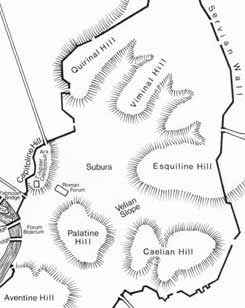 nt on as far as the eye could see, past buildings and fields. I sighed. Another long day would be ahead of me. I would first go to the Temple of Veiovis to worship (where I wondered every day why the cella was wider than the front porch), and then I would walk my often-trodden path to the Asylum to give tours of Capitolinus Mons (Capitoline Hill).
This was my job, to appeal to the strangers that entered the Asylum daily, to draw the interest of the travelers from afar. "Titus the Tour Guide" was my title. I would take my customers on a tour of the Asylum and Capitoline Hill, for a fair pay, which provided me with enough for my living.
I am a very knowledgeable guide, or at least I like to think so, but I am getting bored of the same old thing, day after day, rote recitation and routes. I long for something better, something new. I have a feeling this was my lucky day.
I was standing at the main entrance area of the Asylum, watching as the travelers from afar wandered through. I knew by now the right people to pick out. I looked for three things in a potential customer. For one, they could not be weary and tired, for they would never accept to the tour. For two, they should not be walking with purpose, because he could not interrupt their planned travels. For three, they must have enough payment for the tour.
I soon spotted a potential customer who was walking in my direction, or rather, I was spotted by a potential customer who was walking in my direction. This wasn’t normal, but I did my normal spiel of appeal for my tour. The customer was only too anxious, but he also seemed to be nervous. He was quickly looking both ways as if he was making sure he wasn’t followed. I didn’t catch this, so when the shady customer agreed and provided payment, I was only too happy to take this traveler on my first tour of the day.
I always began my tour on the Arx, the northern summit of the hill, which was the higher point of Capitoline Hill. The tour literally only went downhill from there. On the way to the Temple of Juno Moneta I spewed general information about the hill.
“The Capitoline Hill is the smallest of the seven hills of Rome. It is surrounded by steep cliffs on all sides except in the southeast where it is accessible from the Roman Forum. It is located between the Forum and the Campus Martius. It is also the religious center of the city. The northern and southern summits of the hill are divided by the Asylum, which is where we just came from. South of the Asylum are a few other temples, the most prominent of which is the Temple of Jupiter Optimus Maximus. The Capitoline Hill was a site for this temple for the Capitoline Triad, which are Jupiter, Juno, and Minerva. The temple was started under the rule of Rome’s fifth king Tarquin the Elder. Legend says that the recovery of a human skull (“head” in Latin is “caput”) while foundation trenches were being dug led to the name of the hill. When the Senones Gauls raided Rome in 390 BC, this was the one section of the city that evaded capture by the barbarians. Julius Caesar and the brother and nephew of Vespasian
 also visited this hill. Also-“
“Excuse me”, the shady traveler interjected. “Can you tell me more about the Asylum?”
“I was getting to that”, I answered. “The Asylum is a grove in the depression between the two summits of Capitoline Hill (the Arx and the Capitolium). An asylum can be any place offering safety, shelter, and protection. Tradition states that Romulus invited visitors, settlers, a
 nd refugees from afar in the Asylum. This began Rome’s policy of encouraging a diverse population.”
We arrived at the Temple of Juno Moneta. “This is a temple for Juno ‘who warns’. The Roman Mint is located here.” I then showed the stranger the amazing architecture including the marble columns and arches of the temple and then I showed him where the money was made.
When we were both finished, I told the stranger where we would travel next. We were going to the Capitolium to visit the Temple of Jupiter Optimus Maximus, the Temple of Fides, and the Aedes Tensarum. The Aedes Tensarum was first. I answered the traveler’s questions as we walked over. We strolled along as many others were busily hurrying all around. A sweet wind blew, which brightened my mood. I couldn’t get over the fact that the traveler man was jittery the whole time. I tried to wave it off in the back of my mind. When we arrived at the Aedes Tensarum, I began again.

“The Aedes Tensarum is a small temple where symbols of the gods during the theater festivals are stored. Chariots are also housed here.” We then walked to the Temple of Fides, saving the Temple of Jupiter Optimus Maximus for last. On the way to the temple of Fides, I saw a Roman man with a something sharp in his toga and wondered why he looked so mischievous. The traveler then clumsily bumped into him, and we continued on.
At the Temple of Fides I told the man, “This temple is dedicated to the goddess Fides.” I then went on to explain to him that this temple was different in its colorful archaic features. One such requirement was that the priests had to wrap their hands to symbolize the sacred nature of oaths. Senators also met here.
When we arrived at the Temple of Jupiter Optimus Maximus, I felt like I had already told him a lot about it. As I began to tell the man of the highlights of the temple, an actual light appeared near the altar. I walked over to check it out as the light turned into some kind of swirling portal to another area. I turned to wonder aloud to the man, but as I did he drew a knife. He must have pick pocketed it from the man near the Temple of Fides. He stared at me deviously. I looked at him closer and saw the uniform underneath his clothes. “You must have escaped from Carcer”, I said. Carcer was the ancient state prison of Rome at the bottom of the Capitoline Hill. He told me the truth, “Yes, then I stole a uniform from a man at the Temple of Concord. And before you ask, I am killing you to take your place and blend in. I will become you and will never be found.” He glared hungrily at me. On any other day I would have stayed away from the colorful tunnel, but today I spun and dove straight into it.
In the tunnel I wondered why such a portal would open up for me. I came out the other side of the tunnel in a familiar place. It was Capitoline Hill, but it was run down and looked old. I walked outside, confused, and asked the closest person I could see what happened. He told
 me that the temples were over a thousand years old and that this ruin was bound to happen sometime.
I questioned him again. “What year is this?”
The man answered, “1536.”
My pride for the Hill overtook my confusion of time, place, etc. I told him, “I need to find the nearest architect to fix these buildings.”
He raised his hand slowly and looked down. “I’m an architect”, he said. He looked sad.
“Well great! You can help rebuild and improve these places. I can even help you with them.” He still looked sad. “Come on”, I begged him. “Please, you must help me. This place has a h
 uge historical importance. You must help.”
He finally agreed. “Glad to do business with you”, I said to the man. “My name is Michelangelo”, he said. “And I’m glad to help, too!”
Years passed. The church of Santa Maria de Aracoeli was built at the Arx. The Piazza del Campidoglio and the surrounding palazzos were designed by Michelangelo, who decided to orient the Capitoline towards St. Peter’s Basilica. Still, the Hill was restored, so I was satisfied. Capitoline Museums then opened. I helped bring back the Capitoline. I decided that my purpose of coming into the future must have been to start off Michelangelo. This always confused me. And when I figured out that Rome was gone I almost died, but hey, this was a new start, just like I wanted…
Information Bibliography:
"Capitoline Hill." Wikipedia.org. Wikipedia. http://en.wikipedia.org/wiki/Capitoline_Hill.
"Capitoline Hill." Rome Reborn. Institute for Advanced Technology in the Humanities.
http://www.romereborn.virginia.edu/ge/GF-006.html.
"Asylum." Rome Reborn. Institute for Advanced Technology in the Humanities.
Picture Bibliography:
http://www.ancient-rome.com/images/7hills.jpg
http://www.sacred-destinations.com/italy/rome-capitoline-museum-pictures/eosa_032.jpg
Google Earth Screenshots. Digital image. Google Earth.
"Capitoline Hill." Wikipedia.org. Wikipedia. http://en.wikipedia.org/wiki/Capitoline_Hill.
"Capitoline Hill." Rome Reborn. Institute for Advanced Technology in the Humanities.
http://www.romereborn.virginia.edu/ge/GF-006.html.
"Asylum." Rome Reborn. Institute for Advanced Technology in the Humanities.
Picture Bibliography:
http://www.ancient-rome.com/images/7hills.jpg
http://www.sacred-destinations.com/italy/rome-capitoline-museum-pictures/eosa_032.jpg
Google Earth Screenshots. Digital image. Google Earth.
Saturday, March 14, 2009
Roman Calendars-A Contribution to Today

The original Roman calendar was chaotic. It included 10 months and 304 days in a year that started with March. Two more months, January and February, were added later that century. Because these months were only 29 or 30 days long, an extra month had to be added about every second year. The days of the month had an awkward method of counting backward from three days: the calends (1st of the month), the ides (the middle of the month, occurring on the 13th sometimes and on the 15th the other times), and the nones (the ninth day before the ides). This was then even more hopelessly confused when officials abused their authority to prolong their terms in office or to hasten or delay elections. In 45 BC, Julius Caesar was advised by the Greek astronomer Sosigenes to use a solar calendar. This calendar became known as the Julian Calendar and fixed the year with 365 days and 366 days every 4th year. This was called a leap year. This order was established as it is known in everyday calendars. In 44 BC Caesar changes the name of the month Quintilis to Julius(July)after himself. Then the month Sextilis was renamed after the Roman Emperor Caesar Augustus (August). The Romans named the days of the week in honor of the sun, moon, and various planets.
Friday, March 13, 2009
Basic Capitoline Hill Story
My name is Titus Tullius Sextus. I work at the Asylum in ancient times. I will be meeting people as they come in, walking around the hill after work, etc.
Latin Phone Numbers!
1410 817 4765-MCDX DCCXVII MMMMDCCLXV
1443 677 3059-MCDXLIII DCLXXVII MMMLIX
1443 564 8456-MCDXLIII DLXIV MMMMMMMMCDLVI
MMMMMMMMMCMXCIX
Football-superbowl
Bottom of sheet music
Clocks
Outlines _
5,000- V _
100, 000- X _
500, 000- D _
1,000,000- M
1443 677 3059-MCDXLIII DCLXXVII MMMLIX
1443 564 8456-MCDXLIII DLXIV MMMMMMMMCDLVI
MMMMMMMMMCMXCIX
Football-superbowl
Bottom of sheet music
Clocks
Outlines _
5,000- V _
100, 000- X _
500, 000- D _
1,000,000- M
Tuesday, March 10, 2009
The Gallic War-Julius Caesar
These are the 2nd and 3rd groups of sentences that we were supposed to do.
All these differ from each other in language, customs, and laws. The Garumna River divides the Gauls from the Aquitani, and the Marne and the Seine separate them from the Belgians.
Of all these the Belgae are the strongest, because they are the farthest from the civilization and refinement of our province, and merchants least often resort to them and import those things that tend to effeminate the mind,
All these differ from each other in language, customs, and laws. The Garumna River divides the Gauls from the Aquitani, and the Marne and the Seine separate them from the Belgians.
Of all these the Belgae are the strongest, because they are the farthest from the civilization and refinement of our province, and merchants least often resort to them and import those things that tend to effeminate the mind,
Monday, March 9, 2009
Vocab Quiz-Chapter 16
1. aetas-life
2, auditor-listener
3. clementia-mercy
4. mens-mind
5. satura-satire
6. acer-sharp
7. brevis-brief
8. celer-swift
9. dificillis-difficult
10. dulcis-sweet
11. facillis-easy
12. fortis-strong
2, auditor-listener
3. clementia-mercy
4. mens-mind
5. satura-satire
6. acer-sharp
7. brevis-brief
8. celer-swift
9. dificillis-difficult
10. dulcis-sweet
11. facillis-easy
12. fortis-strong
Saturday, March 7, 2009
Roman Baths-Not quite the same as today...

Public baths (thermae) were all over Rome. They were in large cities and small towns alike. Under the Republic they had hot, warm, and cold-water baths (caldaria, tepidaria, frigidaria). Alongside these baths were the exercise areas (palaestra). The baths near Pompeii's forum (75 BC) are an excellent example of the early type of public baths. Under the empire these structures became grander. Sone examples of these new baths are the Baths of Caracalla (ca. AD 217) in Rome. These also included libraries, lecture halls, and vast vaulted public spaces. They were decorated with statues, mosaics, painting, and stuccos.
Chapter 15 S.A., #'s 1-9
1. I have long been on that ship and because of the storm and the clouds, I kept expecting death.
2. We came up to that city in seven hours.
3. Italy was abundant in the Greek arts at those times, and many Romans cultivated these arts.
4. They kept hesitating between war and peace.
5. In that time, I was driving that man into the city.
6. Each miserable kept saying : "I am a Roman citizen."
7. My girl used to love her sparrow, and the sparrow chirped to her only and it did not move from her lap.
8. My sons used to esteem my brother, they avoided me; they called me a bitter father and awaited my death. Now on the other hand, I changed my morals have changed and I will draw two sons to me tomorrow
9. The tyrant Dionysius, because the head barber kept fearing to commit, he taught his daughters to cut his beard and hair, so the maidens cut their father's hair and beard.
2. We came up to that city in seven hours.
3. Italy was abundant in the Greek arts at those times, and many Romans cultivated these arts.
4. They kept hesitating between war and peace.
5. In that time, I was driving that man into the city.
6. Each miserable kept saying : "I am a Roman citizen."
7. My girl used to love her sparrow, and the sparrow chirped to her only and it did not move from her lap.
8. My sons used to esteem my brother, they avoided me; they called me a bitter father and awaited my death. Now on the other hand, I changed my morals have changed and I will draw two sons to me tomorrow
9. The tyrant Dionysius, because the head barber kept fearing to commit, he taught his daughters to cut his beard and hair, so the maidens cut their father's hair and beard.
Friday, March 6, 2009
Chapter 15-Numeral Test ='(
Part I-Roman Numerals for 1-23, +50 +90
1. I
2. II
3. III
4. IV
5. V
6. VI
7. VII
8. VIII
9. IX
10. X
11. XI
12. XII
13. XIII
14. XIV
15. XV
16. XVI
17. XVII
18. XVIII
19. XIX
20. XX
21. XXI
22. XXII
23. XXIII
50. L
90. XC
Part II-Cardinals 1-20, + each 10 through 100
1. unus
2. duo
3. tres
4. quattuor
5. quinqua
6. sex
7. septem
8. octo
9. novem
10. decem
11. undecim
12. duodecim
13. tredecim
14. quattuordecim
15. quindecim
16. sedecim
17. septendecim
18. duodeviginti
19. undeviginti
20. viginti
30. triginta
40. quadraginta
50. quinquaginta
60. sexaginta
70. septuaginta
80. octoginta
90. nonaginta
100. centum
Part III-Ordinals 1-20, + each ten through 100
1. primus
2. secundus
3. tertius
4. quartus
5. quintus
6. sextus
7. septimus
8. octavus
9. nonus
10. decimus
11. undecimus
12. duodecimus
13. tertius decimus
14. quartus decimus
15. quintus decimus
16. sextus decimus
17. septimus decimus
18. duodevicesimus
19. undevicesimus
20. vicesimus
30. trigesimus
40. quadragesimus
50. quinquagesimus
60. sexagesimus
70. septuagesimus
80. octogesimus
90. nonagesimus
100. centesimus
1. I
2. II
3. III
4. IV
5. V
6. VI
7. VII
8. VIII
9. IX
10. X
11. XI
12. XII
13. XIII
14. XIV
15. XV
16. XVI
17. XVII
18. XVIII
19. XIX
20. XX
21. XXI
22. XXII
23. XXIII
50. L
90. XC
Part II-Cardinals 1-20, + each 10 through 100
1. unus
2. duo
3. tres
4. quattuor
5. quinqua
6. sex
7. septem
8. octo
9. novem
10. decem
11. undecim
12. duodecim
13. tredecim
14. quattuordecim
15. quindecim
16. sedecim
17. septendecim
18. duodeviginti
19. undeviginti
20. viginti
30. triginta
40. quadraginta
50. quinquaginta
60. sexaginta
70. septuaginta
80. octoginta
90. nonaginta
100. centum
Part III-Ordinals 1-20, + each ten through 100
1. primus
2. secundus
3. tertius
4. quartus
5. quintus
6. sextus
7. septimus
8. octavus
9. nonus
10. decimus
11. undecimus
12. duodecimus
13. tertius decimus
14. quartus decimus
15. quintus decimus
16. sextus decimus
17. septimus decimus
18. duodevicesimus
19. undevicesimus
20. vicesimus
30. trigesimus
40. quadragesimus
50. quinquagesimus
60. sexagesimus
70. septuagesimus
80. octogesimus
90. nonagesimus
100. centesimus
Thursday, March 5, 2009
How the Seas Got Their Names
Aegean-name derived from Aegeus, king of Athens and father of Theseus
or from Aegea a queen of the Amazons who drowned in the sea
or from an ancient Greek town known as Aegae
Adriatic-named for Adria, a flourishing port and colony. "Adria" also means "water" or "sea"
Ionian-Io supposedly swam across this sea and it was named after her.
Mediterranean-from "medi" and "terra" in Latin, which make it literally "in the middle of the land"
Tyrrhenian-named for a Greek name for the Etruscans, who were said to be emmigrants from Lydia led by the prince Tyrrhenus.
or from Aegea a queen of the Amazons who drowned in the sea
or from an ancient Greek town known as Aegae
Adriatic-named for Adria, a flourishing port and colony. "Adria" also means "water" or "sea"
Ionian-Io supposedly swam across this sea and it was named after her.
Mediterranean-from "medi" and "terra" in Latin, which make it literally "in the middle of the land"
Tyrrhenian-named for a Greek name for the Etruscans, who were said to be emmigrants from Lydia led by the prince Tyrrhenus.
Wednesday, March 4, 2009
S.A. p. 101 #'s 2 + 8, Cyrus' Dying Words on Immortality
2. We came up to that city in seven hours.
8. My sons used to esteem my brother, they avoided me; they called me a bitter father and awaited my death. Now on the other hand, I changed my morals have changed and I will draw two sons to me tomorrow.
Cyrus' Dying Words on Immortality
Oh my three sons, you ought not be miserable. In fact, now I come to death, but my part, my soul, will always remain. As long as I was with you, you did not see the soul, but from my deeds you realized it was in my body. Therefore, believe that the soul is the same after death, even if you will not see it, and always preserve me in your memory.
8. My sons used to esteem my brother, they avoided me; they called me a bitter father and awaited my death. Now on the other hand, I changed my morals have changed and I will draw two sons to me tomorrow.
Cyrus' Dying Words on Immortality
Oh my three sons, you ought not be miserable. In fact, now I come to death, but my part, my soul, will always remain. As long as I was with you, you did not see the soul, but from my deeds you realized it was in my body. Therefore, believe that the soul is the same after death, even if you will not see it, and always preserve me in your memory.
Subscribe to:
Posts (Atom)